

Ten easy snacks and treats for cooking with kids, with real amounts and the exact job a child can do at each age, starting at 3.
Quick picks
- Best first recipe: berries and cream cups. No stove, no knife, ages 3 and up.
- Best for little hands: apple donuts and yogurt fruit pops
- Best for confident kids: banana bread and chocolate chip cookies
- No oven needed: 6 of the 10 recipes
- Ages: every recipe lists kid jobs by age, from 3 to 12
Cooking with kids goes better when the recipe is short and every child has a real job. A 4-year-old isn't ready to sauté, but they can rinse berries, mash bananas, and smash cookies in a bag. Give them the right task and they stay busy while you handle the heat.
Below are 10 easy recipes for kids to make with you, from no-cook snacks to a first batch of cookies. Each one lists the kid jobs by age, so cooking with kids doesn't turn into you doing everything while they watch.
What kids can do at each age
The secret to cooking with kids is matching the job to the hands. Here's a simple guide based on the age-by-age task list from Kids Eat Right, the family nutrition program of the Academy of Nutrition and Dietetics.
- Ages 3 to 5: rinse fruit and vegetables, stir, mash, tear lettuce, press cookie cutters, and spread with a plastic or butter knife.
- Ages 6 to 7: crack eggs, use a vegetable peeler, measure ingredients, and cut soft foods with a kid-safe knife.
- Ages 8 to 9: open cans, beat eggs, measure and mix dry ingredients, juice lemons, and read a food thermometer.
- Ages 10 to 12: follow a recipe step by step, slice and chop, boil pasta, and bake with you nearby.
Treat the ages as a starting point, because cooking with kids is about the child in front of you. A careful 5-year-old may be ready for a peeler before a distracted 8-year-old is.
Before anyone starts
- Everyone washes hands with soap before cooking with kids starts, and again after touching raw eggs.
- Nobody tastes raw batter or dough. The FDA warns that raw flour can carry E. coli and Salmonella, and says kids shouldn't eat raw dough or play with it.
- The stove, oven, and microwave stay grown-up jobs until about age 10, and even then you stand right there.
- Soft foods get a kid-safe nylon knife. Real blades only come out with you beside them.
- Do the hard prep before cooking with kids begins. Core the apples, heat the oven, and set out bowls before you call the kids in.
Knife work is the part most parents worry about. This short video walks through teaching kids to use a knife safely, so you and your child can watch it together before the first cut.
Why the mess is worth it
Those rules keep cooking with kids safe, and the payoff shows up at the table. In a 2014 study in the journal Appetite, kids ages 6 to 10 who made their own lunch ate about 76% more salad than kids whose parents cooked it for them. They also said they felt more in control afterward, which is the quiet win of cooking with kids.
Cooking with kids still means spilled flour. Set the mixing bowl on a rimmed sheet pan to catch the overflow, and plan on 10 extra minutes of cleanup. That's the whole price.
1. Berries and cream cups
No stove, no knife, and no way to get it wrong. Start here if cooking with kids is new at your house.
Ingredients
Check off ingredients as you go. Cook mode keeps your screen awake.
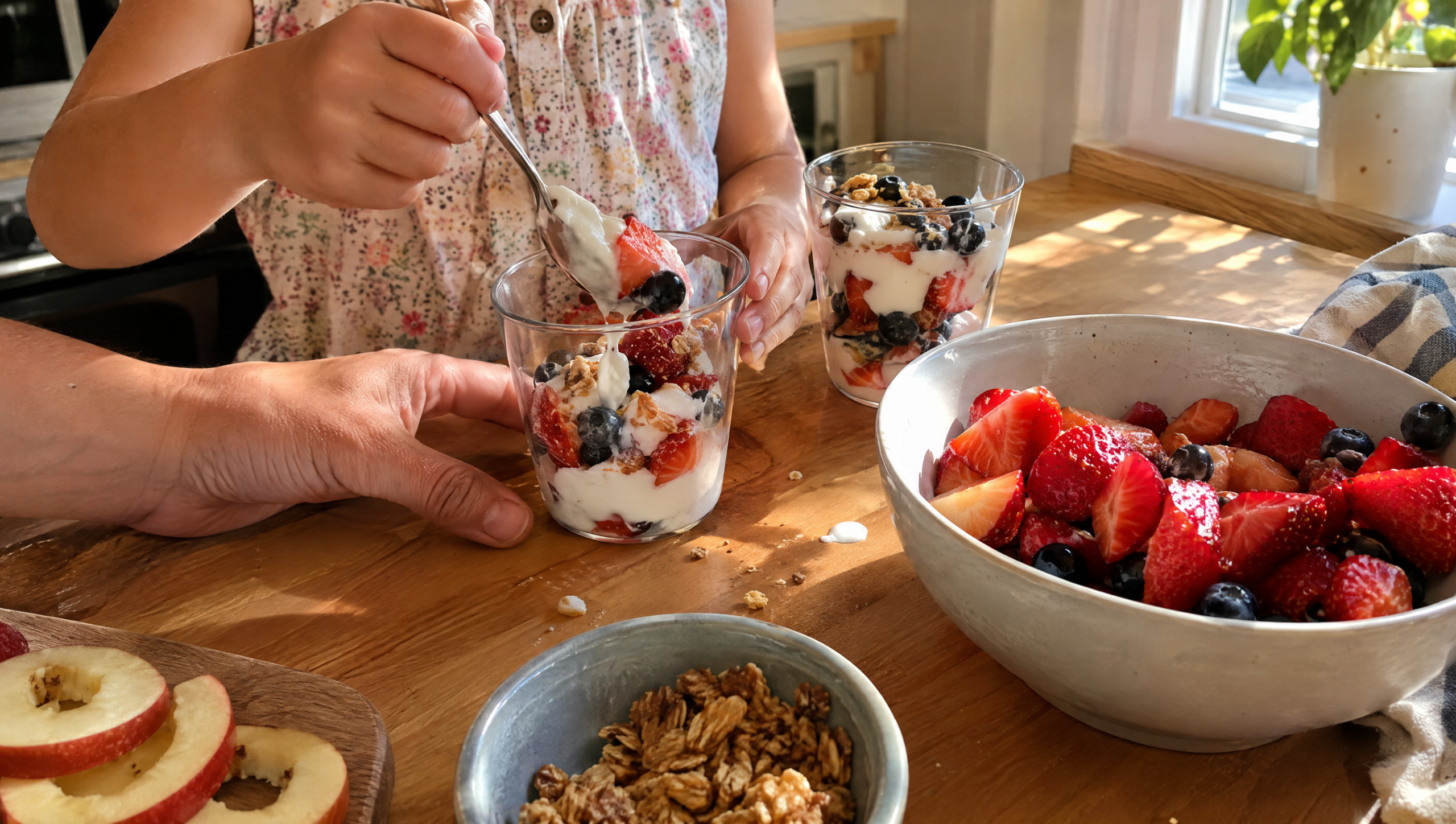
Kid jobs: Ages 3 to 5 rinse the berries and spoon the layers into cups. Ages 6 and up halve the strawberries with a kid-safe knife and stir the honey into the yogurt.
1. Prep the berries. Rinse the berries in a colander and pat them dry. Hull the strawberries and cut them in half.
2. Sweeten the yogurt. Stir the honey or maple syrup into the yogurt.
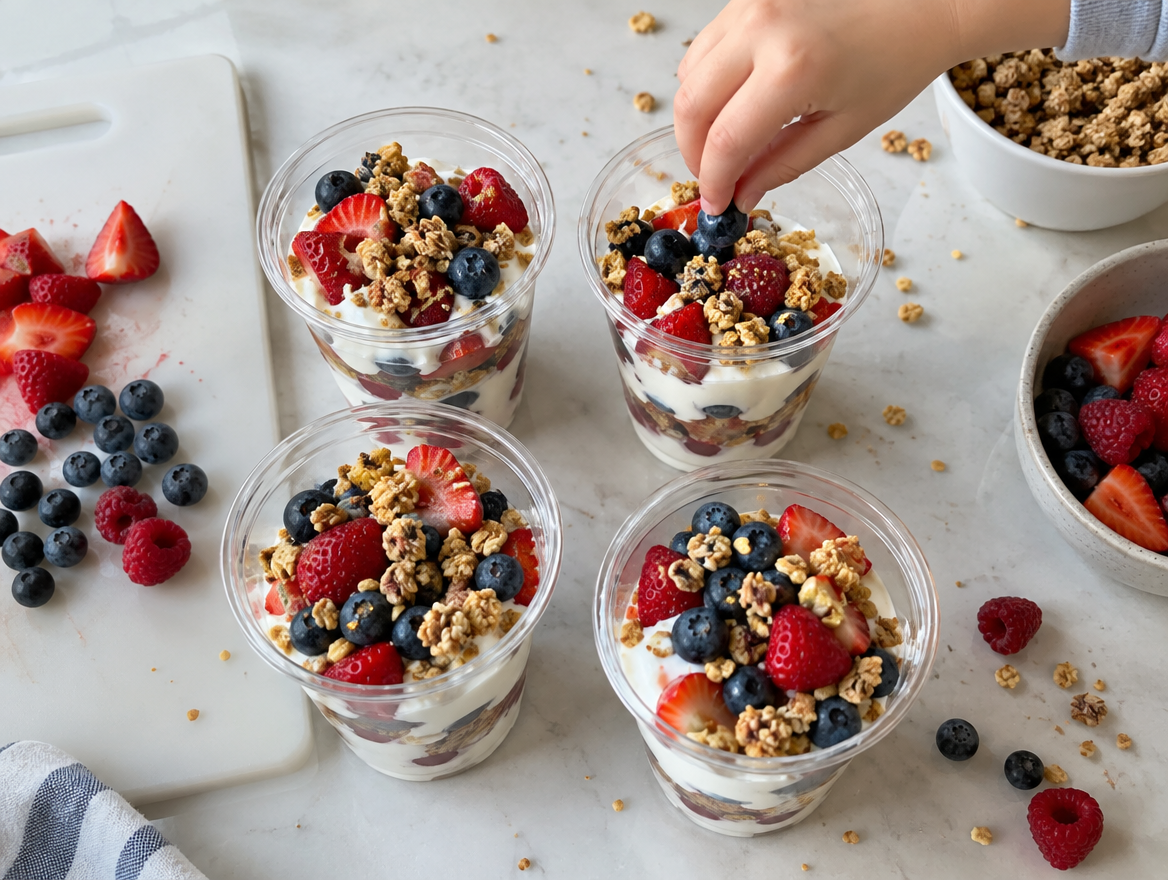
3. Layer. Spoon about 2 tablespoons of yogurt into each cup, then add berries and a sprinkle of granola. Repeat until the cups are full, ending with berries.
4. Serve. Eat right away, or chill the cups up to 4 hours and add the granola just before serving so it stays crunchy.
2. Apple donuts
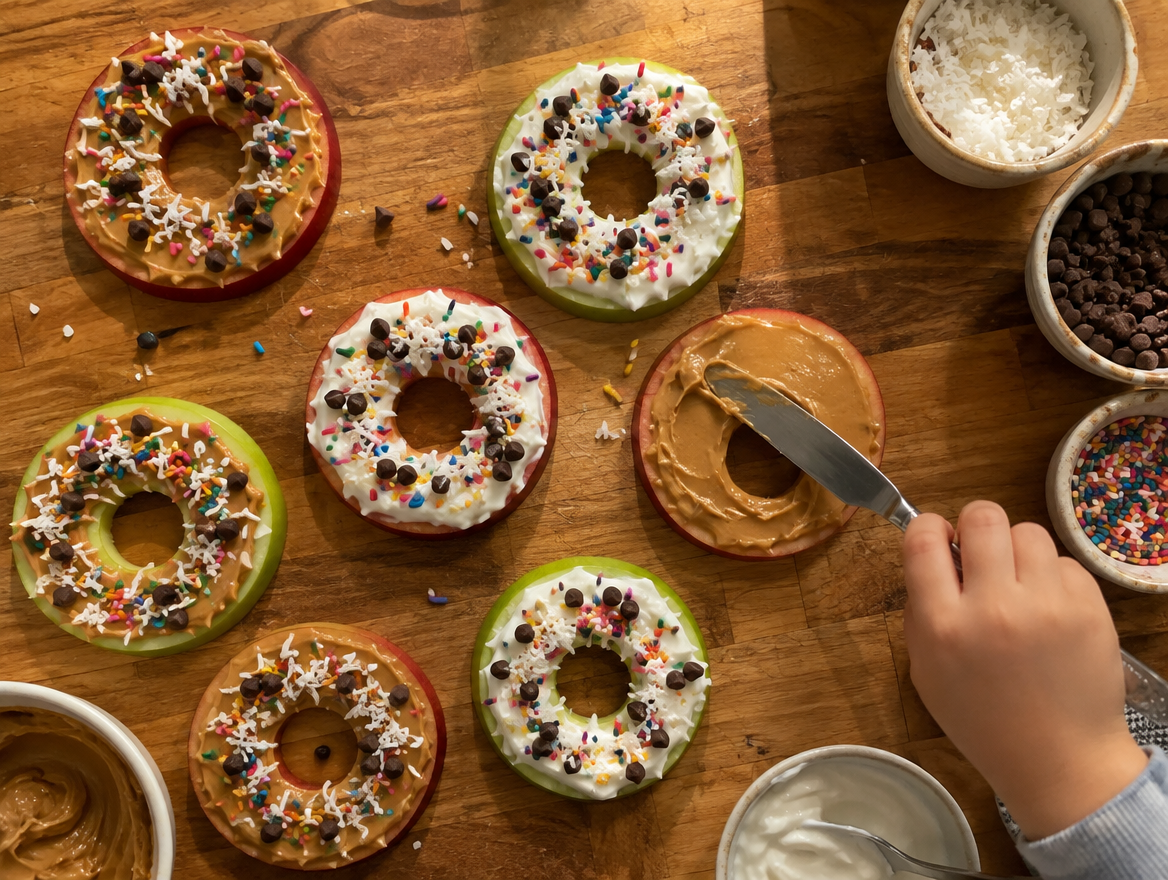
Apple rings get a spread and toppings, so they look like donuts. You do the coring and slicing, and the kids do the decorating. It's the easiest way to start cooking with kids who are 3 or 4.
Ingredients
Kid jobs: Ages 3 to 5 spread the peanut butter with a butter knife and press on the toppings. Ages 6 and up brush the slices with lemon juice. Grown-ups core and slice.
1. Core and slice. Core the apples with an apple corer or a small knife. Slice them crosswise into ½-inch rings. You'll get 5 or 6 rings from each apple.
2. Dry the rings. Pat the rings dry with a paper towel so the spread sticks. Brush them with lemon juice if you're not eating them right away.
3. Decorate. Spread about 1 tablespoon of peanut butter on each ring and press the toppings into it.
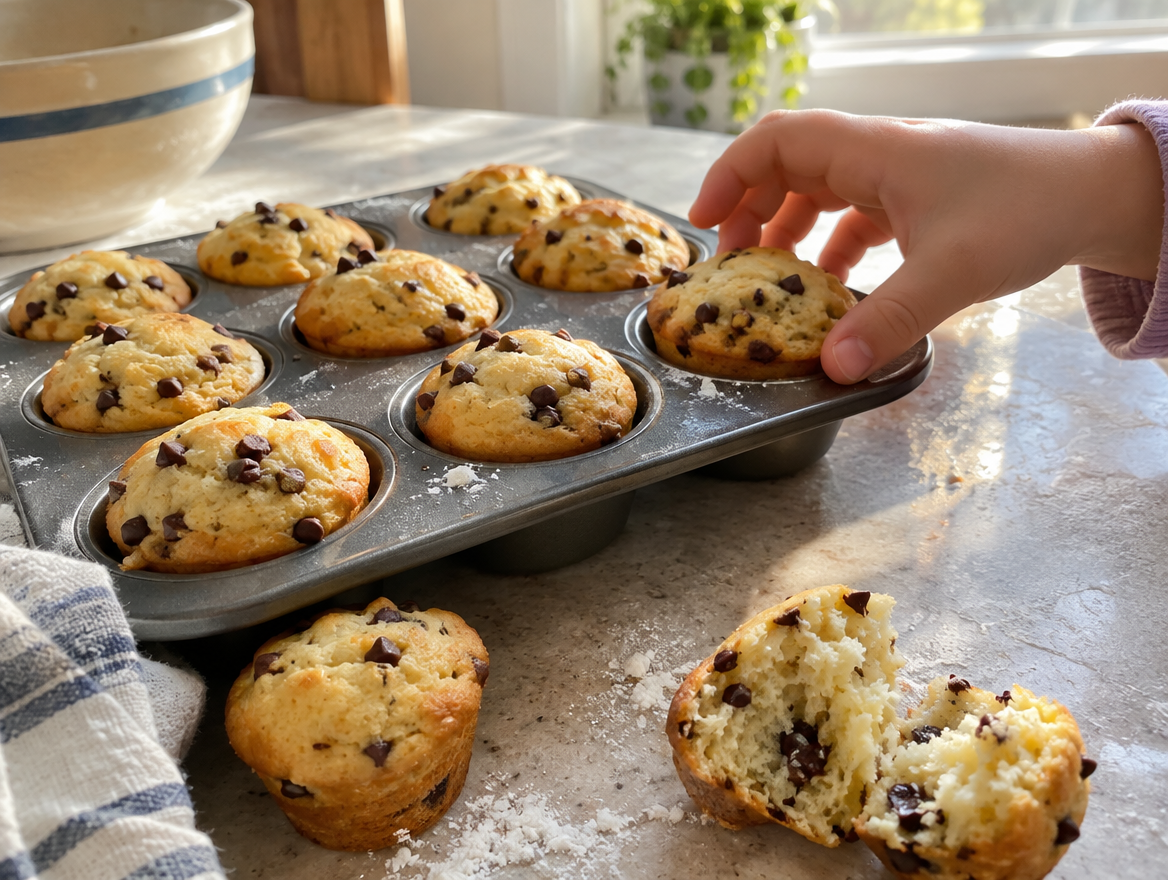
3. Mini chocolate chip pancake muffins
Pancake batter baked in a mini muffin tin, so nobody has to flip anything over a hot pan. They freeze well for school mornings, so this cooking with kids project pays off all week.
Ingredients
Kid jobs: Ages 4 to 5 dump in the measured dry ingredients and whisk. Ages 6 to 7 crack the egg and measure the milk. Ages 8 and up scoop the batter into the tin. Grown-ups handle the oven.
1. Heat the oven. Heat the oven to 350°F and grease a 24-cup mini muffin tin well.
2. Mix the dry ingredients. Whisk the flour, sugar, baking powder, and salt in a large bowl.
3. Add the wet ingredients. In another bowl, whisk the milk, egg, and melted butter. Pour it into the flour mixture and stir just until no dry flour shows. A few lumps are fine. Fold in the chocolate chips.
4. Fill and bake. Fill each cup about three-quarters full, about 1 heaping tablespoon. Bake 10 to 12 minutes, until the tops spring back and a toothpick comes out clean. Cool 5 minutes, then pop them out.
Freeze extras in a zip-top bag for up to 3 months, so one round of cooking with kids covers several breakfasts. Warm them in the microwave for 15 to 20 seconds.
4. Banana bread
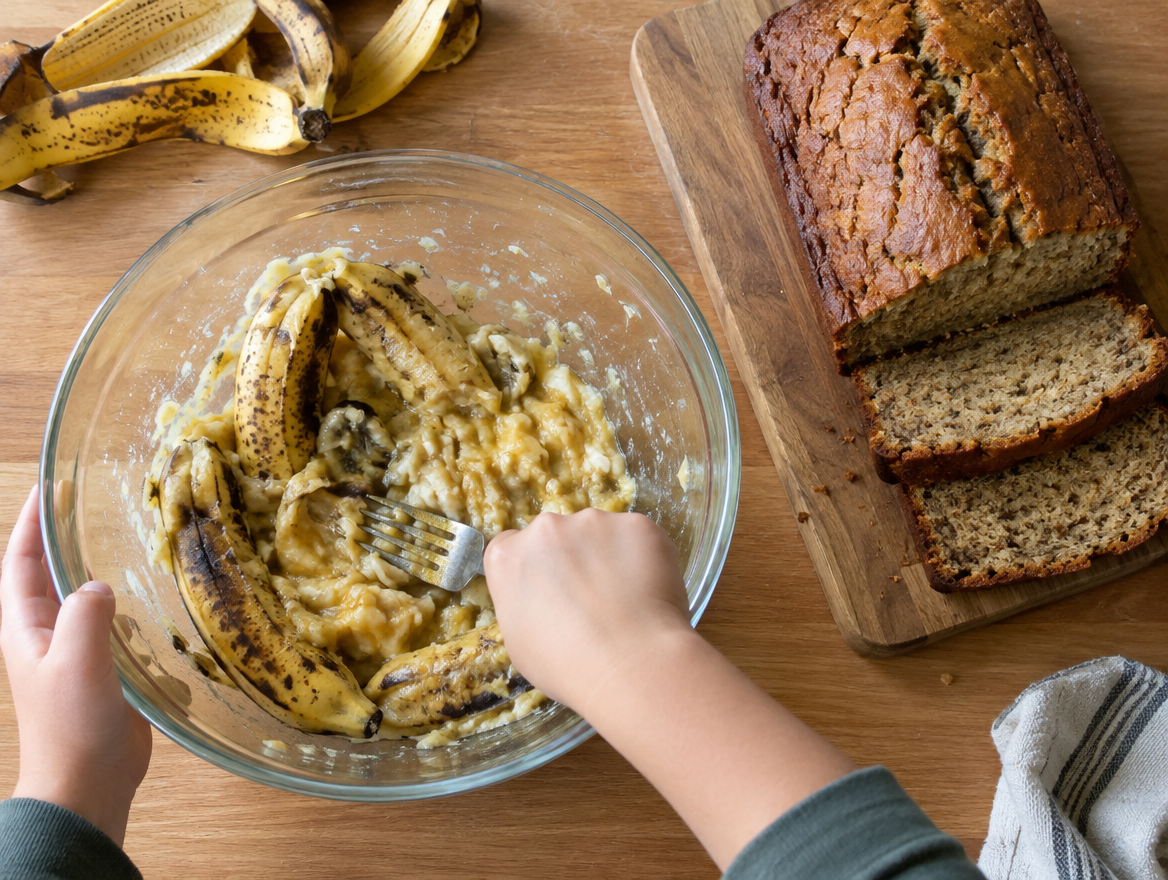
The best use for spotty bananas. Mashing them is a perfect first job for cooking with kids, and our grandma-style loaf keeps the steps simple.
Kid jobs: Ages 3 to 5 peel the bananas and mash them with a fork. Ages 6 to 7 crack the eggs and stir. Ages 8 and up measure the flour and level it with a butter knife. Grown-ups handle the oven.
5. Carrot cake yogurt dip
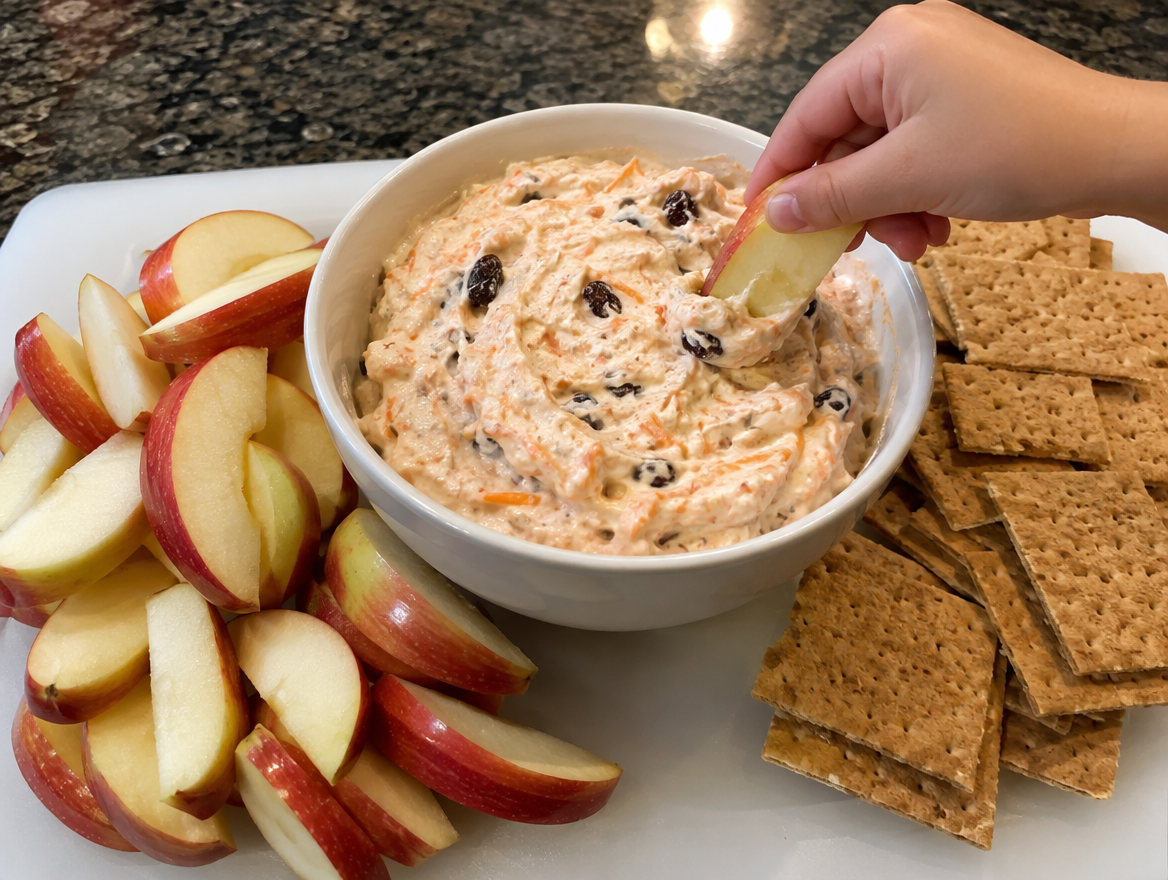
All the flavor of carrot cake in a dip for apples and crackers. It's an easy way to get carrots into a snack, and a good cooking with kids recipe for practicing with a peeler.
Ingredients
Kid jobs: Ages 4 to 5 add the ingredients and stir. Ages 6 and up peel the carrot with a vegetable peeler. Older kids can grate it on the fine side of a box grater while you watch their knuckles.
1. Mix the base. Stir the cream cheese, yogurt, maple syrup, and cinnamon together until smooth. A hand mixer makes it faster.
2. Add the carrot. Stir in the grated carrot and raisins.
3. Serve. Serve with apples, graham crackers, or pretzels. Store leftovers covered in the fridge for up to 3 days.
6. Biscuit pizza cups
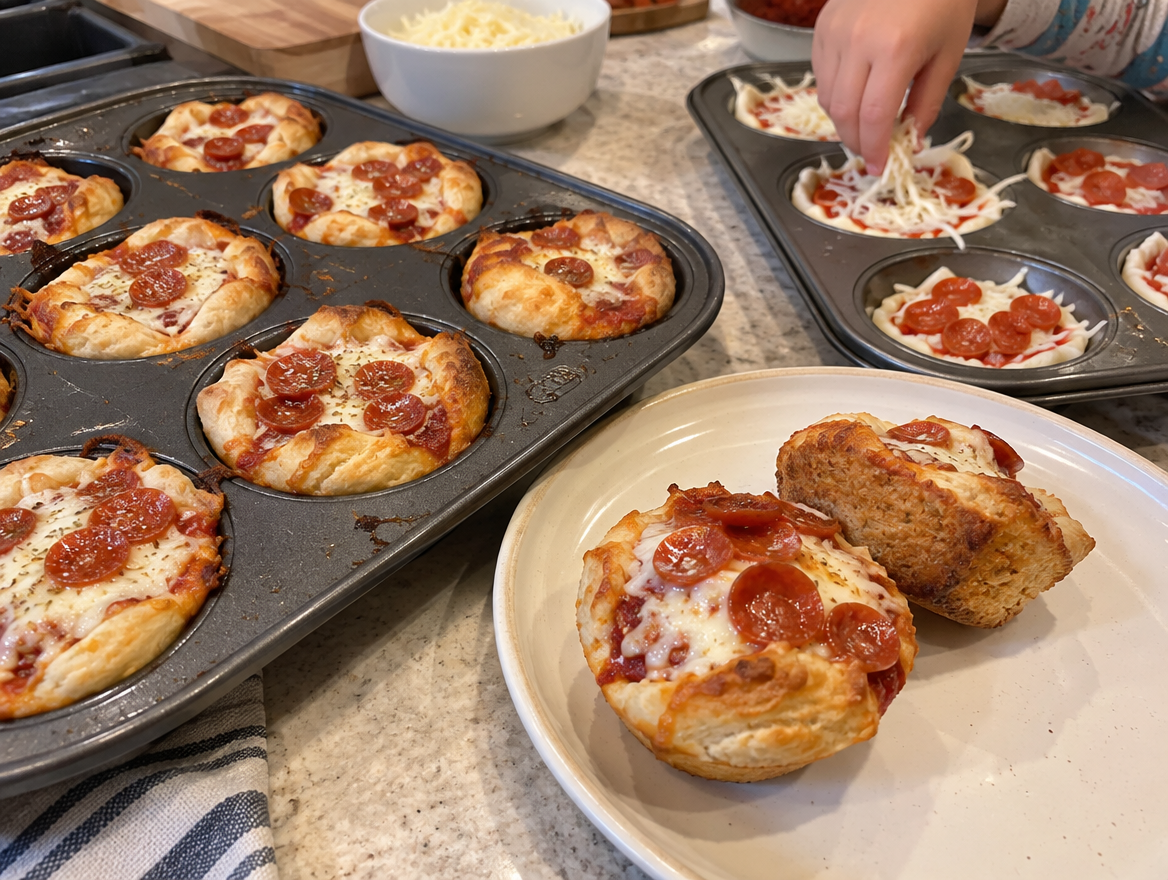
Canned biscuits become little pizza crusts in a muffin tin. Kids build their own, so everyone gets the toppings they want. That's cooking with kids at dinnertime with almost no stress.
Ingredients
Kid jobs: Ages 4 to 5 press the dough into the cups, spoon in the sauce, and sprinkle the cheese. Ages 8 and up open the biscuit can. Grown-ups handle the oven.
1. Heat the oven. Heat the oven to 375°F and grease 8 cups of a standard muffin tin.
2. Shape the crusts. Press each biscuit into a muffin cup, pushing the dough up the sides to make a little bowl.
3. Fill. Add about 1 tablespoon of sauce, 2 tablespoons of cheese, and any toppings to each cup.
4. Bake. Bake 13 to 16 minutes, until the edges are deep golden and the cheese bubbles. Cool 5 minutes before lifting them out, since the sauce stays very hot. Melted cheese and sauce cause more burns in cooking with kids than the oven does.
7. Salad in a jar
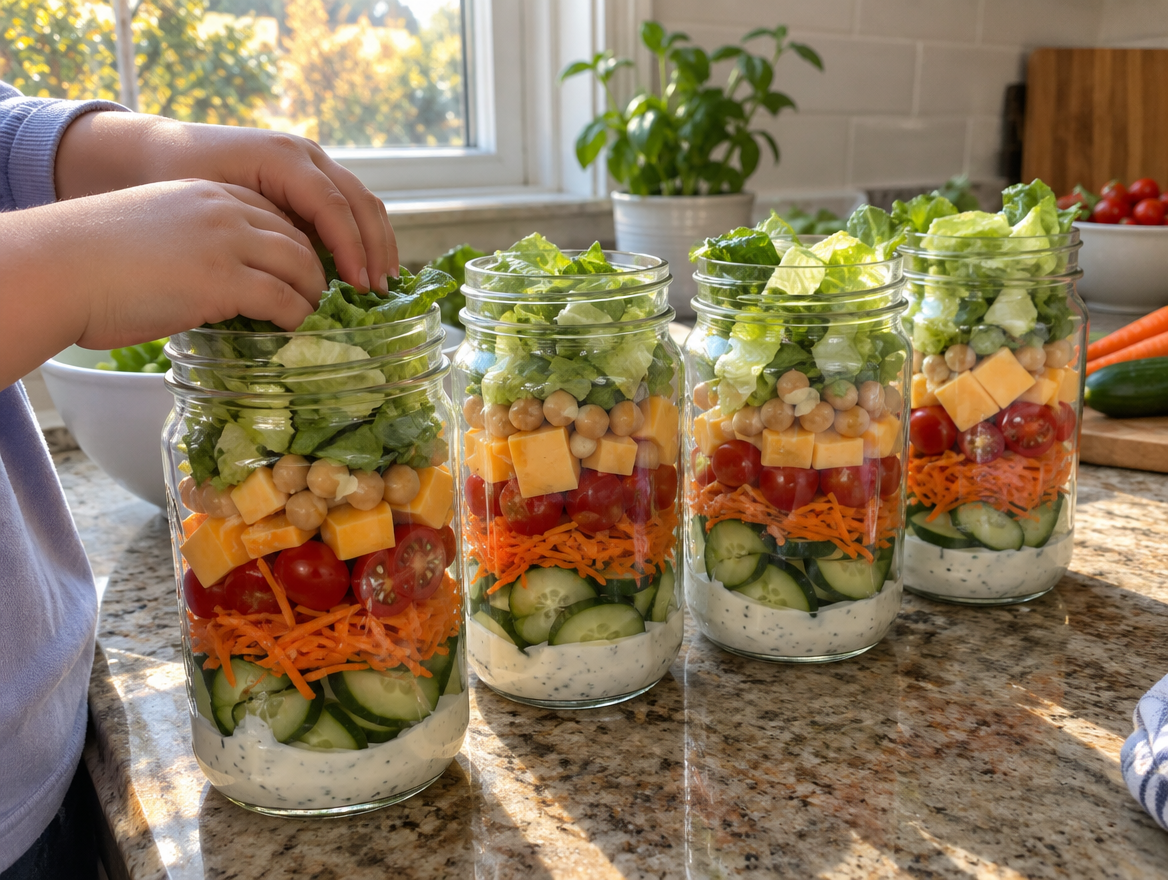
Kids are more likely to eat a salad they built, which is one of the best reasons for cooking with kids. Our mason jar salad puts the dressing on the bottom and the lettuce on top, so it stays crisp for lunch the next day.
Kid jobs: Ages 3 to 5 whisk the dressing, tear the lettuce, and drop the layers into the jar. Ages 6 to 7 cut the celery with a kid-safe knife. Grown-ups slice the apple and radish.
The dressing uses peanut butter and the salad has walnuts. For a nut-free jar, use sunflower seed butter and skip the walnuts.
8. Yogurt fruit pops
Three ingredients, one bowl, and a freezer make this the lowest-stress recipe for cooking with kids on the list. The waiting is the hardest part.
Ingredients
Kid jobs: Ages 3 to 5 mash the berries with a potato masher and spoon the mix into molds. Ages 6 and up chop soft fruit with a kid-safe knife and push in the sticks.
1. Mash. Mash half the berries in a bowl until juicy. Stir in the yogurt, honey, and the rest of the berries. Leave it a little streaky.
2. Fill the molds. Spoon the mixture into popsicle molds and tap them on the counter to settle it. Add the sticks.
3. Freeze. Freeze at least 6 hours or overnight. Run the molds under warm water for 10 to 15 seconds to loosen the pops.
No molds? Small paper cups work just as well for cooking with kids on a budget. Freeze for 1 hour, push a wooden stick into the middle of each, then finish freezing.

9. Cookies and cream fudge
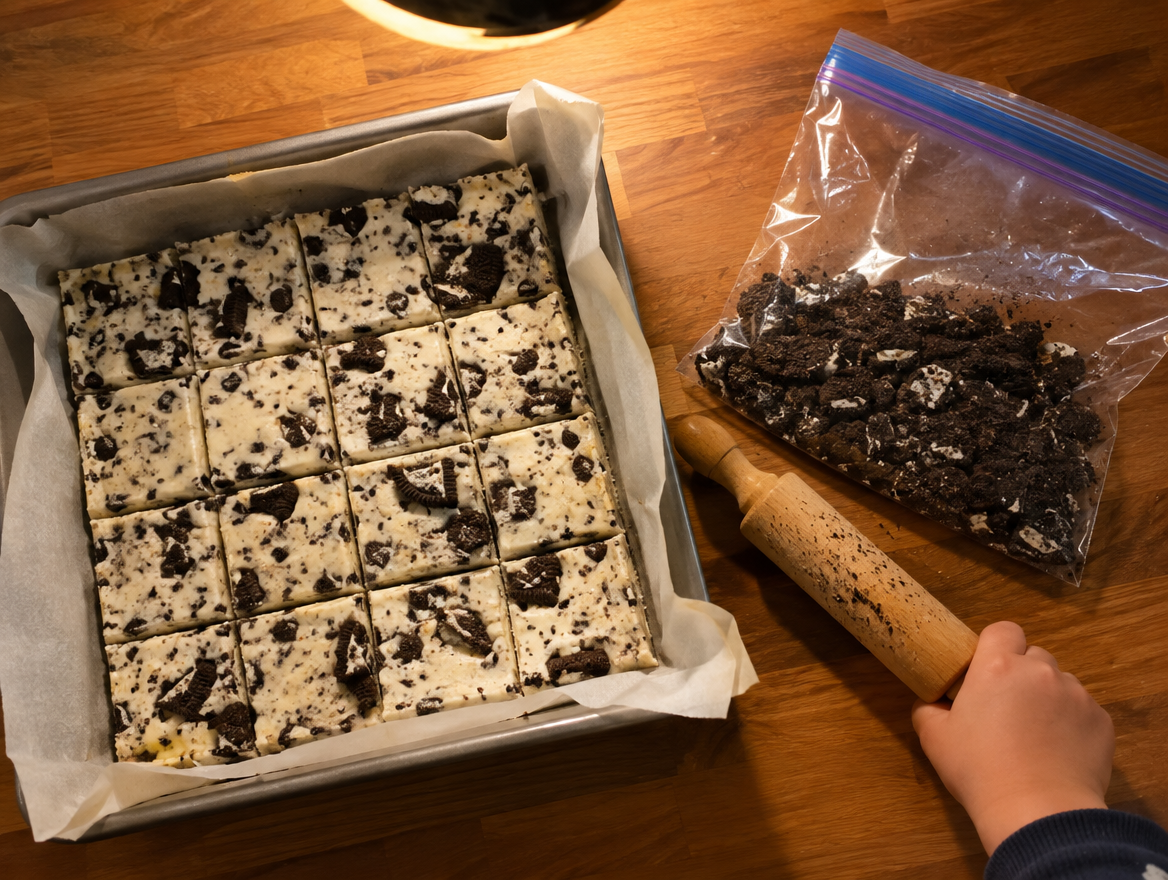
Three ingredients and a microwave. Kids get the best job, which is smashing cookies in a bag with a rolling pin. No step in cooking with kids gets more giggles.
Ingredients
Kid jobs: Ages 3 to 5 crush the cookies in a sealed zip-top bag. Ages 6 and up line the pan and sprinkle the last crumbs on top. Grown-ups melt the fudge, since it gets very hot.
1. Line the pan. Line an 8×8-inch pan with parchment paper, leaving some hanging over the sides.
2. Crush the cookies. Seal the cookies in a zip-top bag and roll or tap them with a rolling pin into chunky pieces. Set aside 2 tablespoons for the top.
3. Melt. Microwave the white chocolate chips and condensed milk in a large microwave-safe bowl for 1 minute. Stir, then heat in 20-second bursts, stirring each time, until smooth.
4. Set. Fold in the crushed cookies and spread the fudge in the pan. Sprinkle the saved crumbs on top and press them in. Chill 2 hours until firm, then lift out and cut into 36 squares.
Keep the fudge in an airtight container in the fridge for up to 1 week.
10. Chocolate chip cookies
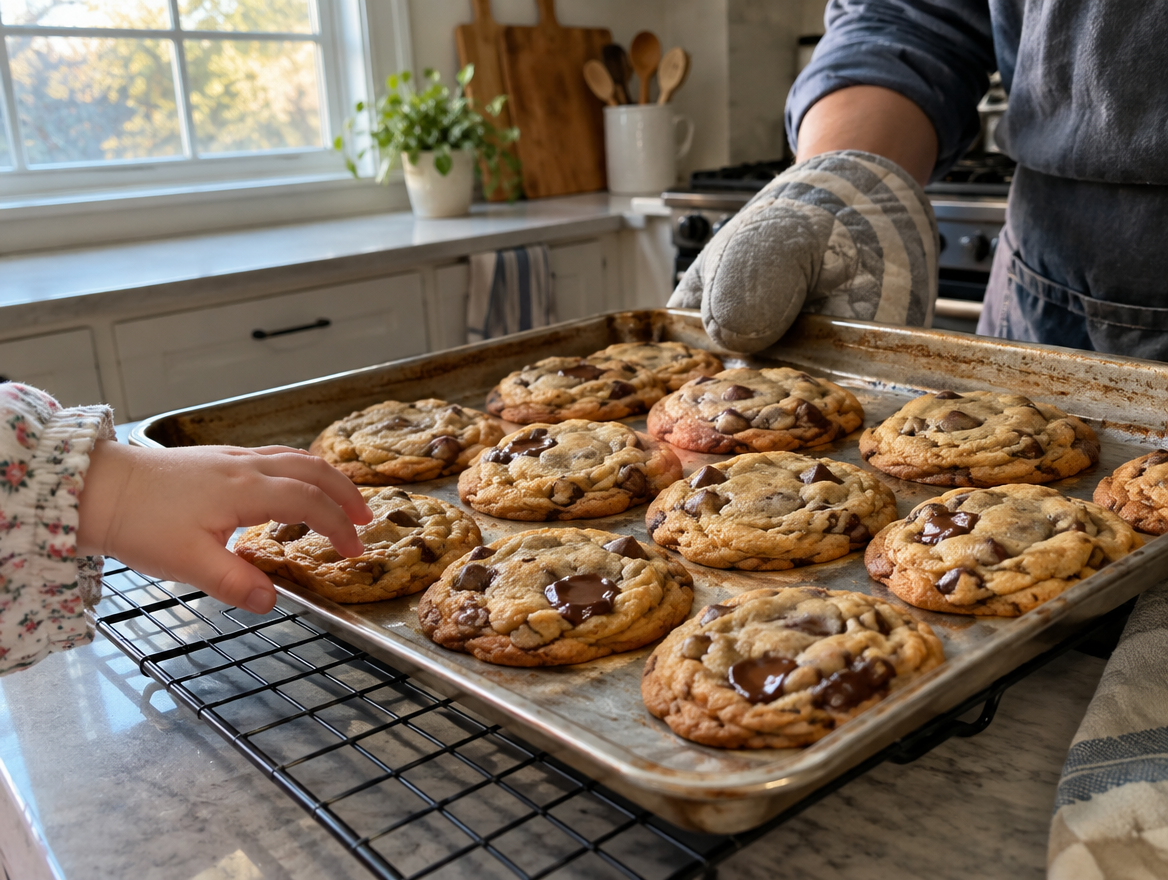
The classic first baking project. Older kids can run most of it themselves, which is the goal of cooking with kids in the first place.
Kid jobs: Ages 6 to 7 crack the egg and stir in the chips. Ages 8 to 9 measure and whisk the dry ingredients. Ages 10 to 12 cream the butter and sugar, scoop the dough, and bake with you nearby.
The raw dough rule for cooking with kids applies here too. The dough is for baking, not tasting.
The one tool worth buying
Most recipes for cooking with kids need nothing special. The exception is a knife your child can use without you hovering over every cut. A nylon kid-safe knife slices bananas, strawberries, cucumbers, and cheese, but it won't cut skin with normal pressure.

- Culinary Adventure Awaits: Get your young chef ready to roll with the Curious Chef3-Piece Nylon Knife...
- Kid-Safe Slicing Fun: Let your child explore the kitchen with child safe knives designed to make slicing...
Last update on 2026-10-08 / Affiliate links / Images from Amazon Product Advertising API
(As an Amazon Associate, we earn from qualifying purchases.)
A sturdy step stool matters too when cooking with kids. A child who can see into the bowl stays focused, and one who has to stretch on tiptoe usually knocks something over.
More recipes to make together
Once cooking with kids feels easy with these 10, keep the momentum going with our easy healthy recipes for kids and these homemade fruit snacks. For after-school ideas, try our healthy snack ideas.
Ready to try cooking with kids at dinner? Our family-friendly sheet pan recipes and easy dinner recipes for kids have plenty of jobs for small hands.
Where to start this week
You came here because cooking with kids usually means they watch while you do the work. Every recipe above gives them a real job at their age. This week, set out the ingredients for the berries and cream cups before you call them in, and hand over the spoon.
Frequently Asked Questions
What age is best to start cooking with kids?
Cooking with kids can start around age 2, with jobs like stirring a cool bowl, picking herb leaves off stems, or dropping measured ingredients into a bowl. Keep the first sessions short, about 10 to 15 minutes, and stop while it's still fun.
How do I teach my child to use a knife safely?
The safest start to knife work when cooking with kids is soft foods and a kid-safe knife. Teach the claw grip, where the fingertips curl under like a cat's paw, and the bridge hold, where the hand arches over the food. Have them say each grip out loud before the first cut.
How can I make cooking with kids less stressful?
Do all the prep before cooking with kids begins, and give each child one job at a time. If you have two kids, set up separate stations so nobody waits. Pick a weekend morning instead of the dinner rush.
Are these recipes safe for kids with nut allergies?
Most are nut-free as written, which keeps cooking with kids simple for allergy families. For the apple donuts and the mason jar salad, use sunflower seed butter, and leave the walnuts out of the salad. Check the labels on chocolate chips, granola, and sandwich cookies, since many are made in facilities that also process nuts.
How long do these snacks keep?
Most snacks from a round of cooking with kids keep well. The muffins and banana bread keep 2 days at room temperature or 3 months in the freezer. The fudge keeps 1 week in the fridge, and the carrot cake dip keeps 3 days. The berries and cream cups and apple donuts are best eaten the same day.
Can I make these recipes with a toddler and an older child at once?
Yes, and cooking with kids of two ages works best with split jobs. Give the older child the steps with the knife, egg, or mixer, and give the toddler the dumping, stirring, and decorating. The banana bread and biscuit pizza cups split well between two ages.
Do I need special kids' cooking tools?
No. Cooking with kids works with the tools you already own, plus a sturdy step stool and a kid-safe knife. Child-size measuring cups and a small whisk are nice extras, but regular ones work fine for every recipe here.
Be Honest: Would You Hand Your 5-Year-Old a Real Knife?
This one splits parents fast.
One side says a small, sharp knife is safer than a dull one. Kids learn to respect a blade by using one, with a grown-up right beside them.
The other side says there's no rush. A nylon knife cuts a banana just fine, and fingers don't grow back.
Pick your side.
Why did you vote that way? Drop your take in the comments.