

Quick Summary: Stir Fry Vegetables
- 5 rules that fix soggy vegetables for good
- One sauce that works with any frozen vegetable combination
- 4 tested combinations, no new recipe needed for each one
- Explains why frozen vegetables cost less, and it isn't quality
- Total cook time: about 15 minutes
Frozen vegetables cost less than fresh ones for one reason. Fresh produce has to move fast before it spoils, and that speed costs money in labor and shipping. It has nothing to do with quality. Once that's clear, the real question isn't whether to stir fry vegetables from the freezer.
It's how to stir fry vegetables from the freezer without ending up with a soggy pan. Most people who stir fry vegetables and end up disappointed are making one of five specific mistakes, not a mistake with the vegetables themselves. This piece exists to fix that, one rule at a time, so vegetables become a reliable weeknight option instead of a gamble.
Sogginess is a water problem, not a frozen problem. Fresh vegetables turn watery when you stir fry vegetables too, if you skip the same steps. This piece gives you five rules for how to stir fry vegetables so they turn out right every time, one sauce that carries almost any frozen vegetable combination, and four combinations to start with tonight.
Five Rules That Prevent Soggy Stir Fry Vegetables
Five rules cover almost every mistake that ruins vegetables, frozen or fresh.
- Skip surface water. Frozen vegetables carry ice and condensation. Knock it off and pat them dry before they touch the pan. Wet vegetables steam instead of sear, and steamed stir fry vegetables turn to mush every time.
- Use real heat. A pan that isn't ripping hot can't evaporate water fast enough, so stir fry vegetables sit and boil in their own moisture instead of browning.
- Don't crowd the pan. A crowded pan drops in temperature the moment vegetables hit it, which is exactly how good stir fry vegetables turn into sad ones. Cook in batches if you need to, since two smaller batches of stir fry vegetables beat one overcrowded pan every time.
- Salt and sauce go in last. Salt pulls water out of vegetables, and sauce adds more liquid on top of what's already there. Add both in the final thirty seconds, never before, or the stir fry vegetables will turn watery right at the finish line.
- Never mix frozen and fresh in the same pan. They release water at different rates, so one batch of stir fry vegetables ends up perfect and the other ends up swimming.
Get these five rules right and stir fry vegetables stop being a gamble. They become one of the most reliable ways to stir fry vegetables for dinner, and the version you cook next week will taste just as good as the one you cook tonight.
The One Sauce That Works With Any Frozen Vegetable
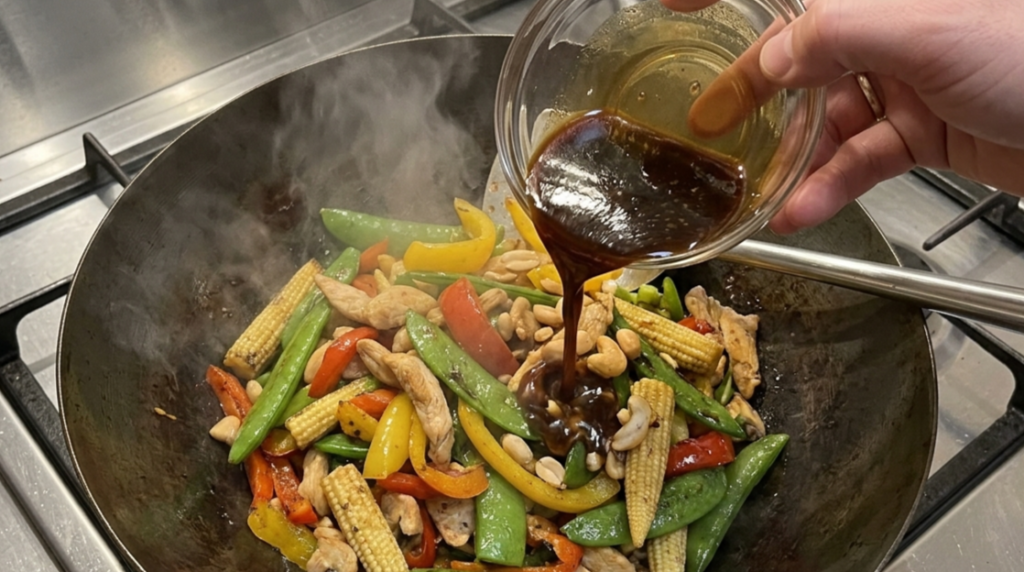
One sauce and one method carry every version of stir fry vegetables in this piece. Master it once and the vegetable choice stops mattering.
You'll need soy sauce, rice vinegar, sesame oil, minced garlic, minced ginger, a spoonful of chili crisp, and a teaspoon of cornstarch mixed with water. For the vegetables, use one pound of any frozen combination from the list below. No chili crisp on hand? A pinch of red pepper flakes works in its place. Total time to stir fry vegetables this way runs about 15 minutes, most of it spent waiting on the pan instead of chopping.
- Whisk the soy sauce, rice vinegar, sesame oil, garlic, ginger, chili crisp, and cornstarch slurry together in a small bowl and set it aside.
- Tip the frozen vegetables into a colander and pat them dry with a towel. Don't thaw them first. Just knock off the ice and surface moisture.
- Heat oil in a large skillet or wok until it shimmers, then add the vegetables in a single layer without crowding the pan.
- Let the vegetables sear undisturbed for 2 minutes, then stir and cook 3 to 4 more minutes until the edges start to brown and the water has cooked off.
- Pour in the sauce, toss for 30 seconds until it clings and thickens, and serve immediately over rice.
That's the whole method behind every plate of stir fry vegetables this piece covers. What changes is only the vegetable, and the same five rules apply no matter which combination goes in the pan.
Four Frozen Vegetable Combinations, Same Sauce
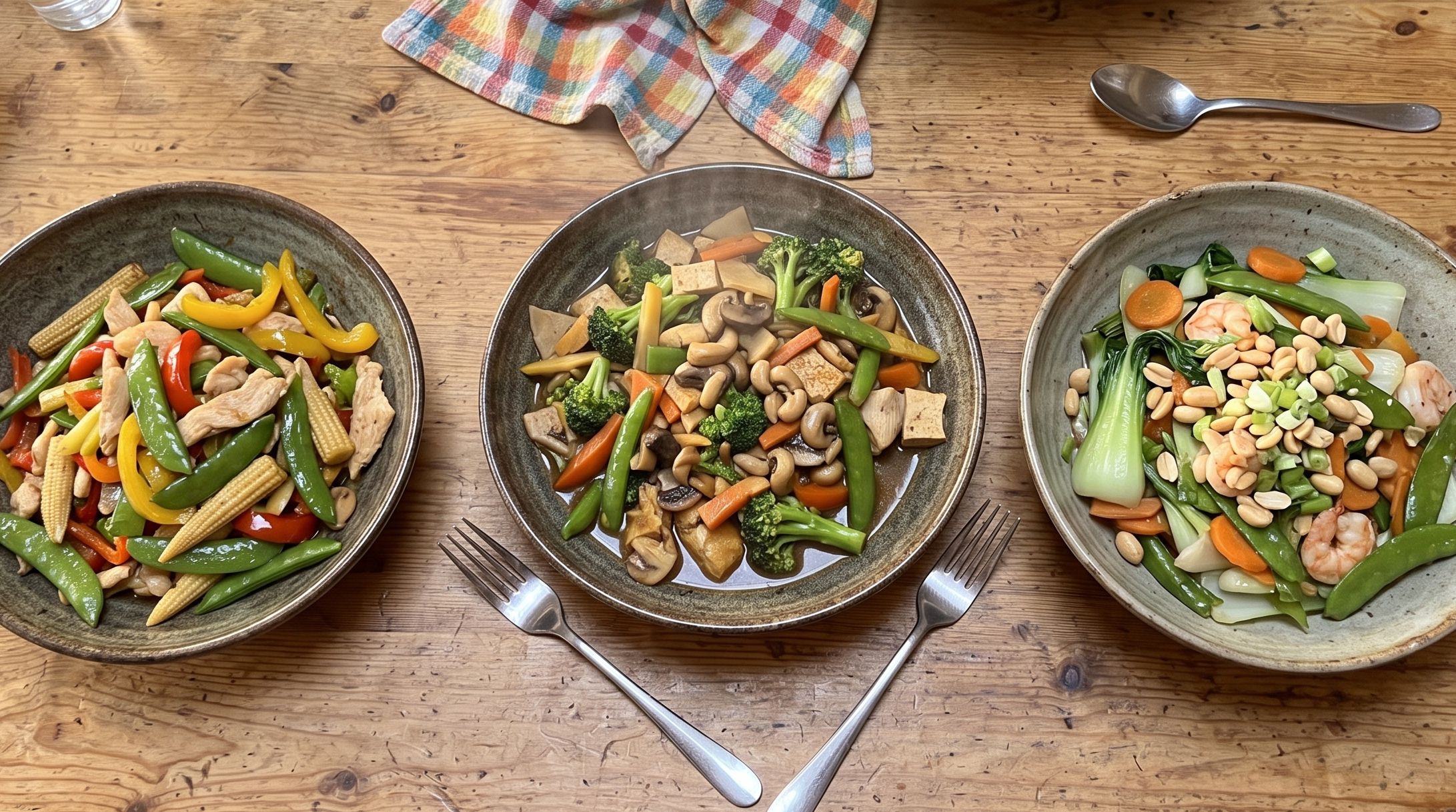
Broccoli and carrot is the version most people start with when they first stir fry vegetables this way, and it holds up well because both vegetables are dense enough to sear without falling apart. Snap pea and corn cooks a minute faster since both are thinner, so pull these vegetables off the heat as soon as the edges color.
Cauliflower and bell pepper needs an extra minute of searing time since cauliflower holds more water than most frozen vegetables, but the same five rules apply without any change to the sauce.
Edamame and green bean is the heartiest way to stir fry vegetables on this list and works well with a bowl of rice underneath, since both hold their shape through the full four minutes of searing.
Four combinations, one sauce, one method. That's the whole system behind how to stir fry vegetables well, and it scales to whatever's actually in the freezer that week.
Frozen Isn't the Compromise
There's a reason stir fry vegetables get treated like a compromise, and it isn't the vegetables.
It's a fresh-is-better assumption that doesn't hold up once you look at the actual supply chain math. A recipe that solves the water problem gets the same result whether you stir fry vegetables from a bag or from a produce bin, at a lower price and without a special trip to the store.
The freezer aisle was never the downgrade. Skipping the five rules above was.
Pick one of these four combinations tonight and try the method once before deciding whether stir fry vegetables belong in the regular rotation. Most people only need one try to see the difference, and after that, stir fry vegetables from the freezer stop feeling like a compromise at all. T
hat's really the whole point of learning to stir fry vegetables this way: one method, any combination, no more guessing.
FAQ
Q: Do stir fry vegetables need to be thawed before cooking? No. Thawing adds extra water to the pan right before cooking, which is the opposite of what you want when you stir fry vegetables. Add them frozen, dry them off first, and cook from there.
Q: Why do my stir fry vegetables always turn out soggy? The most common cause is surface moisture hitting a pan that isn't hot enough. Dry the vegetables first and make sure the oil is shimmering before anything goes in.
Q: Can I use a mix of frozen and fresh vegetables in the same stir fry? It's not recommended. They release water at different rates, so one ends up perfectly cooked while the other turns watery. Pick one or the other for a single batch of stir fry vegetables.
Q: What's the best oil for cooking stir fry vegetables? A high smoke point oil works best, since the pan needs to stay hot through the whole cook. Avocado oil, peanut oil, or refined grapeseed oil all hold up well.
Q: How long do stir fry vegetables actually take from frozen? About 15 minutes total, with most of that time spent searing rather than prepping. The sauce takes under a minute to whisk together.
Q: Is frozen produce less nutritious than fresh for stir fry vegetables? No. Frozen vegetables are typically frozen at peak ripeness, which locks in nutrients that fresh produce can lose during shipping and storage.
Q: Can I double this recipe for a bigger batch of stir fry vegetables? Yes, but cook in two batches instead of one large one. A crowded pan drops in temperature and the vegetables steam instead of sear.
Poll
Be honest: if a stir fry recipe calls for fresh vegetables and all you have is frozen, what do you actually do?
- Use the frozen anyway. Nobody at the table has ever noticed the difference.
- Skip the recipe entirely and make something else instead.
- Make the trip to the store. Fresh is fresh for a reason.
Why did you vote that way? Drop your take in the comments.