

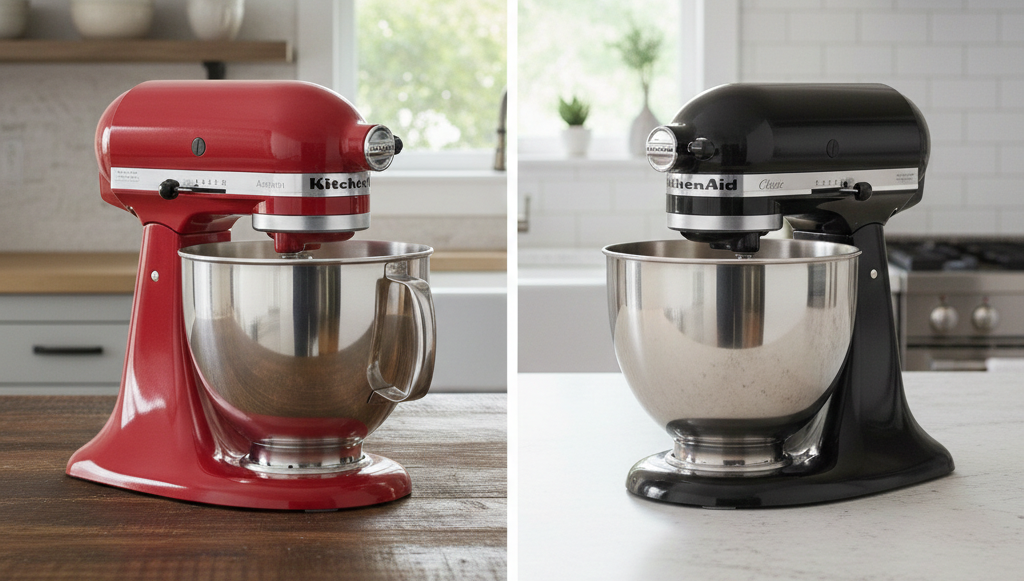
Quick Overview: KitchenAid Artisan vs Classic
- KitchenAid Classic stand mixer
- Smaller bowl capacity
- Lighter weight
- Lower cost
- Designed for casual home baking
- KitchenAid Artisan stand mixer
- Larger bowl capacity
- Heavier, more planted feel
- Higher price
- Built for frequent baking and larger batches
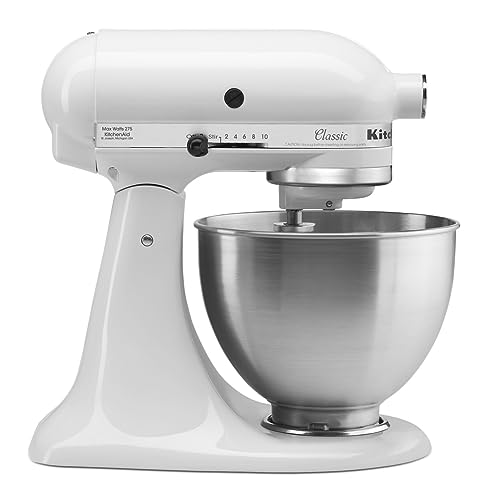
- Built to take it all on with the durable and built-to-last metal construction, and 59 touchpoints around...
- 4.5 Quart Stainless Steel Bowl to mix up to 8 dozen cookies in a single batch. Dishwasher safe. Using the...
Last update on 2026-10-13 / Affiliate links / Images from Amazon Product Advertising API
(As an Amazon Associate, we earn from qualifying purchases.)
Choosing between the KitchenAid Artisan vs Classic stand mixers creates more confusion than it should. Both models look nearly identical, both come from KitchenAid, and both are marketed as ideal for home bakers. The price gap, however, pushes many shoppers into second-guessing.
Real kitchens rarely match marketing photos. Home bakers make cookies after work, knead dough on weekends, and pull mixers in and out of cabinets. Buying the best KitchenAid stand mixer depends less on specs and more on everyday habits.
This stand mixer comparison focuses on real-world use: batch size, counter space, dough frequency, and long-term comfort, so the right choice feels confident rather than risky.
A printable Stand Mixer Decision Cheatsheet appears later for readers who want a quick, one-page shortcut.
Capacity & Bowl Size: How Much Do You Actually Bake at Once?
KitchenAid Classic Stand Mixer
The KitchenAid Classic stand mixer handles:
- Single batches of cookies
- Brownies and quick breads
- Frosting for cakes and cupcakes
Smaller bowls reduce overmixing risk and simplify cleanup. Many first-time buyers find the Classic easier to manage during everyday baking.
Limitations appear when:
- Recipes are doubled
- Holiday baking ramps up
- Bread baking becomes frequent
KitchenAid Artisan Stand Mixer
The KitchenAid Artisan stand mixer supports:
- Double cookie batches
- Large cake batters
- Multiple loaves of bread dough
Larger capacity helps frequent bakers, though small batches sometimes require more scraping.
Bowl size only adds value when larger batches happen regularly.
Motor Power & Torque: What “Stronger” Means in Real Kitchens
Understanding Motor Specs Without Marketing Noise
Wattage numbers dominate product listings, yet torque under load matters more. Real dough stresses motors differently than frosting or whipped cream.
Real Dough Performance
Home-baking tests showed:
- Cookie dough mixed smoothly on both models
- Occasional pizza dough worked on both
- Weekly bread dough felt calmer on the Artisan
Bread frequency, not raw power, creates the real difference in the KitchenAid Artisan vs Classic decision.
Noise Level & Vibration: The Overlooked Daily Factor
Noise affects enjoyment more than many buyers expect.
- The Classic vibrates more with heavier doughs
- The Artisan stays steadier on the counter
Apartment kitchens and open layouts amplify this difference.
Attachments & Versatility: What Gets Used Long-Term
Both mixers:
- Share the same attachment hub
- Accept pasta rollers, grinders, and food prep tools
Heavier attachments perform more smoothly on the Artisan. Light attachments behave the same on both models.
Most home bakers regularly use only a few attachments, making imagined versatility less important than real habits.
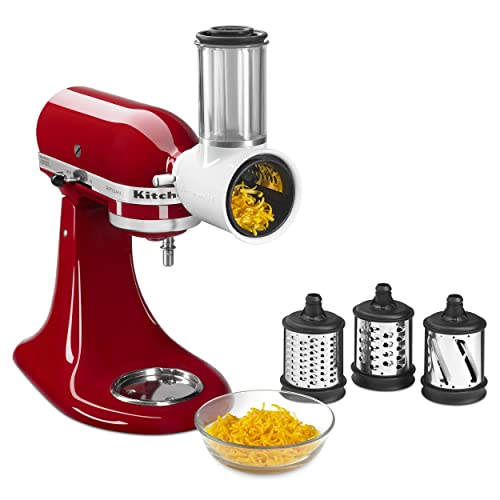
- Genuine KitchenAid Stand Mixer Attachment - Designed and engineered by the manufacturers of the...
- Compatible with any KitchenAid Stand Mixer. Transform your stand mixer into a versatile kitchen appliance...
Last update on 2026-10-13 / Affiliate links / Images from Amazon Product Advertising API

Counter Space, Weight & Storage: Living With the Mixer
Footprint & Clearance
Tilt-head design requires vertical clearance. Cabinets above counters influence usability more than width.
Weight & Handling
- The Classic moves easily for cabinet storage
- The Artisan suits permanent counter placement
Weight becomes friction when lifting happens often.
Cleaning & Maintenance: Ownership Over Time
Daily care remains similar:
- Bowls wash easily
- Beaters swap quickly
- Exterior wipe-downs stay simple
Long-term durability stays strong for both models when used within reasonable limits.
Our Real-World Test Framework
Test Recipes
- Chocolate chip cookies
- Single-loaf bread dough
- Whipped cream
What Was Measured
- Mixing consistency
- Motor strain sounds
- Adjustments during mixing
- Cleanup effort
Every test reflected normal home baking rather than lab conditions.
Artisan vs Classic Differences That Matter Most
Key differences:
- Bowl capacity relative to batch size
- Weight relative to storage habits
- Bread dough frequency
Minor differences:
- Marketing claims
- Color options
- Small spec variations
Comfort and confidence matter more than numbers.
How to Choose the Right Mixer for Your Baking Style
Choose the KitchenAid Classic Stand Mixer If:
- Baking happens occasionally or weekly
- Recipes stay small to medium
- Storage space remains limited
- Value and simplicity rank high
Choose the KitchenAid Artisan Stand Mixer If:
- Baking happens frequently
- Recipes are doubled often
- Bread dough appears regularly
- Counter space allows permanent placement
Both remain strong candidates for the best KitchenAid stand mixer when matched correctly.
Quick Decision Summary for Home Bakers
- KitchenAid Classic suits small batches and lighter use
- KitchenAid Artisan supports frequent baking and larger quantities
- Cookies and cakes perform equally well on both
- Bread frequency drives the upgrade decision
- Storage habits influence long-term satisfaction
- Attachments work on both mixers
- Matching habits prevents regret in the KitchenAid Artisan vs Classic choice
Still Unsure? Use the 60-Second Stand Mixer Checklist
Consider:
- Monthly baking frequency
- Largest typical batch
- Counter vs cabinet storage
- Bread dough frequency
The Printable Stand Mixer Decision Cheatsheet turns these questions into a one-page guide that removes second-guessing.

- Built to take it all on with the durable and built-to-last metal construction, and 59 touchpoints around...
- 5 Quart Stainless Steel Bowl with comfortable handle for small or large batches, to mix up 9 dozen...
Last update on 2026-10-13 / Affiliate links / Images from Amazon Product Advertising API
Final Verdict: Choose the Mixer That Fits Your Kitchen Life
The KitchenAid Artisan vs Classic comparison works best when viewed through daily habits. Casual bakers often feel happiest with the Classic. Frequent bakers appreciate the Artisan’s added capacity and calm under load.
Satisfaction comes from fit, not from buying the most expensive option.
Frequently Asked Questions: KitchenAid Artisan vs Classic
Which KitchenAid stand mixer works best for home bakers?
Both models work well. The Classic fits casual baking, while the Artisan suits frequent and larger-batch baking.
Can the KitchenAid Classic handle bread dough?
Occasional bread dough works well. Regular or dense dough feels smoother on the Artisan.
Is the KitchenAid Artisan stand mixer worth the extra cost?
Extra cost makes sense for bakers who double recipes often or bake bread regularly.
Do both mixers use the same attachments?
All standard KitchenAid hub attachments fit both mixers.
Which mixer fits small kitchens better?
The Classic feels easier to move and store due to lighter weight.
How long do KitchenAid stand mixers last?
With proper care, both models often last decades.
Which KitchenAid mixer offers better long-term value?
Value depends on usage frequency. Light bakers gain value from the Classic, while frequent bakers gain value from the Artisan.