


Welcome back to our comprehensive guide on How To Be A Master Chef for beginners and food enthusiasts! In today’s posts, we’ll go over everything you need to know to saute like a master chef & how to make super sauces through de-glazing! If you’ve ever wanted to be a master chef, the time is now, so let’s get started!
Learn Poaching, Steaming & Boiling Techniques for Beginners.
Start To Saute
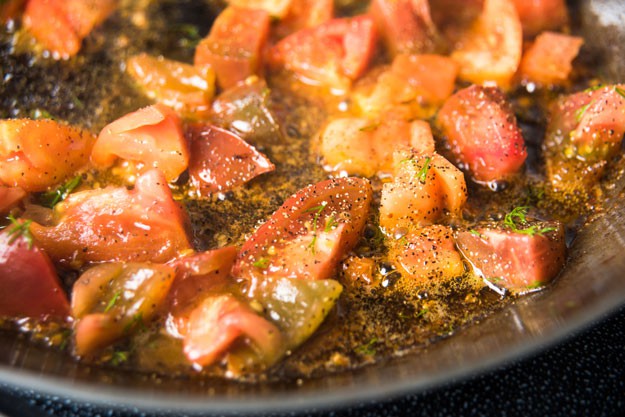
Sauteing is not solely a French style of cooking; there are many other areas throughout the world that have been known to cook fillets of fish, sear steaks, quick-cook shellfish, and glaze vegetables. This technique is one that needs to be known because it is the easiest and quickest way to cook a meal. You will more than likely use this technique the most.
Face Your Fats: Butter & Oil
Sauteing requires you to use some sort of fat, whether you are using butter or some type of oil; it is necessary to use one or the other. There are different types of sauteing that require you to use either butter or oil and here is how to tell:
If you are sauteing on medium-high heat, you'll probably want to use butter. Butter will add some flavor, but the real issue with this could be that the butter can burn if you are not careful. This can have a negative effect on the taste and color of your food so watch the heat!
Using high heat during sauteing means you will want to use oil. The problem with using butter is that butter is much more likely to burn than oil. When butter burns, it can have a negative effect on your whole dish, thus ruining it. Oil is definitely the better choice in the scenario.
Meats are usually sauteed in oil due to the fact they need a higher heat to cook. While butter adds more flavor, it is more commonly used when sauteing foods that do not need such a high temperature to cook, like vegetables. Seafood is sauteed in either butter or oil because the heat does not really matter as much. Some chefs have been known to cook with half oil and half butter when sauteing seafood, giving their meal the added flavor from the butter and allowing the oil to keep the butter from burning.
Super Sauces Made Through Deglazing
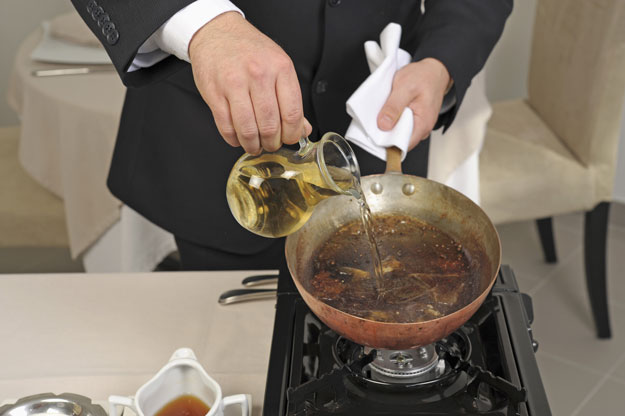
You may have had some sort of delicious sauce while at a restaurant but could not put your finger on what it was. It might have been made through deglazing! The juices left over combined with the food that is stuck to the pan after sauteing make for excellent sauces! Browned bits found in the pan are called fond and have a ton of flavor. Once they are deglazed, the sauce that comes from it is phenomenal! Following your sauteing of some sort of meat, chicken, or fish, pour some water into the pan (make sure to remember that the sauce will reduce to about half of the amount of water you put in your pan so measure accordingly). Put the heat on high while scraping the brown particles found on the pan. Once the sauce reduces to half, serve it!
Sauteing Steak, Chicken, Fish, & Veggies
Steak
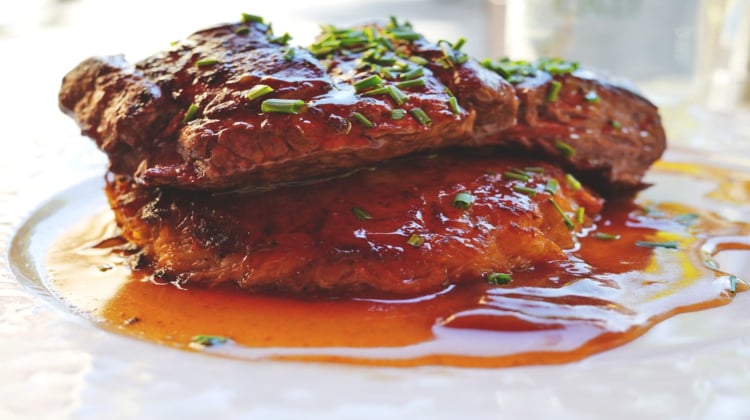
Thin cuts are definitely the way to go when sauteing steak. This will let the meat cook through on high heat. Thicker cuts probably won't cook all the way, making the meat rarer than some people might like it. Use your own judgment according to your tastes! When trying to sear your meat, just let the steak cook on the hot pan without moving it around. Then flip it. Don't crowd your meat because this can cause the meat to steam rather than saute, making the meat gray in color.
Chicken
Sauteing chicken allows it to remain juicy with an outer skin that is full of flavor! Adding herbs and spices is definitely recommended. Consider leaving the skin on for the extra flavor as well. The remaining oil or butter also makes a great sauce! Add some juice, chicken broth, or wine after cooking it and make a sauce drizzle over your bird!
Vegetables
Blanching or steaming vegetables first is usually how they are cooked prior to sauteing. This ensures the veggies will be nice and soft. Following the blanching or steaming process, they are sauteed in butter and possibly even some fresh herbs. You'll probably be washing vegetables prior to sauteing them so make sure to dry them off completely to avoid splattering from the pan!
Don't miss the series; catch the rest of our guides below:
Chapter 1: Be A Master Chef in 10 Days
Chapter 2: Kitchen Storage Ideas
Chapter 2.1: Main Kitchen Appliances
Chapter 2.2: Creating a Safe and User-Friendly Kitchen
Chapter 2.3: Essential Pots, Pans and Cookware
Chapter 3: How To Organize and Stock Your Kitchen Pantry
Chapter 4: How To Buy and Use Your Kitchen Knives
Chapter 4.1: Knife Cuts – Chopping, Dicing and More
Chapter 5: How To Steam, Boil, Poach and More
Chapter 6: How To Saute and Make Homemade Sauces
Chapter 7: How To Braise Meat and How To Make Stew
Chapter 8: How To Roast Meat, Veggies and Poultry
Chapter 9: How To Grill Steak, Chicken and Veggies
Chapter 10: How To Bake Goods and Desserts From Scratch
Chapter 10.1: How to Make Pie Crust, How To Bake Cakes and More!
Chapter 11: Cooking for Beginners – Breakfast
Chapter 11.1: Breakfast Bread – How To Make French Toast, Pancakes & Waffles
Chapter 13: How To Cook Perfect Pasta and Hearty Grains
Chapter 14: How To Make Sauces From Scratch
Chapter 15: Easy To Make Homemade Desserts For Beginners
Chapter 16: How To Make Single-Pot Recipes From Scratch
Chapter 17: Thinking Like A Chef – Cooking Tips for Beginners
Don’t forget to catch the next part of our guide to How To Be A Master Chef In 10 Days! We love hearing your feedback and comments, so let us know if you have any other tips for beginner cooks or your thoughts on this series. HomemadeRecipes.com was founded to create an online community where foodies, epicureans and chefs can share recipes and learn new ones! We need your help, however, in creating this community where you can come, share and learn. If you love to cook, love food or have some great recipes and ideas you’d like to share with us, shoot us an email and make sure to stay in touch on Facebook, Twitter, and Pinterest! We’re always looking for contributors and want to hear from you.
Sign up for our daily newsletter here!
Do you have Instagram? Don’t forget to follow @HomemadeRecipesOfficial.
Click here to Like Us on Facebook.
Click here to Follow Homemade Recipes on Pinterest