

Quick Answer: Creamy One Pot Pasta
- Creamy one pot pasta gets its silky sauce from pasta starch, not cream
- Cook 8 ounces of short pasta in 2.5 cups of broth inside a wide pan
- Stir through fresh-grated parmesan off the heat at the end
- The starch released during cooking thickens the liquid into a sauce that coats every bite
- One pan, 20 minutes, no cream
Jump to the recipe card or read the full one pot pasta recipe below.

Somewhere around 5:47 PM, the question stops being what should I cook and starts being what can I actually pull off right now. The fridge looks the same as it did yesterday. The sink is already half full. Grocery prices are up a cumulative 29% since 2020, the average household is spending $170 a week where $120 used to cover it, and 62% of consumers told the Food Industry Association this January they feel very or extremely concerned about rising prices. That is the room this recipe walks into.
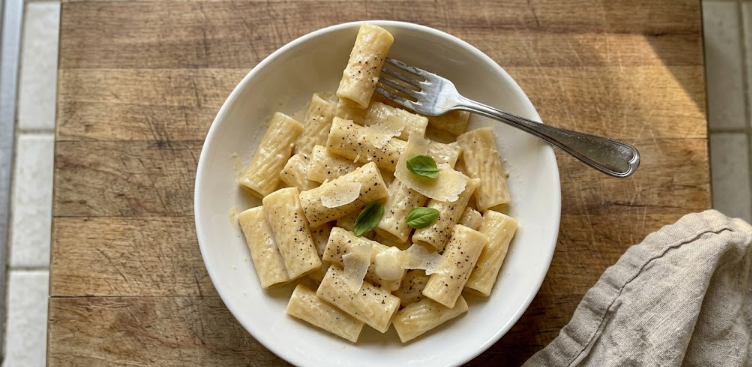
Creamy one pot pasta is the weeknight dinner that answers back. Twenty minutes. One pan. A pound of pasta, a carton of broth, a wedge of real parmesan, and a few cloves of garlic produce a sauce that tastes like you cooked it in stages. No cream, no cornstarch, no roux. Just starch doing what starch does when you let it.
This creamy one pot pasta is not a novelty recipe. It’s a rotation anchor, the kind of 20 minute weeknight pasta that belongs in your regular cycle, not your special occasion file.
Below is the full one pot pasta recipe: the technique, the ratios, the failure modes, and the exact steps to make creamy pasta without cream work the first time and every time after.
What Makes This Creamy One Pot Pasta Actually Work
The short version: pasta starch thickens the cooking liquid into a sauce.
The longer version is worth two minutes. When dry pasta hits hot liquid, the outer layer of the noodle releases amylose and amylopectin, two starches that dissolve into the water and behave like a very mild thickener. In a traditional recipe, you drain that liquid away. In a one pot pasta recipe, you cook with so little liquid that the starch stays in the pan, hydrates, and turns the broth into a loose, glossy sauce. Add fat (olive oil, butter) and a grated hard cheese at the finish, and that starchy liquid emulsifies into something that coats pasta the way a cream sauce would.
This is why you can make creamy pasta without cream. The cream is not doing the work in a traditional recipe either. The pasta water is. You have just been throwing the pasta water down the drain for your whole cooking life.
Two mechanics matter more than any ingredient choice in a creamy one pot pasta. Liquid ratio and pan shape. Get those right and this one pot pasta recipe is almost impossible to break.
The Ingredient List That Holds Up to a Bad Pantry Day
Six ingredients do the work in this creamy one pot pasta. Swap notes are built into the list, not hidden in a footnote.
- Short pasta, 8 ounces. Rigatoni, penne, shells, fusilli, or cavatappi. Long pasta works but needs a wider pan and a longer hand on the stirring spoon.
- Chicken or vegetable broth, 2.5 cups. Or 2.5 cups of well-salted water. Broth carries more depth. Salted water works and is free.
- Parmesan or pecorino, 1 cup fresh-grated. Grated from a block. Not from the green can. Not pre-shredded.
- Garlic, 4 cloves, thinly sliced. Fresh cloves. Jarred garlic loses its edge in this dish.
- Olive oil, 3 tablespoons. Extra virgin if you have it.
- Unsalted butter, 2 tablespoons. Optional but worth it. Finishes the sauce with body.
Three ingredient calls are non-negotiable. Fresh-grated hard cheese is one. Pre-shredded parmesan is coated with anti-caking starch that prevents it from melting smoothly, which is exactly the opposite of what you need here. Real garlic cloves are two. Decent broth or genuinely well-salted water is three. Fail any of the three and the creamy one pot pasta underperforms no matter how clean your ratios are.
Everything else is negotiable. Salt to taste. Black pepper. Chili flakes. A handful of spinach at the end, a lemon zest at the finish, a spoon of tomato paste at the start. You own the variations. The base of this 20 minute weeknight pasta holds.
“It's perfect for nights when standing over the sink to do dishes feels like the last thing you want.” — consumer weeknight meals roundup, syndicated April 2026
How to Make Creamy One Pot Pasta Step-by-Step (20 Minutes, One Pan)
A 10-inch or wider pan with a heavy base is the right tool for this one pot pasta recipe. A Dutch oven works. A deep sauté pan works. A narrow saucepan does not. The pasta needs surface area to move in its liquid, not stack on itself.
Step 1 — Warm the oil and toast the garlic. Heat 3 tablespoons olive oil in a 10-inch pan over medium heat. Add 4 sliced garlic cloves. Cook 60 to 90 seconds, until the edges just start to turn pale gold. Stop before the garlic browns. Browned garlic goes bitter and the whole pot tastes like it.
Step 2 — Add the liquid. Pour in 2.5 cups of broth (or salted water). Add 1 teaspoon salt if using plain water, half a teaspoon if using broth. Bring to a steady simmer, not a rolling boil.
Step 3 — Add the pasta. Drop in 8 ounces of short pasta. Stir once to submerge. The pasta will look like it is swimming in too much liquid. It is not. That liquid is your sauce in waiting.
Step 4 — Simmer uncovered, stirring regularly. Cook 10 to 12 minutes at a steady simmer, stirring every 90 seconds with a silicone spatula along the bottom of the pan. The liquid will reduce as the pasta absorbs it and releases starch. If you have never cooked pasta in its own sauce before, minute five will look wrong. Too soupy, nothing thickening. That is correct. The sauce comes together in the last three minutes.
Step 5 — Check for doneness. Start testing a noodle at minute 9. You want al dente, tender with a whisper of bite at the center. The sauce should coat the back of a spoon and hold a line drawn with a finger for two seconds. If the sauce is too thin, uncover and simmer two more minutes. If the sauce is too tight, add a quarter cup of hot broth and stir.
Step 6 — Pull the pan off the heat. Critical move. Cheese added to a hot pan clumps and turns grainy. Off the heat, stir in 1 cup of fresh-grated parmesan a handful at a time, tossing between additions. Add 2 tablespoons butter if using. Keep tossing until the cheese has melted into the sauce and the pasta looks glossy.
Step 7 — Taste, adjust, serve immediately. Salt and black pepper to taste. A small squeeze of lemon if the dish tastes heavy. Serve in bowls within 2 minutes of finishing. The sauce tightens as it sits, and this dish is at its best the moment it leaves the pan.
Why One Pot Pasta Gets Gluey (And How to Prevent It)
The five o'clock cook already knows a creamy one pot pasta can go wrong, because a version of it already has. Better to hand over the diagnostic than pretend it is foolproof. Three failure modes cause almost every gluey one pot pasta.
All three are fixable in the pan.
Failure 1: Too little liquid. If you used less than 2.5 cups per 8 ounces of short pasta, the starch has nowhere to hydrate. It binds into paste on the pasta surface. The fix: add a quarter cup of hot broth at a time and stir until the sauce loosens. Never cold liquid. Cold broth shocks the starch and splits the sauce.
Failure 2: Not enough stirring, especially in the first four minutes. Dry pasta settles and clumps on the pan bottom in the first two minutes before it starts to release starch. Once it clumps, it fuses into a starchy brick. The fix: every 90 seconds for the first six minutes, drag a silicone spatula along the bottom of the pan.
Failure 3: Pan too narrow. An 8-inch saucepan stacks the pasta in three or four layers. The pasta on the bottom overcooks and turns gluey before the pasta on top is hydrated. The fix: use a pan with a 10-inch or wider base. A Dutch oven, a wide sauté pan, a deep skillet. Anything that gives the pasta room to move.
“Within minutes, my pasta was sticking to the bottom of the pan.” — home cook one-pot testing write-up, WonderHowTo
The Water Ratio That Makes or Breaks the Sauce
2.5 cups liquid to 8 ounces of short pasta is the working baseline for every creamy one pot pasta you will ever make. Memorize this ratio and every variation of this one pot pasta recipe stays stable.
Adjustments by pasta type:
- Short pasta (rigatoni, penne, shells, fusilli): 2.5 cups liquid per 8 ounces. The baseline.
- Long pasta (spaghetti, linguine, fettuccine): 3 cups liquid per 8 ounces. Long shapes drink more and need a wider pan. Break the pasta in half if it doesn't lay flat.
- Whole wheat pasta: 3 cups liquid per 8 ounces. Whole wheat absorbs more and takes 2 to 3 minutes longer to cook.
- Gluten-free pasta: 2 cups liquid per 8 ounces. GF pasta releases more starch faster and gets gluey on standard ratios. Start checking at minute 7.
If-then diagnostic:
- If the sauce is thin at minute 12, uncover and simmer two more minutes. The liquid reduces, the sauce tightens.
- If the sauce is tight at minute 10 and the pasta is not done, add a quarter cup of hot broth and keep going.
- If the pasta is done but the sauce is still thin, pull the pan off the heat, let it sit two minutes, and stir. The sauce thickens as it rests.
This is the shape of technique-first cooking. You are not following a recipe. You are running a diagnostic.
How to Meal Prep This So It Reheats Perfectly
Honest framing first: creamy one pot pasta is a fresh-off-the-stove dish. It is best within 10 minutes of cooking. Whether to call it a meal prep recipe at all is a borderline case. Starch-thickened sauces tighten in the fridge and can split on reheat if you are careless. The answer is yes, with a protocol.
The reheat protocol, which works if you follow it:
- Fridge: 3 days in an airtight container. Not longer. The sauce keeps breaking down after day 3.
- Freezer: Not recommended. The starch sauce separates on thaw and never fully recovers.
- Reheat: Stovetop only. Low heat. Add a splash of hot broth or hot water, 2 tablespoons per serving, and stir continuously until the sauce loosens and coats the pasta again. The microwave without added liquid will give you dry, clumped pasta with a broken sauce.
What this 20 minute weeknight pasta is good at is doubling. Cook a double batch. Eat half tonight. Convert the other half into something new Wednesday: a baked pasta with breadcrumbs and more cheese on top at 400°F for 15 minutes, or loosened with extra broth and a can of white beans into a brothy pasta soup. That is secondary meal architecture. The roast chicken feeds Tuesday. The creamy one pot pasta feeds Monday and Wednesday.
Want a week of these already mapped? Our 7-Day One-Pot Dinner Plan takes the same pan, the same ratio logic, and seven different flavor profiles.
Creamy One Pot Pasta Variations (The Rotation Version)
One creamy one pot pasta base, three directions. Each variation takes the core one pot pasta recipe and adds two ingredients at specific points in the cook. Pick one per week. None require a grocery run if the pantry is stocked.
- Spinach and lemon. At step 6, along with the cheese, fold in 3 cups fresh baby spinach and the zest of one lemon. Finish with a squeeze of the lemon juice. Bright, green, works for picky eaters who tolerate spinach when it hides inside sauce.
- Canned tuna and chili flakes. At step 1, add half a teaspoon of red chili flakes with the garlic. At step 6, along with the cheese, flake in one 5-ounce can of drained tuna in oil. Treat the tuna oil as a flavor asset. Pour half of it into the pan with the tuna. Cheap, pantry-stable, high-protein, reads as a different dish entirely.
- Frozen peas and bacon. At step 1, cook 3 slices of bacon in the pan before the garlic. Pull the bacon, drain half the fat, then add the olive oil and garlic. At step 5, when the pasta has 3 minutes left, add 1 cup of frozen peas directly into the simmering sauce. Crumble the bacon back in at step 7.
The Pan Makes the Difference
This section contains affiliate links. HomemadeRecipes.com may earn a small commission on purchases made through these links at no extra cost to you.
Two pans handle this creamy one pot pasta reliably. Either one earns the slot. Neither is required.
A Lodge enameled Dutch oven (typically $60 to $90) is the budget answer. The heavy cast iron base distributes heat evenly so the pasta does not scorch on the bottom before the starch releases. The straight sides give the liquid room to reduce. It is also the single most useful pan in a weeknight kitchen for everything adjacent. Braises, soups, one-pot rice.
A wide everyday pan with a 10-inch base (the Our Place Always Pan sits around $145) is the upgrade answer. Non-stick means the sauce almost never sticks to the bottom even if stirring slips. The lid doubles as a strainer when you are cooking something else.
If you have a 10-inch stainless or cast-iron skillet with a 2-inch or deeper side, skip both. You already own the right pan.
Recipe Card
Creamy One Pot Pasta Without Cream (20 Minute Weeknight Pasta)
Yield: 4 servings | Active time: 10 minutes | Total time: 20 minutes | Cost: approximately $2.25 per serving
Ingredients
- 8 oz short pasta (rigatoni, penne, shells, or fusilli)
- 2.5 cups chicken or vegetable broth (or well-salted water)
- 1 cup fresh-grated parmesan or pecorino
- 4 garlic cloves, thinly sliced
- 3 tbsp extra virgin olive oil
- 2 tbsp unsalted butter (optional)
- Salt and black pepper to taste
- Optional: lemon wedge, chili flakes, fresh parsley
Method
- Heat olive oil in a 10-inch or wider pan over medium heat. Add sliced garlic and cook 60 to 90 seconds until just pale gold.
- Pour in broth. Bring to a steady simmer.
- Add pasta. Stir once.
- Simmer uncovered 10 to 12 minutes, stirring every 90 seconds along the bottom of the pan.
- Test at minute 9 for al dente. Sauce should coat the back of a spoon.
- Pull pan off heat. Stir in parmesan a handful at a time. Add butter if using. Toss until glossy.
- Taste, adjust salt and pepper, serve immediately.
Nutrition (per serving, estimate): 420 cal | 18g fat | 48g carbs | 17g protein | 680mg sodium
Frequently Asked Questions
Q: How do you make creamy pasta without cream?
Starch released from pasta during cooking thickens the liquid into a sauce. Cook 8 ounces of short pasta in 2.5 cups of broth in a wide pan, then finish off the heat with fresh-grated hard cheese. The starch and cheese emulsify with the olive oil into a silky coating. No cream needed.
Q: What pasta works best for one pot cooking?
Short sturdy shapes work best. Rigatoni, penne, shells, fusilli, and cavatappi all hold their structure during the extended simmer. Long pasta like spaghetti works but needs a wider pan and about 20% more liquid to cook evenly without clumping.
Q: Why does my one pot pasta come out gluey?
Three causes. Too little liquid (under 2.5 cups per 8 ounces), not enough stirring in the first four minutes, or a pan too narrow for the pasta to move freely. Fix the ratio, stir every 90 seconds along the bottom, and use a pan with at least a 10-inch base.
Q: Can I make creamy one pot pasta ahead for meal prep?
It's a 3-day fridge dish at best. Starch-thickened sauces tighten and can split on reheat, so warm leftovers on the stovetop over low heat with a splash of hot broth, stirring until the sauce loosens again. Skip the microwave unless you add liquid first. Freezing is not recommended.
Q: What protein can I add to one pot pasta?
Canned tuna, rotisserie chicken, browned Italian sausage, crumbled bacon, cooked shrimp, or a can of white beans all work. Add pre-cooked proteins at step 6 with the cheese so they warm through without overcooking. Sausage and bacon should be browned in the pan first, then removed until the final step.
Q: Is creamy one pot pasta actually cheaper than stovetop pasta with jarred sauce?
Usually yes, at about $2 to $2.50 per serving versus roughly $2.75 to $3.50 for pasta with a decent jarred sauce. The savings come from skipping the jarred sauce entirely. Broth and parmesan carry the flavor, and both have longer shelf lives than an opened jar.
Q: Can I make this dairy-free?
Yes, with one adjustment. Skip the parmesan and butter in this creamy one pot pasta, and finish with 3 tablespoons of nutritional yeast plus 2 extra tablespoons of olive oil off the heat. The texture is slightly less rich but still sauced and silky. A quarter cup of blended soaked cashews stirred in at the end adds body if you want creamy pasta without cream closer to the original mouthfeel.
Quick Poll
What does it actually mean to “cook dinner”?
- A) Making it from scratch, every ingredient, every step, otherwise it doesn't count
- B) Assembling real ingredients into a meal, even if some of them are shortcuts
- C) Getting food on the table by 7 PM, the method is irrelevant
Why did you vote that way? Drop your take in the comments.