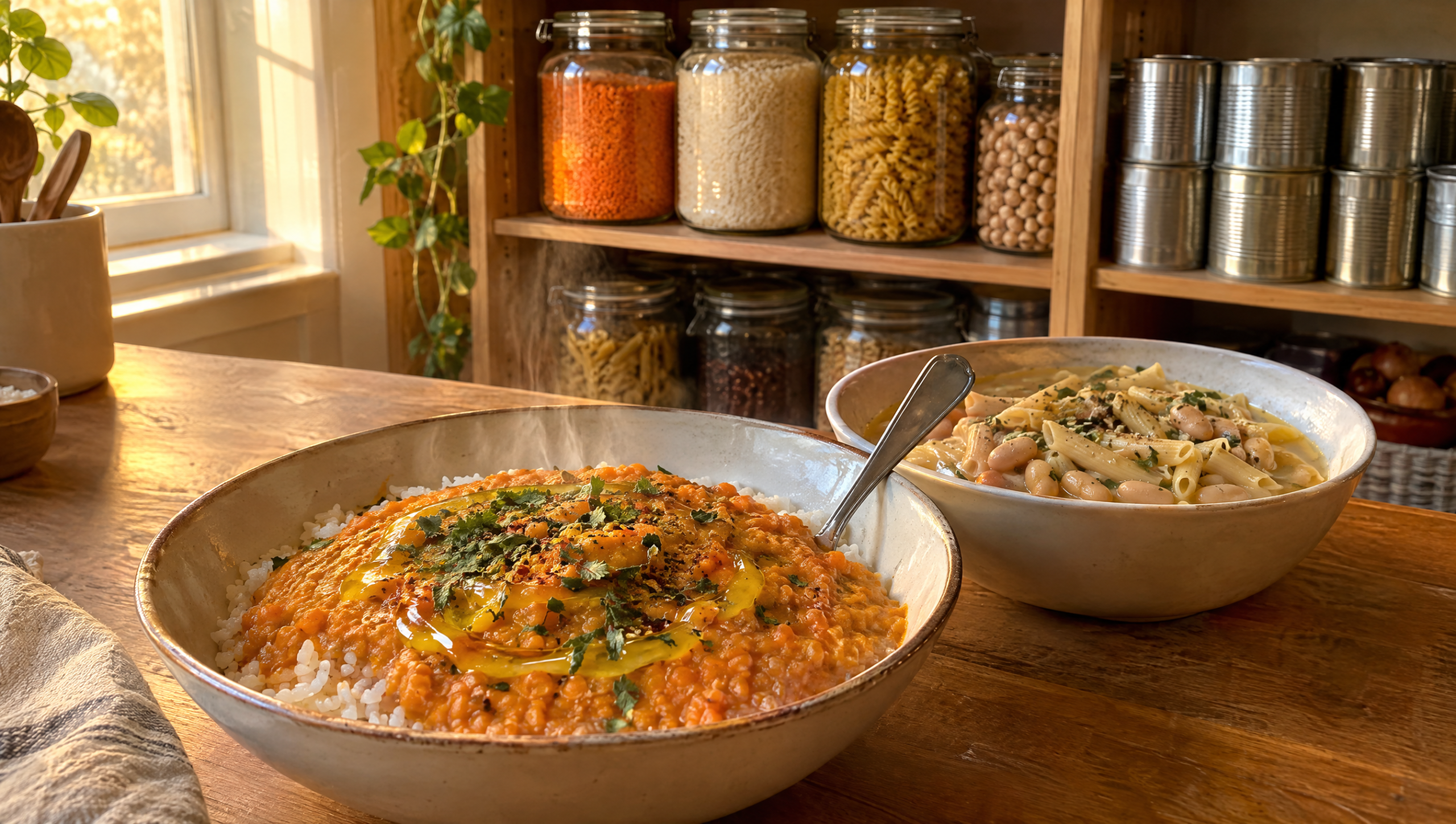


Twenty shelf-stable staples, 50 pantry meals you can make from them, and a 7-night plan with full recipes, so dinner happens even when the fridge is bare.
What's in this list
- The staples: 20 items in three tiers, base, protein, and flavor
- The map: 50 pantry meals built only from those 20 items
- The plan: 7 dinners with exact amounts, and two of them are leftovers made over
- Fresh food needed: none, though eggs and frozen vegetables help
- Free printable: a one-page checklist to tape inside the cabinet
Pantry meals work when the shelf is stocked for dinner, not for emergencies. Twenty staples, mapped ahead of time, cover 50 different dinners, and many kitchens already hold half of them.
That matters more every month at the register. USDA's latest Food Price Outlook forecasts grocery prices up 2.4% in 2026, with beef and veal up 9.4%. The beans, lentils, and canned fish in this list are how pantry meals keep protein on the plate without that beef bill.
Why pantry meals fall flat, and the 30-second fix
Stocking the shelf is the easy part. Most pantry meals fail at the stove for one of two reasons: the cook has the right cans but no plan for them, or the finished pot tastes flat and everyone quietly decides pantry meals aren't worth it.
The map further down fixes the first problem. The second one takes 30 seconds at the end of cooking, and it's the habit that makes cheap pantry meals taste like real dinners.
The 30-second finish for any pantry dinner
- Salt. Lentils and rice soak up the salt in canned goods and broth. Taste, then add salt a pinch at a time.
- Acid. A spoonful of vinegar or a squeeze of lemon wakes up a heavy pot of beans or lentils. If a dish tastes like it's missing something, this is usually it.
- Fat at the end. The oil you cook with mostly disappears. A drizzle of olive oil over each bowl right before serving is the part you actually taste.
The 20 staples behind 50 pantry meals
Every item below earns its shelf space by showing up in at least two of the 50 pantry meals. Count how many you already own before you shop, and buy only the gaps.
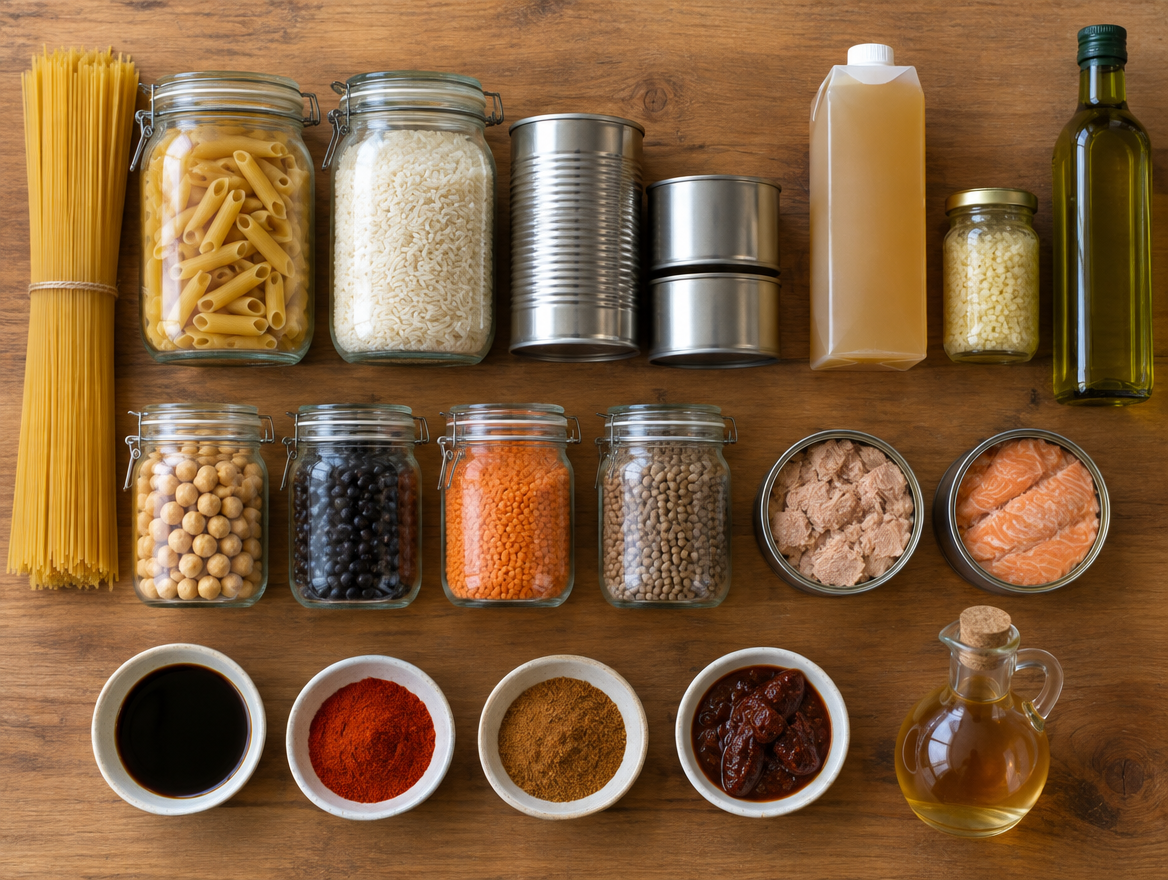
Base tier: 8 items that make the meal
- Dried pasta, two shapes. One long (spaghetti) and one short (penne or rigatoni). Short shapes hold chunky bean sauces, and long ones suit oil and tomato sauces. Pasta shows up in 12 of the pantry meals below.
- Long-grain white rice. It cooks in about 18 minutes and soaks up whatever it's cooked in. Cook it in broth or coconut milk and it tastes like a different dish, which is how rice carries so many pantry meals.
- Canned whole tomatoes. Crush them yourself with a spoon for sauces with real texture. Whole tomatoes are the backbone of the pasta pantry meals.
- Canned diced tomatoes. They break down fast in soups and rice dishes.
- Low-sodium broth, chicken or vegetable. Low-sodium lets you salt to taste, since regular broth can make a soup too salty before you add anything else.
- All-purpose flour. It thickens soups and chowders and turns canned fish into patties.
- Olive oil. For cooking and for the finishing drizzle.
- Garlic, jarred or fresh. Jarred garlic means it actually goes into dinner on a busy night. Garlic powder is the backup.
Protein tier: 7 items that make it filling
This tier is what turns pantry meals from side dishes into dinner. Red lentils cook in about 20 minutes with no soaking, and canned beans and fish are ready the moment the can opens.
- Canned chickpeas. Pasta, curry, soup, or roasted until crisp.
- Canned black beans. They hold their shape in bowls and tacos, so they anchor the smoky pantry meals on this list.
- Dried red lentils. They melt into thick soups and dal. One cup of dry lentils feeds about four, which makes them the cheapest protein in these pantry meals.
- Canned white beans (cannellini). Mash a few into the pot and they thicken soups and sauces with no cream.
- Canned tuna. No cooking needed. Packed in oil tastes richer, packed in water is more flexible.
- Dried green or brown lentils. They keep their shape, so they work in salads and a meaty pasta sauce. They cook in about 25 to 30 minutes.
- Canned salmon. It works anywhere tuna does and makes great patties, so it doubles the number of fish pantry meals you can make.
Nine of these 20 staples come in a can, so the tool that touches the most pantry meals is the one that opens them. A plain steel crank opener with a big turning knob is easy on the hands and small enough to toss in with your next Amazon order.
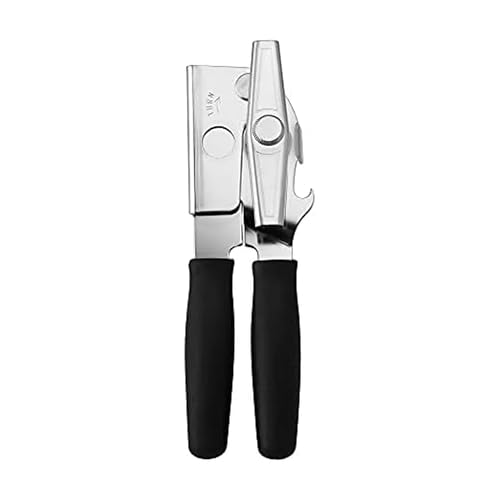
- DURABLE AND STRONG: all-steel construction withstands frequent use
- ERGONOMIC HANDLES: feature soft-cushion grips that fit any-sized hand and ensure comfortable handling
Last update on 2026-10-15 / Affiliate links / Images from Amazon Product Advertising API
(As an Amazon Associate, we earn from qualifying purchases.)
Flavor tier: 5 items that stop the repeats
Five small items change the same beans and rice enough that a week of pantry meals never tastes like the same dinner twice.
- Soy sauce or tamari. Salt and savory depth in one pour. Tamari is the gluten-free choice.
- Canned coconut milk, full fat. It turns lentils into dal and rice into something creamy. The carton kind is too thin for these recipes.
- Chipotle peppers in adobo. One pepper plus a spoonful of sauce adds smoky heat to beans, rice, and soups. Freeze leftover peppers flat in a bag so one can lasts through months of pantry meals.
- Red wine or apple cider vinegar. The acid for the 30-second finish, and the cheapest way to make pantry meals taste brighter.
- Two spices: smoked paprika and garam masala. Smoked paprika for beans, chickpeas, and tomato dishes. Garam masala for anything with lentils or coconut milk.
50 pantry meals from those 20 staples
Here's the map. Every dinner below uses only the 20 staples, plus salt and pepper. An egg or a bag of frozen vegetables makes several of these pantry meals better, but none of them need it. The seven marked “recipe below” have full recipes in the plan.
Pasta nights (1 to 12)
- Brothy white bean and garlic pasta (recipe below)
- Tuna puttanesca (recipe below)
- Smoky chipotle chickpea pasta
- Pasta e ceci: chickpeas, diced tomatoes, broth, and garlic
- Brown lentil bolognese with whole tomatoes
- Pasta e fagioli: white beans, diced tomatoes, and broth
- Garlic and olive oil spaghetti with crispy chickpeas
- Salmon, garlic, and olive oil spaghetti
- Coconut tomato pasta with garam masala
- Tuna and white bean pasta with vinegar
- Chipotle black bean pasta
- Red lentil tomato sauce over penne
Rice nights (13 to 24)
- Coconut red lentil dal over rice (recipe below)
- Smoky black bean rice bowls (recipe below)
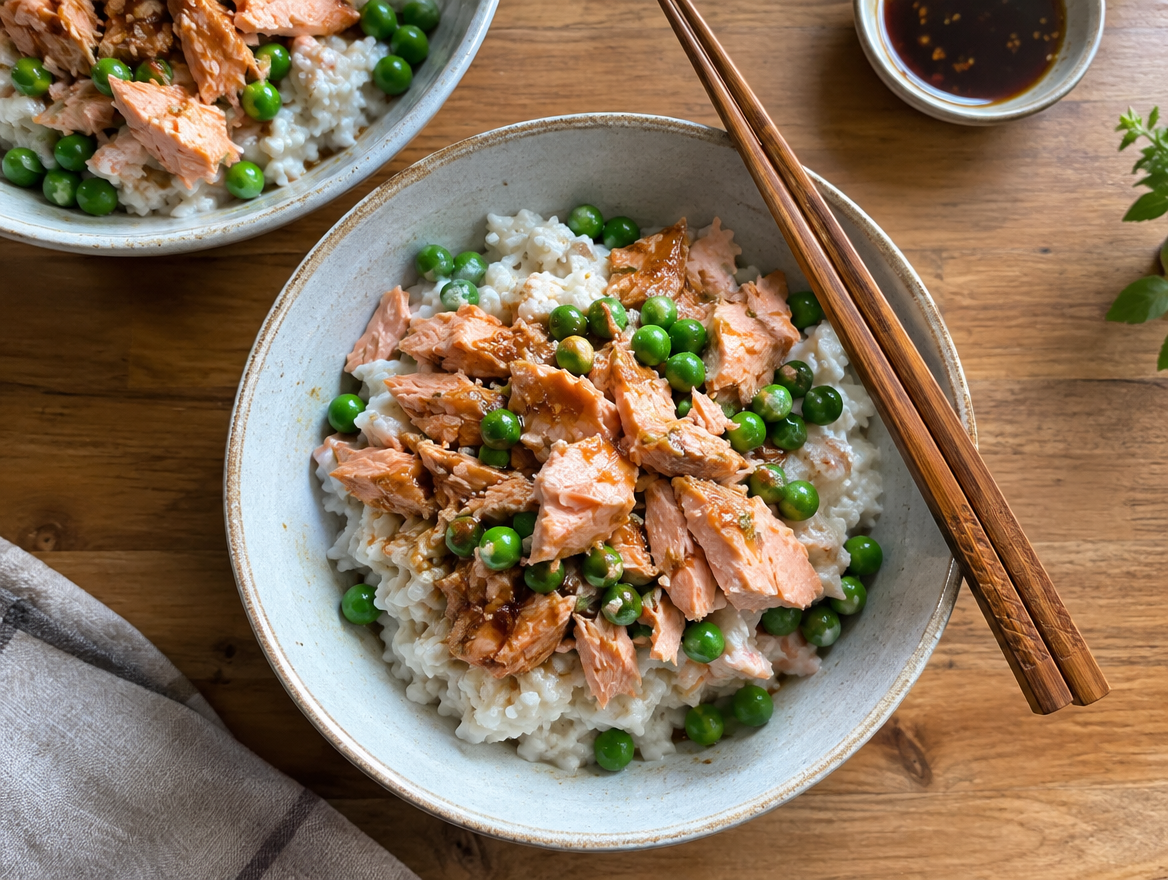
- Coconut salmon rice bowls (recipe below)
- Tuna and white bean rice bowls with vinegar
- Coconut chickpea curry over rice (see our chickpea curry recipes)
- Soy garlic fried rice with chickpeas
- Brown lentils and rice with smoked paprika
- Tomato rice with chickpeas and smoked paprika
- Chipotle black bean burrito bowls
- Salmon fried rice with soy sauce
- Tomato rice with white beans and garlic
- Chipotle rice and black beans
Soups and stews (25 to 38)
- White bean and lentil soup from leftover dal (recipe below)
- Chickpea and smoked paprika soup (recipe below)
- Garam masala red lentil soup
- Tomato rice soup
- Black bean chipotle soup
- Brown lentil and tomato stew
- White bean soup with short pasta
- Coconut chickpea stew
- Salmon and white bean chowder thickened with flour
- Tomato soup with garlic
- Pasta and bean soup with frozen vegetables
- Red lentil coconut soup with soy sauce
- Three-bean chipotle chili with chickpeas, black beans, and white beans
- Garlic broth with pasta and white beans
Skillet, patties, and flatbread nights (39 to 50)
- Salmon patties with flour and garlic (more ideas in our canned fish recipes)
- Tuna patties (and how to make canned tuna taste better)
- Chickpea shakshuka in tomato sauce, with eggs if you have them (see our shakshuka recipe)
- Black bean flatbread pizzas
- Smashed chickpea flatbreads with garlic oil
- Brown lentil sloppy joes with chipotle
- Black bean patties
- White bean and tuna salad with vinegar and olive oil
- Brown lentil salad with vinegar and garlic
- Coconut rice with crispy chickpeas
- Chipotle black bean tacos on simple flour tortillas
- Garlic flatbread with white bean dip (try our canned bean protein bowls too)
The 7-night pantry meal plan
The map shows what's possible. This plan picks seven of those pantry meals and gives you exact amounts, and two of the nights are leftovers made over, so you cook five times and eat seven. Each recipe feeds four.
Every night cooks in one pot or one skillet. A 6-quart enameled Dutch oven handles all of them, from a double batch of dal to a full pot of soup, and its heavy base keeps lentils from scorching while they simmer.
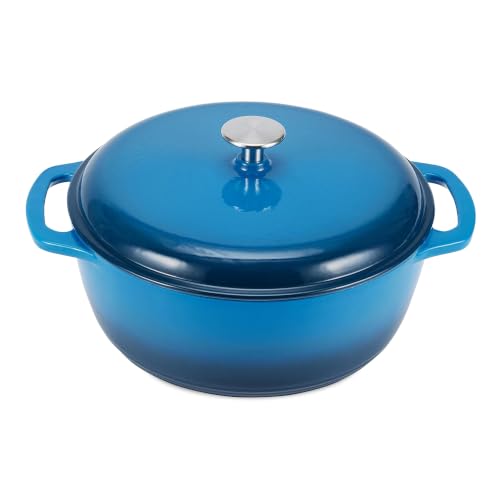
- OVEN SAFE DESIGN: Withstand temperatures up to 500 degrees Fahrenheit, making this enamel cast iron dutch...
- EXCELLENT HEAT RETENTION: This heavy-duty cast iron pot with lid distributes heat evenly and is ideal for...
Last update on 2026-10-15 / Affiliate links / Images from Amazon Product Advertising API
(As an Amazon Associate, we earn from qualifying purchases.)
Night 1: Coconut red lentil dal over rice
The highest-yield dinner in this set of pantry meals. Make the full pot and save about 2 cups for Night 3.
Ingredients
Check off ingredients as you go. Cook mode keeps your screen awake.
1. Bloom the garlic. Heat the oil in a Dutch oven over medium heat. Add the garlic and garam masala and stir for 1 minute, until fragrant.
2. Simmer. Add the lentils, tomatoes, coconut milk, broth, and salt. Bring to a boil, then lower to a steady simmer. Cook uncovered 20 to 25 minutes, stirring often, until the lentils fall apart and the dal is thick.
3. Finish. Stir in the vinegar, taste, and add salt if needed. Serve over rice with a drizzle of olive oil. Refrigerate about 2 cups for Night 3.
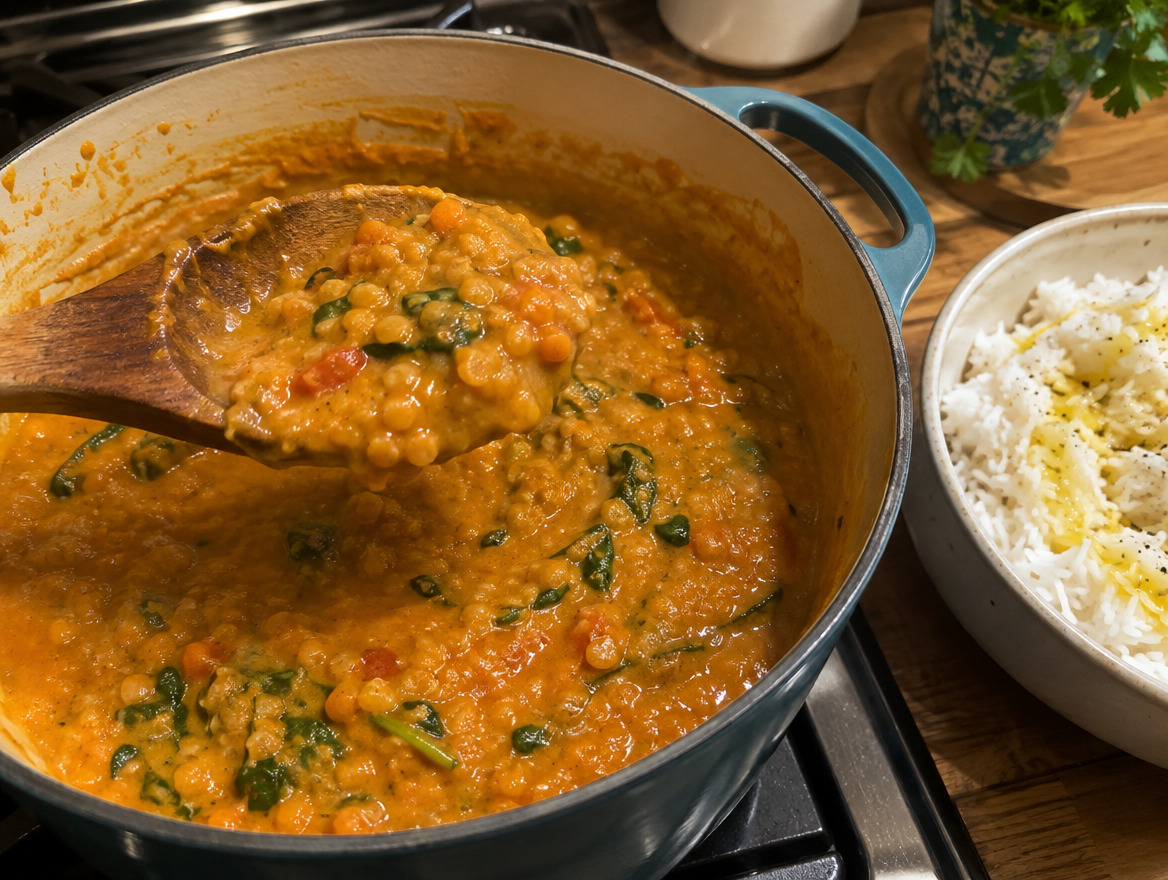
Night 2: Brothy white bean and garlic pasta
One of the fastest pantry meals here. Mashing a few beans into the pan makes a creamy sauce with no cream.
Ingredients
1. Boil the pasta. Cook the pasta in well-salted water until just tender. Save 1 cup of the pasta water before draining.
2. Soften the garlic. Meanwhile, warm the oil and garlic in a wide skillet over medium-low heat for 3 to 4 minutes, until soft and pale gold. Don't let it brown, or the dish turns bitter.
3. Make the sauce. Add the beans, broth, and salt. Simmer 5 minutes, then mash about a third of the beans against the pan with a spoon.
4. Toss. Add the pasta and toss, adding pasta water a splash at a time until the sauce coats every piece. Finish with the vinegar and a drizzle of olive oil.
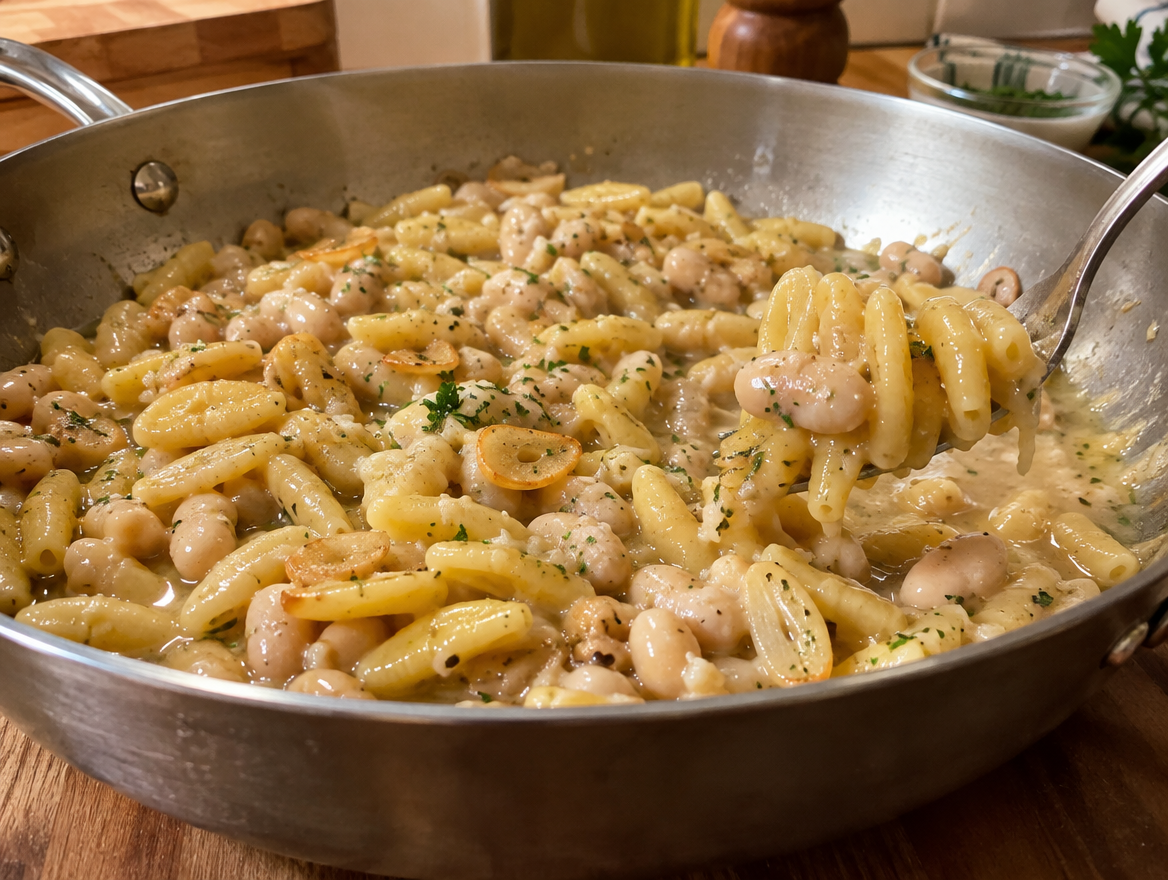
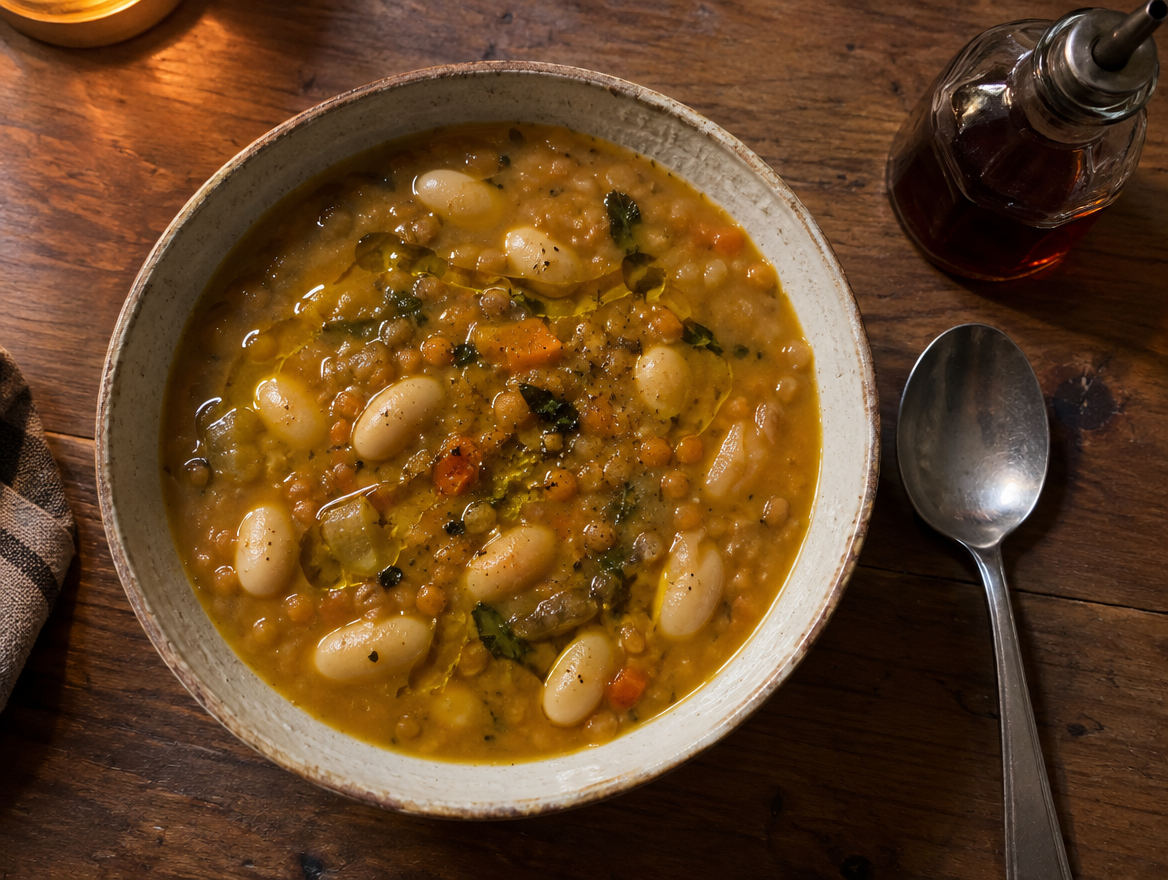
Night 3: White bean and lentil soup
Night 1's leftover dal becomes a new soup in 15 minutes. This is the trick that makes a week of pantry meals cheaper than it looks.
Ingredients
1. Warm. Combine the dal, beans, and 1 cup of broth in a pot over medium heat. Stir until it simmers, about 5 minutes. Add more broth if you like it thinner.
2. Finish. Stir in the vinegar, taste for salt, and serve with olive oil drizzled over each bowl.
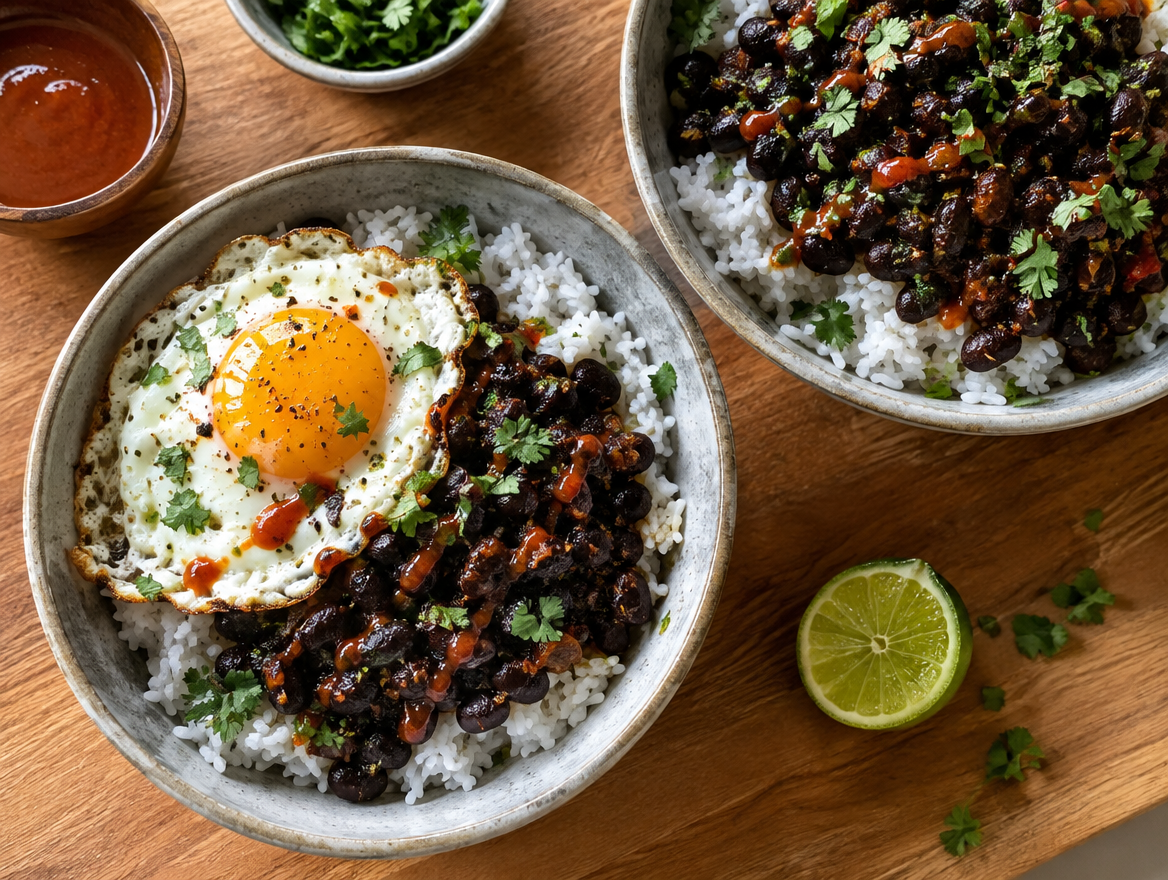
Night 4: Smoky black bean rice bowls
Smoked paprika, soy sauce, and chipotle make plain black beans taste slow-cooked. Add a fried egg if there's one in the fridge.
Ingredients
1. Cook the rice. Bring the rice and broth to a boil, cover, and cook on the lowest heat for 18 minutes without lifting the lid. Rest 5 minutes.
2. Cook the beans. Heat the oil in a skillet over medium heat. Add the beans, paprika, soy sauce, chipotle, and adobo. Cook 6 to 8 minutes, stirring now and then, until the sauce thickens and the edges of the beans start to crisp.
3. Serve. Spoon the beans over the rice, add a fried egg if you have one, and finish with a splash of vinegar.
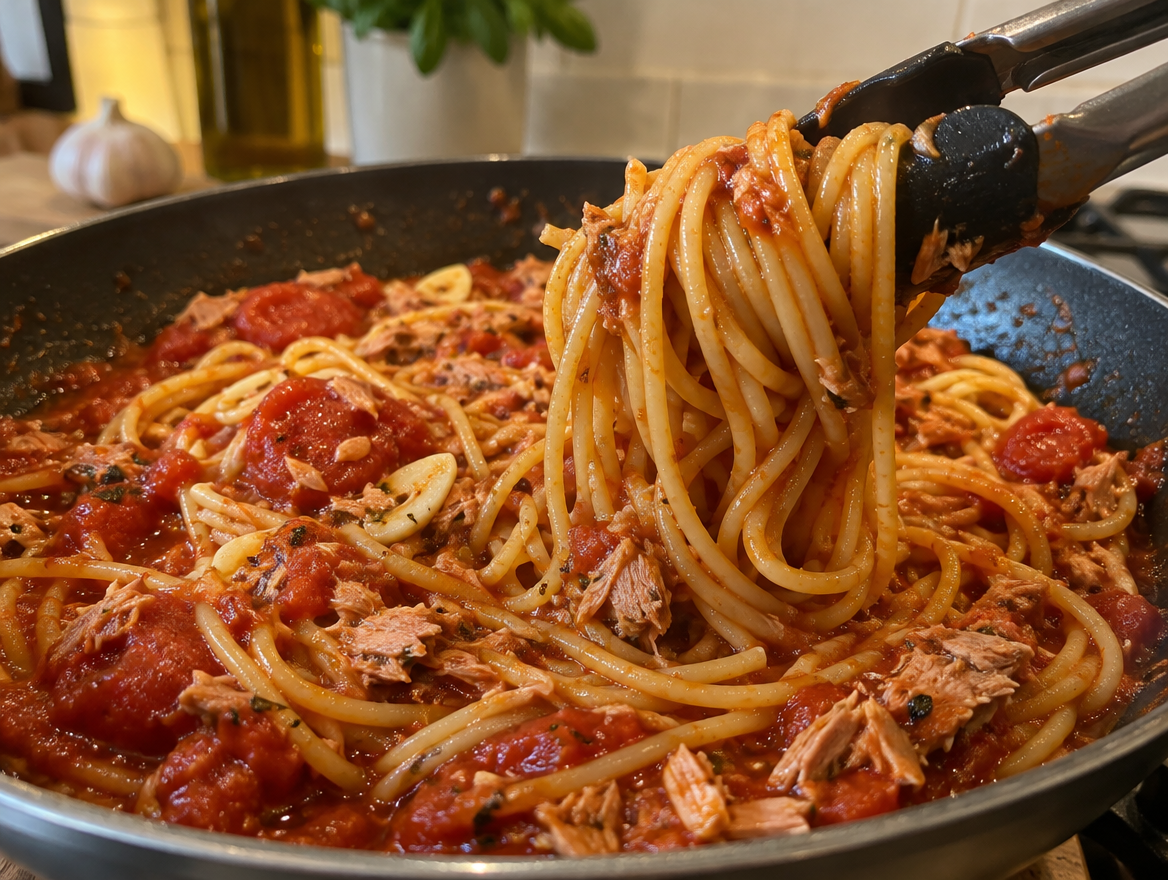
Night 5: Quick tuna puttanesca
Whole tomatoes crushed in the pan make a sauce that tastes like it simmered for an hour. It takes about 20 minutes.
Ingredients
1. Boil the pasta. Cook the spaghetti in well-salted water. Save ½ cup of the pasta water before draining.
2. Make the sauce. Warm the oil and garlic in a skillet over medium heat for 1 minute. Add the tomatoes and crush them with a spoon. Simmer 10 minutes, until thick.
3. Add the tuna. Stir in the tuna, pepper flakes, and vinegar. Cook 2 minutes.
4. Toss. Add the spaghetti and a splash of pasta water and toss until glossy.
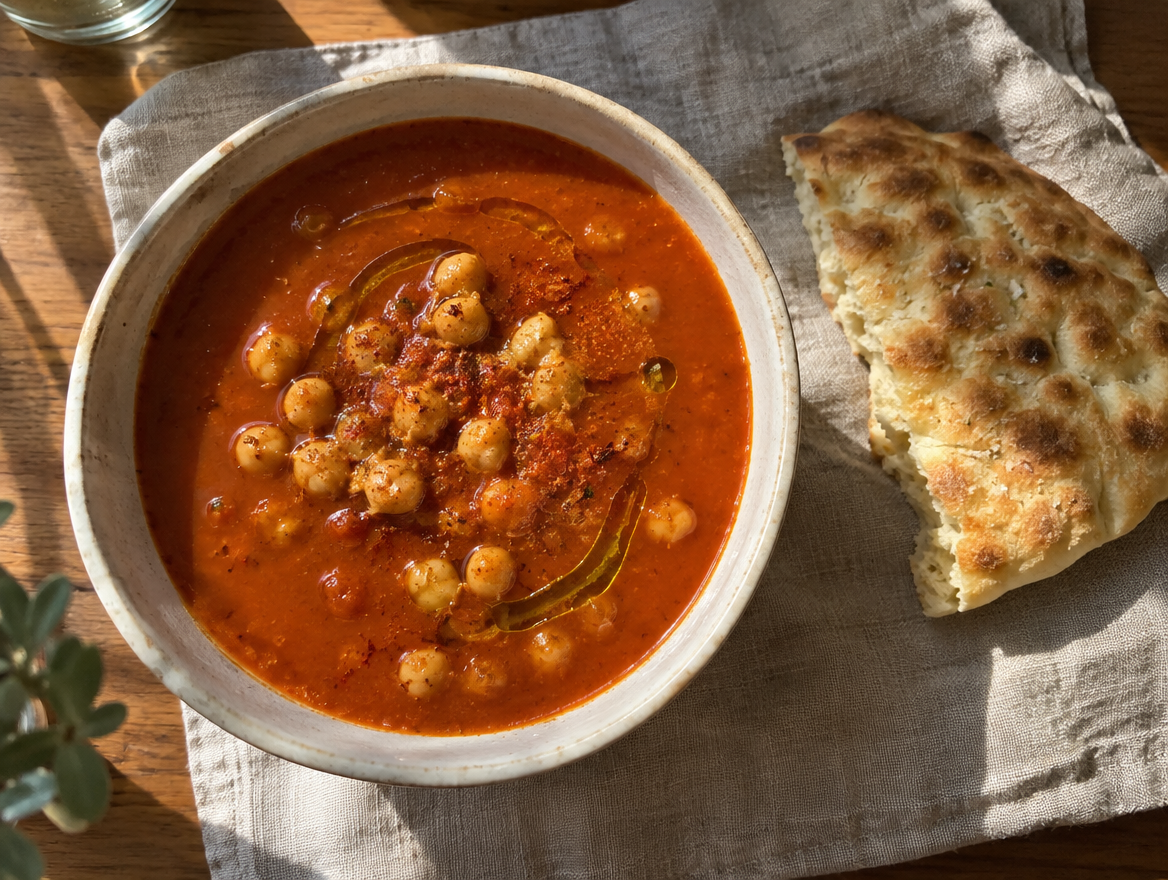
Night 6: Chickpea and smoked paprika soup
Blooming the paprika in oil before the liquid goes in is what gives this soup its deep, smoky color.
Ingredients
1. Bloom the spice. Heat the oil in a pot over medium heat. Add the garlic for 1 minute, then the paprika for 30 seconds, stirring so it doesn't scorch.
2. Simmer. Add the tomatoes, broth, and chickpeas. Simmer 15 minutes.
3. Finish. Mash a few chickpeas against the pot to thicken it, add the vinegar, and taste for salt.
Leftover soup turns into a pasta soup tomorrow. Add 1 cup short pasta and 1 cup broth and simmer until the pasta is tender.
Night 7: Coconut salmon rice bowls
Rice cooked in coconut milk tastes rich enough that canned salmon and a splash of soy sauce finish the bowl.
Ingredients
1. Cook the rice. Stir the rice, coconut milk, water, and salt in a pot and bring to a boil. Stir once, cover, and cook on the lowest heat for 18 minutes. Scatter the peas on top, cover, and rest 5 minutes off the heat.
2. Season the salmon. Toss the salmon with the soy sauce and vinegar.
3. Serve. Spoon the salmon over the coconut rice and add another splash of soy sauce to taste.
Coconut milk can stick to the bottom of the pot. Use the lowest heat setting, and if your stove runs hot, set the pot on a second burner turned to low after the boil.
How to store pantry staples so they last
A stocked shelf only saves money if nothing goes stale. Pantry meals depend on dry goods staying dry, so a few habits protect the whole system.
- Dried lentils, rice, and pasta: move them into airtight containers once the bag is open. It keeps out moisture and pantry moths.
- Opened cans: never store food in the open can. Move it to a covered container and treat it like leftovers, which the USDA says to use within 3 to 4 days.
- Leftover coconut milk and chipotles: freeze them in small portions instead of losing half a can.
- Spices: keep them sealed and away from the stove. Heat and light fade them fastest.
Clear, airtight containers make this easy, and they let you see when the lentils or rice are running low before the 5 p.m. scramble instead of after it.
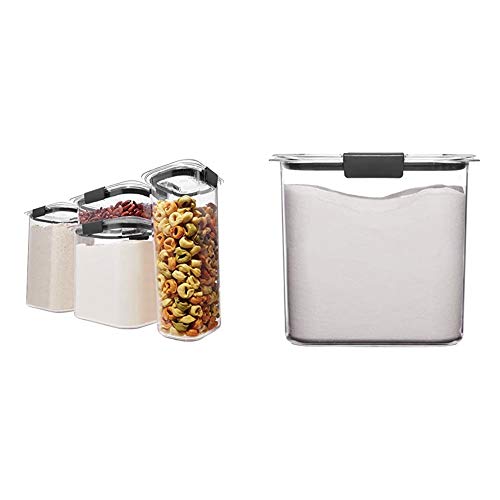
- Includes a 12 cup and 16 cup BPA-free plastic airtight containers with secure latches to keep food fresh.
- Crystal clear lids and bases make it easy to see contents; stain and odor resistant.
Last update on 2026-10-15 / Affiliate links / Images from Amazon Product Advertising API
(As an Amazon Associate, we earn from qualifying purchases.)
Get the free pantry staples checklist
The 20 staples above come as a one-page printable you can tape inside the cabinet door. It has a checkbox for each staple and room to note what you paid, so restocking your pantry meals takes one glance.
More pantry dinners
For more pantry meals built from the same shelf, see our pantry meal prep lunches, no-power pantry meals for storm nights, and budget egg and bean dinners. Feeding a crowd? Try how to feed a family of 4 on a budget or our cheap high protein meals.
Start with the shelf you already have
Pantry meals stop being a last resort once the shelf is mapped to dinners before 5 p.m. You now have the 20 staples, 50 pantry meals they cover, and a week of recipes that cooks five times and eats seven. Tonight, check your shelf against the list, then cook Night 1 and save the leftovers for Night 3.
Frequently Asked Questions
How much does it cost to stock a pantry for pantry meals?
It depends on what you already own. Most kitchens have half the list, so filling the gaps usually means a handful of cans and a bag or two of lentils and rice. Buy the protein tier first, since it does the most to make pantry meals filling. Restocking the staples for pantry meals rarely takes a big shopping trip.
Can I make pantry meals gluten-free?
Yes. Use gluten-free pasta, tamari instead of soy sauce, and cornstarch instead of flour to thicken soups. Rice, lentils, beans, and canned fish are naturally gluten-free, so most pantry meals here need only those three swaps.
How long do dried lentils and rice last?
Stored airtight in a cool, dry spot, they keep their quality for about a year. Old lentils still cook, but they take longer and may stay firm, so add 10 minutes and extra liquid if a bag has been around a while. Rotate the oldest bag into this week's pantry meals first.
Do I need to rinse canned beans?
Rinsing removes the starchy liquid and some of the sodium, so rinse them for bowls and salads. For soups that need thickening, you can add a splash of that liquid back in. Most pantry meals here are written for rinsed beans.
Are pantry meals healthy enough to eat all week?
They cover a lot of ground. Beans, lentils, and canned fish add protein and fiber, and tomatoes and frozen vegetables add color. Toss a cup of frozen vegetables into any soup or rice night to round out your pantry meals.
What can I make if I only have five of the staples?
Pasta, canned tomatoes, garlic, olive oil, and a can of beans or tuna cover at least four of the 50 dinners above. Start with Night 2 or Night 5 and build the shelf from there. Every new staple you add unlocks a few more pantry meals.
How do I keep picky eaters happy with pantry meals?
Serve the parts separately. Put rice, beans, and toppings in their own bowls so each person builds their own plate, and keep the chipotle and spices on the side for the adults. Build-your-own bowls make pantry meals easy to love at any age.
Be Honest: Canned Beans or Dried?
Every pantry has a side in this one.
One side says canned beans are the whole point of pantry meals. Open, rinse, and dinner is on the table in 15 minutes.
The other side says dried beans are cheaper by the pound, taste better, and only need a little planning.
Pick your side.
Why did you vote that way? Drop your take in the comments.