


Quick Answer: Greek Lemon Chicken Soup
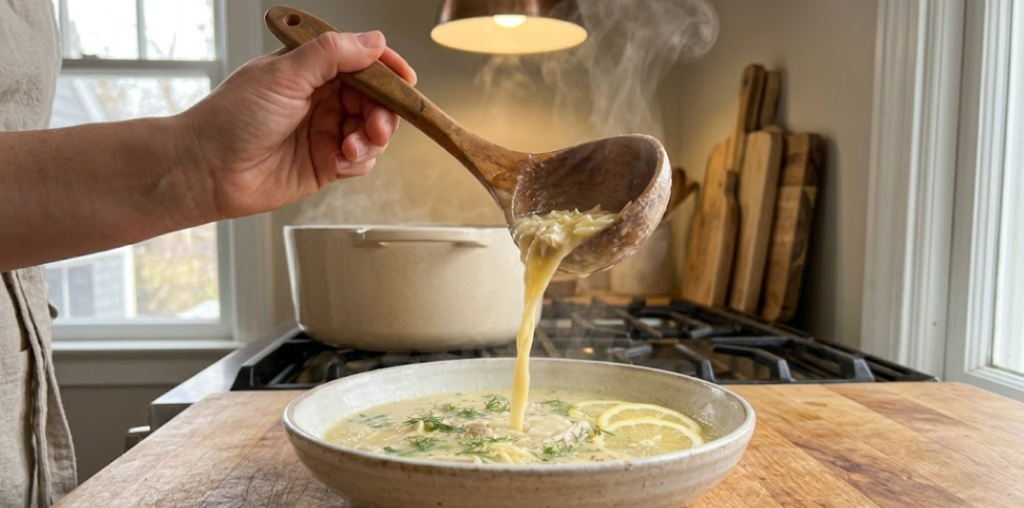
- Greek lemon chicken soup (avgolemono) gets its creamy texture from egg tempering, not cream. Whisked eggs and lemon juice are slowly combined with hot broth, then stirred back into the soup to create a silky, dairy-free broth.
- This recipe uses rotisserie chicken and is on the table in 30 minutes.
- The one technique that makes or breaks it: add hot broth to the egg mixture one ladle at a time while whisking constantly. Never pour all at once. Never boil the soup after the eggs go in.
- Orzo is the recommended grain. Rice works with 5 to 7 extra minutes of cook time.
- Leftovers are kept for 3 days in the refrigerator. Freezing is not recommended after the egg step is complete.
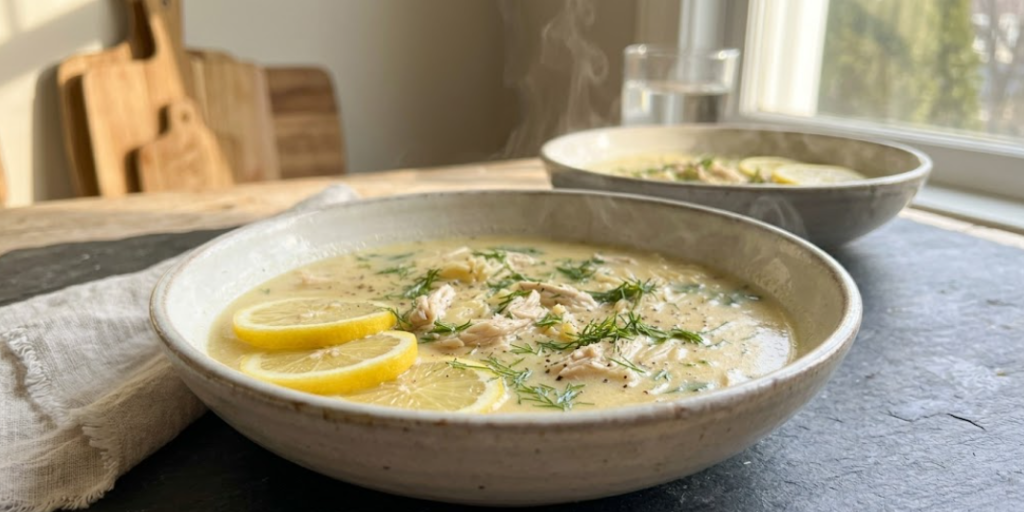
Greek lemon chicken soup, known as avgolemono, has been a fixture on Greek restaurant menus for decades. The reason it stays on those menus is the same reason it is breaking into American home kitchens right now: the broth is silky, rich, and creamy, and there is no cream in it anywhere.
That texture comes from one technique. Egg tempering. It sounds technical. It takes about two minutes. Once you know how it works, you will use it every time you make this soup and probably start looking for other places to use it.
This version uses rotisserie chicken. The from-scratch method produces an excellent soup. It also takes two hours on a Tuesday night when no one has two hours. The rotisserie version produces a soup that tastes like it took two hours and is on the table in thirty minutes. That is the version this article covers.
What Is Greek Lemon Chicken Soup?
Greek lemon chicken soup is built on a broth base with shredded chicken and orzo, finished with a mixture of whisked eggs and fresh lemon juice that gets stirred into the hot soup at the end. That egg-lemon mixture is called avgolemono. Avgo means egg, lemono means lemon in Greek. The word is both the name of the soup and the name of the technique.
The avgolemono method is not exclusive to soup. Greek cooks use it to finish braised meats, stuffed grape leaves, and vegetable stews. The logic is always the same: whisk eggs with acid, introduce hot liquid slowly to bring the temperature up without scrambling the eggs, then stir the warmed mixture back into the pot. The result is a broth that coats a spoon the way a cream sauce does, without any dairy involved.
That “creamy without cream” quality is why this soup is resonating right now. Home cooks who want indulgence without heaviness found it. Once they make it, they tend to make it again.
Getting the technique right starts with having the right tools in hand before the eggs go in. These are the four that make the biggest difference in this recipe:



Last update on 2026-10-13 / Affiliate links / Images from Amazon Product Advertising API
Disclosure: This page contains affiliate links. HomemadeRecipes.com earns a small commission on purchases made through these links at no additional cost to you.
Why This Works: The Science Behind the Silky Broth
The creaminess in this Greek lemon chicken soup is not a trick. It is chemistry.
Eggs are an emulsifier. When you whisk egg yolks with lemon juice and then introduce hot chicken broth gradually, the proteins in the egg begin to set at a controlled temperature. They do not scramble. They thicken. The lemon juice adds acidity that helps stabilize the emulsion and keeps the broth from tasting flat or heavy.
The key word in that process is “gradually.” Pour hot broth into cold eggs all at once and the proteins seize immediately. You get egg drop soup, not avgolemono. Add the hot broth slowly, one ladle at a time while whisking constantly, and the temperature rises gently enough that the eggs emulsify instead of cook. That is tempering.
The same principle works in hollandaise, in zabaglione, in lemon curd. Greek grandmothers were doing it in soup long before culinary schools gave it a name.
Salt the broth well before you temper. An underseasoned broth tastes flat no matter how well you execute the technique. Acid brightens flavor but does not substitute for salt. Both need to be present for this soup to taste like the restaurant version.
A balloon whisk is the single tool that determines whether the egg step works. A fork moves too slowly and a spoon creates no aeration. The whisk keeps the mixture moving fast enough to incorporate the hot broth without scrambling.
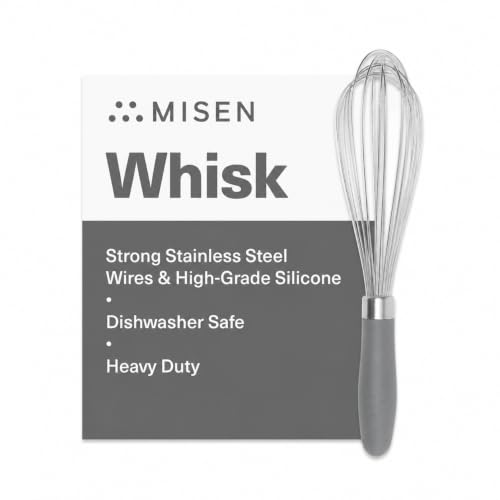
- Stainless Steel Perfection: Elevate your culinary experience with the Misen Stainless Steel Whisk - a...
- Ergonomic Design, Unmatched Comfort: Indulge in comfortable whisking with the Misen Whisk's thick...
Last update on 2026-10-13 / Affiliate links / Images from Amazon Product Advertising API
(As an Amazon Associate, we earn from qualifying purchases.)
Ingredients for Greek Lemon Chicken Soup
Serves 4 to 6
- 1 rotisserie chicken, meat shredded (approximately 3 cups)
- 8 cups low-sodium chicken broth
- ¾ cup orzo
- 1 medium yellow onion, diced
- 3 stalks celery, diced
- 2 medium carrots, diced
- 4 cloves garlic, minced
- 3 large eggs, room temperature
- ½ cup fresh lemon juice (approximately 3 to 4 lemons)
- 1 lemon, zested
- 2 tablespoons olive oil
- 1 teaspoon kosher salt, plus more to taste
- ½ teaspoon black pepper
- ¼ cup fresh dill, chopped (plus more for serving)
- Lemon slices for serving
Substitution notes:
- Orzo can be swapped for long-grain white rice. Add 5 to 7 additional minutes of simmer time.
- Fresh dill can be replaced with flat-leaf parsley if unavailable. The flavor profile shifts slightly toward brighter and less anise-forward.
- Whole eggs work in this recipe. Using only yolks (2 to 3 in place of 3 whole eggs) produces a richer, more stable emulsion with lower curdling risk, which is a useful adjustment for first-time makers.
- No rotisserie chicken on hand: two poached chicken breasts, shredded, work equally well. Add 15 minutes to total time.
Helpful Tools Before You Start
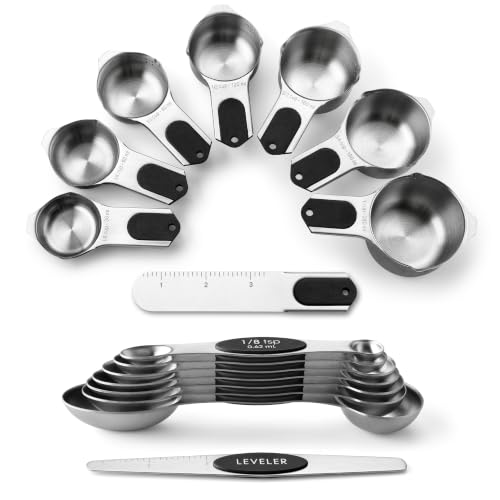
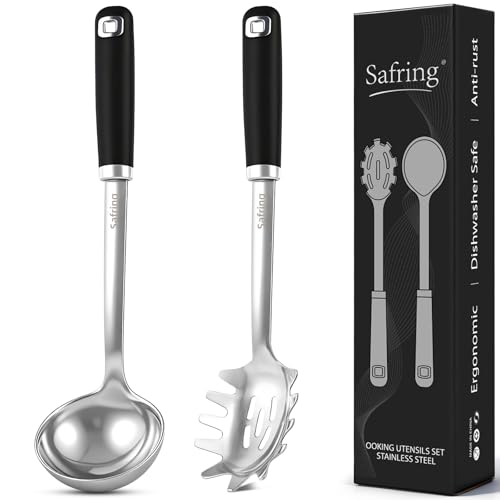
Before the first step, get these on the counter. Having the right prep tools in place is what keeps the 30-minute timeline realistic:


Last update on 2026-10-13 / Affiliate links / Images from Amazon Product Advertising API
How to Make Greek Lemon Chicken Soup
Step 1: Build the base. Heat olive oil in a large Dutch oven or heavy-bottomed pot over medium heat. Add the onion, celery, and carrots. Cook for 6 to 8 minutes, stirring occasionally, until the vegetables have softened and the onion is translucent. Add the garlic and cook for one additional minute until fragrant.
Step 2: Add the broth and cook the orzo. Pour in the chicken broth and raise the heat to bring the liquid to a gentle boil. Season with salt and pepper. Add the orzo and cook for 8 to 9 minutes, stirring occasionally, until the pasta is just shy of fully tender. It will continue cooking when the eggs go in. Reduce heat to low.
Step 3: Add the shredded rotisserie chicken. Stir the shredded rotisserie chicken into the pot. Let it warm through for 2 to 3 minutes. Taste the broth here and adjust salt. The broth should taste well-seasoned before the eggs go in. The tempering step does not add saltiness, and an underseasoned base stays underseasoned.
Step 4: Make the avgolemono — whisk eggs and lemon. In a medium bowl, whisk together the eggs, lemon juice, and lemon zest until fully combined and slightly frothy. The mixture should look pale yellow and uniform, with no streaks of egg white visible. Room temperature eggs emulsify more smoothly than cold ones. If the eggs came straight from the refrigerator, let them sit for 10 minutes before whisking.
Step 5: Temper the eggs. This is the step that determines the texture of the finished soup. Ladle approximately 2 cups of hot broth from the pot, one ladle at a time, into the egg-lemon mixture while whisking constantly. Do not stop whisking. Do not pour more than one ladle at a time. The goal is to raise the temperature of the egg mixture gradually until it is close to the temperature of the soup. After 4 to 5 ladles, the mixture will be warm to the touch and noticeably thickened.
Step 6: Finish the soup. Turn the pot heat to the lowest possible setting. Pour the tempered egg mixture into the pot in a slow, steady stream, stirring continuously. Do not let the soup return to a boil. Boiling breaks the emulsion and scrambles the eggs. Stir for 2 to 3 minutes over low heat until the broth has turned opaque, silky, and visibly thickened. Stir in the fresh dill. Taste and adjust with additional salt, pepper, or a squeeze of lemon.
Step 7: Serve immediately. Ladle the Greek lemon chicken soup into bowls. Top with fresh dill, a few lemon slices, and black pepper. This soup does not hold well over heat. The longer it sits in a hot pot, the more the egg proteins continue to tighten. Serve it as soon as it is finished.
The Egg Tempering Trick That Makes This Soup Silky Without Any Cream
Every home cook who has made avgolemono for the first time reports the same moment: you stir the egg mixture into the soup, watch the broth change color and consistency in real time, and feel like you have just learned something. That response is accurate. Egg tempering is a genuine technique, and it transfers.
The failure mode, meaning curdled eggs, stringy texture, and broken broth, comes from one of three things: boiling the soup after the eggs go in, pouring broth into cold eggs too fast, or skipping the whisking entirely. Any one of these produces scrambled eggs floating in chicken broth. None of them are irreversible disasters, but none of them are avgolemono either.
The fix is patience at step five. Two cups of broth, added slowly, whisked continuously. Four minutes of attention that changes the entire outcome of the dish.
A few additional notes from repeat cooks of this Greek lemon chicken soup:
Room temperature eggs are not optional for best results. Cold eggs have tighter protein structures that seize more easily when heat is introduced. Ten minutes on the counter before you start makes a measurable difference.
Fresh lemon juice only. Bottled lemon juice lacks the volatile acids that give avgolemono its characteristic brightness. The difference is significant enough that it changes the flavor profile of the finished soup.
Lemon zest in addition to juice adds a layer of flavor that juice alone does not deliver. The zest contains aromatic oils that stay volatile through the tempering process. Add it to the egg mixture, not the broth.
How to Make Greek Lemon Chicken Soup in 30 Minutes with Rotisserie Chicken
The traditional method for avgolemono starts with a whole raw chicken simmered for one and a half to two hours to build a homemade stock. The result is exceptional. For a Tuesday night, it is not the recipe.
The rotisserie chicken version works because the flavor depth in avgolemono comes primarily from the avgolemono technique itself: the egg emulsion, the lemon brightness, the seasoned broth. A good low-sodium store-bought broth, seasoned correctly and finished with the egg-lemon mixture, produces a soup that tastes far more complex than its ingredient list suggests.
A few details that close the gap between the shortcut version and the from-scratch version:
Reduce the broth slightly before adding the orzo. Bring 8 cups of broth to a moderate boil and let it reduce for 5 to 7 minutes before adding the pasta. This concentrates the flavor and improves the base without adding cook time.
Use dark meat from the rotisserie chicken. Thigh and leg meat has more fat and more flavor than breast meat. It also shreds more easily and stays moist after reheating. Pull both when you shred the bird.
Season in layers. Salt the vegetables as they cook, salt the broth before the orzo goes in, and taste again before the eggs go in. Three seasoning checkpoints at three different stages of the cook produce a more developed flavor than salting once at the end.
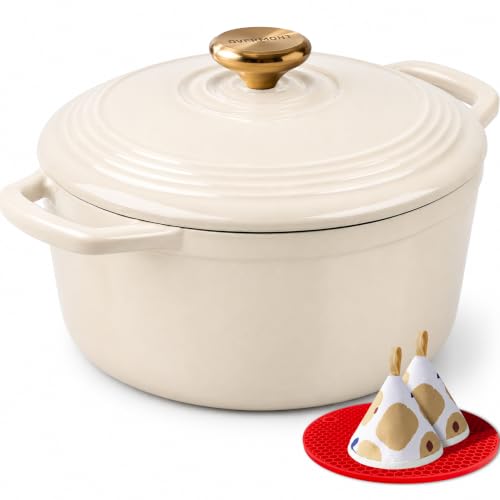
One tool that makes the 30-minute timeline reliable: a large Dutch oven with even heat distribution. The wide base allows the vegetables to soften quickly without burning, and the heavy bottom keeps the temperature steady when you reduce the heat for the egg step. A thin-bottomed pot creates hot spots that can scramble the eggs even at low heat.
For a soup this good, the right pot makes it easier. A 5.5-quart Dutch oven handles the full recipe comfortably and distributes heat evenly enough to protect the egg step:

- Enameled cast iron delivers superior heat distribution and retention; Ready to use, requires no seasoning
- Easy-to-clean and durable enamel resists dulling, staining, chipping and cracking; Light colored smooth...
Last update on 2026-10-13 / Affiliate links / Images from Amazon Product Advertising API
(As an Amazon Associate, we earn from qualifying purchases.)
Can You Freeze Greek Lemon Chicken Soup? Here Is What Actually Happens to the Eggs
The short answer: freezing avgolemono is not recommended.
The egg proteins that create the silky texture of this Greek lemon chicken soup are fragile after they set. Freezing causes the water molecules in the emulsion to form ice crystals, which puncture the protein network. When the soup thaws and reheats, the emulsion is broken. The broth becomes grainy and thin, with a curdled appearance. The soup is still safe to eat but the defining characteristic, that silky creamy texture, is gone.
There are two practical workarounds:
Freeze the soup before the egg step. Cook the base through step three, meaning the broth, vegetables, orzo, and chicken, and freeze that portion. Thaw and reheat, then make the avgolemono fresh when you are ready to serve. The base freezes well for up to three months. The egg step takes four minutes.
Make a smaller batch. This rotisserie chicken soup recipe scales down cleanly to half portions. If the household is two people, halving the recipe produces two generous servings with minimal leftovers to manage.
Refrigerator storage: up to three days in an airtight container. Reheat on the stovetop over low heat only, never boil. Add a small splash of broth if the soup has thickened in the refrigerator. A squeeze of fresh lemon when serving leftovers restores brightness that fades in storage.
What to Serve with Greek Lemon Chicken Soup
This Greek lemon chicken soup is a complete meal in the bowl, with protein, starch, and a bright acid finish all in one pot. Sides are optional. A few that work well without adding cook time:
Crusty bread or pita for the broth. The egg-thickened soup clings to bread the way a cream sauce does. This is the appropriate use.
A simple cucumber and tomato salad with olive oil and oregano. The crisp, cool vegetables balance the warm, silky broth without competing with it. Five minutes of prep.
Crumbled feta on top of the soup. Not traditional in every Greek household, but the salt and tang of feta against the lemon broth is worth knowing about.
Save This Greek Lemon Chicken Soup Recipe Before You Forget It
This Greek lemon chicken soup is the kind of recipe that gets made once and immediately added to the regular rotation. The egg tempering step sounds like something you will remember. You will not remember it. Print this before that happens.
The free printable includes everything in one page:
The full ingredient list formatted as a grocery checklist so nothing gets left at the store. The 7-step recipe with the tempering instructions written exactly the way they appear here. A tips panel covering the three most common failure points: cold eggs, fast pouring, and boiling after the eggs go in.
No login. No email required. One click, one page, done.
[DOWNLOAD THE FREE PRINTABLE RECIPE CARD]
Tape it inside a cabinet door. Fold it into the cookbook you already own. Hand it to whoever else cooks in your house so you are not the only one who knows how to make this.
The Last Thing to Know About Greek Lemon Chicken Soup
Most soups that taste this good take most of a day. This one takes thirty minutes and a rotisserie chicken you picked up on the way home.
The technique is the point. Egg tempering is not a restaurant secret or a culinary school trick reserved for confident cooks. It is four minutes of patient whisking that transforms a pot of chicken broth into something silky, bright, and genuinely worth making again. Home cooks who have tried it once report the same thing: it becomes a regular in the rotation, not a recipe you return to once a year.
“It's not just that we have to cook — it's that we are reinventing the wheel each night.” — Medium
Greek lemon chicken soup solves that. Once you know the egg step, the rest of the recipe runs on autopilot. The vegetables are pantry staples. The chicken is already cooked. The broth comes from a carton. What you are adding is the technique, and the technique is the thing that makes this soup taste like it came from somewhere that knows what it is doing.
Make it once. It goes on the list.
FAQ
Q: What makes Greek lemon chicken soup creamy if there is no cream in it?
The creaminess comes from egg tempering. Whisking eggs with lemon juice and then slowly introducing hot broth raises the temperature gradually, causing the egg proteins to thicken the liquid instead of scrambling. The result is an emulsified broth that has the body of a cream soup without any dairy.
Q: Can I use rice instead of orzo in this avgolemono recipe?
Yes. Swap orzo for an equal volume of long-grain white rice and add 5 to 7 extra minutes of simmer time before the egg step. Short-grain or medium-grain rice works too and produces a slightly thicker, more starchy broth, which some cooks prefer.
Q: My eggs curdled. What went wrong?
One of three things happened: the broth was added to the eggs too quickly, the eggs were cold when you started, or the soup boiled after the egg mixture went in. Any one of these breaks the emulsion. For the next batch, let eggs sit at room temperature for 10 minutes, add broth one ladle at a time while whisking continuously, and keep the heat at the lowest setting after the eggs go in.
Q: Can you make avgolemono ahead of time for meal prep?
Make the base through step three, covering the broth, vegetables, orzo, and chicken, and refrigerate for up to two days. When ready to serve, reheat the base gently, then complete the egg tempering step fresh. The avgolemono technique takes four minutes and cannot be made in advance without affecting texture.
Q: Is this Greek lemon chicken soup gluten-free?
Not as written, because orzo is a wheat pasta. Substitute an equal volume of long-grain white rice or a certified gluten-free orzo, and confirm the chicken broth label is gluten-free. All other ingredients in this recipe are naturally gluten-free.
Q: How much lemon juice is too much in avgolemono?
Half a cup is the baseline for a soup that reads as bright but balanced. Beyond that, the acid starts to compete with the broth rather than lift it. Taste after the egg mixture is incorporated and add more lemon in small increments, one tablespoon at a time, until the brightness is where you want it. Lemon zest adds aromatic depth without increasing the acid level.
Q: Can I make this rotisserie chicken soup with leftover chicken instead?
Yes. Any cooked, shredded chicken works in this recipe. Dark meat produces the best result because more fat content means more flavor in the finished soup. Light meat works but can dry out slightly during the simmer step. Add it later in the cook, just before the egg step, to minimize that risk.
Quick Poll
Why did you vote that way? Drop your take in the comments.