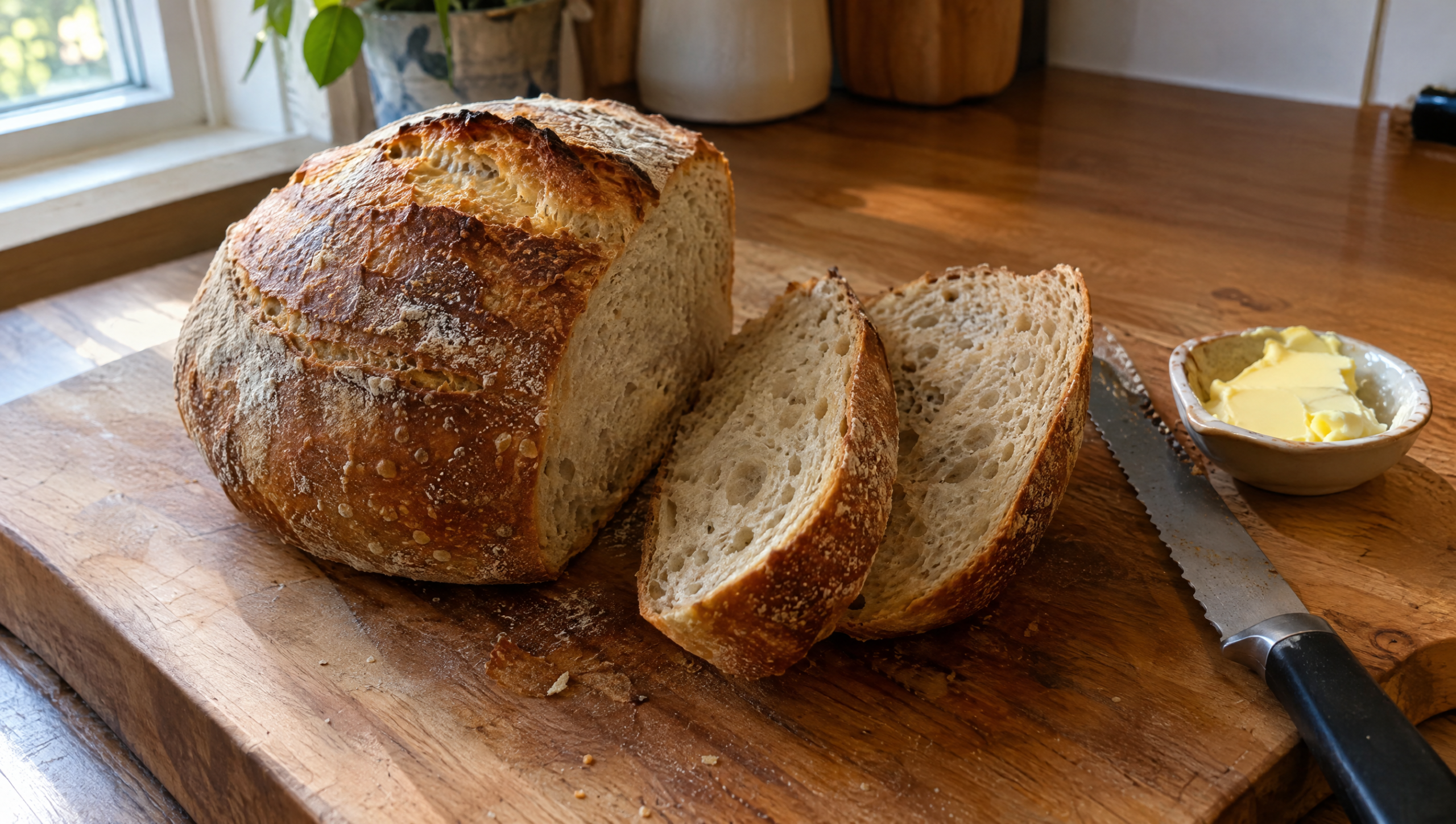


Four ingredients, a kitchen scale, and one night in the fridge. The dough tells you when it's ready, and this recipe shows you what to look for.
Recipe overview
- Active time: about 30 minutes, spread across the day
- Total time: about 24 hours, including an overnight rest in the fridge
- Makes: 1 round loaf, 10 to 12 slices
- Oven: 475°F, then 450°F, in a covered Dutch oven
- You need: flour, water, salt, and an active sourdough starter
Learning how to make sourdough bread comes down to one method. Mix flour and water, then work in active starter and salt. Fold the dough every 30 minutes for 2 hours, and let it rise until it's 50 to 75 percent bigger. Shape it, chill it overnight, and bake it in a hot Dutch oven.
For most beginners, the hard part is knowing when the starter and the dough are ready. The clock only gets you close. This recipe gives you the times, the signs to watch for, and fixes for loaves that come out flat or gummy.
Get a starter you can trust
Before you learn how to make sourdough bread, you need the one ingredient most stores don't sell: an active starter. It's a jar of flour and water that wild yeast and bacteria have taken over, and it's the only thing that makes this bread rise.
You can make one from scratch. Mix flour and water, then feed it every day for 7 to 14 days, until it reliably doubles after each feeding. Plenty of first attempts stall, and a stalled starter is hard to diagnose when you've never seen a healthy one.
HomemadeRecipes.com may earn a commission when you order through links on this page.
The shortcut we point beginners to is The Mother, a dried starter from Mother's Country Store. The starter itself is free and you cover shipping. It comes with a step-by-step revival guide, and the company says most bakers see bubbles within 12 to 24 hours. If it hasn't activated within 48 hours, they replace it for free. A scoop from a friend who bakes works too.
Once it's going, it doesn't need daily care. Keep it in the fridge and feed it once a week. Take it out and feed it the day before you bake.
Know when your starter is ready
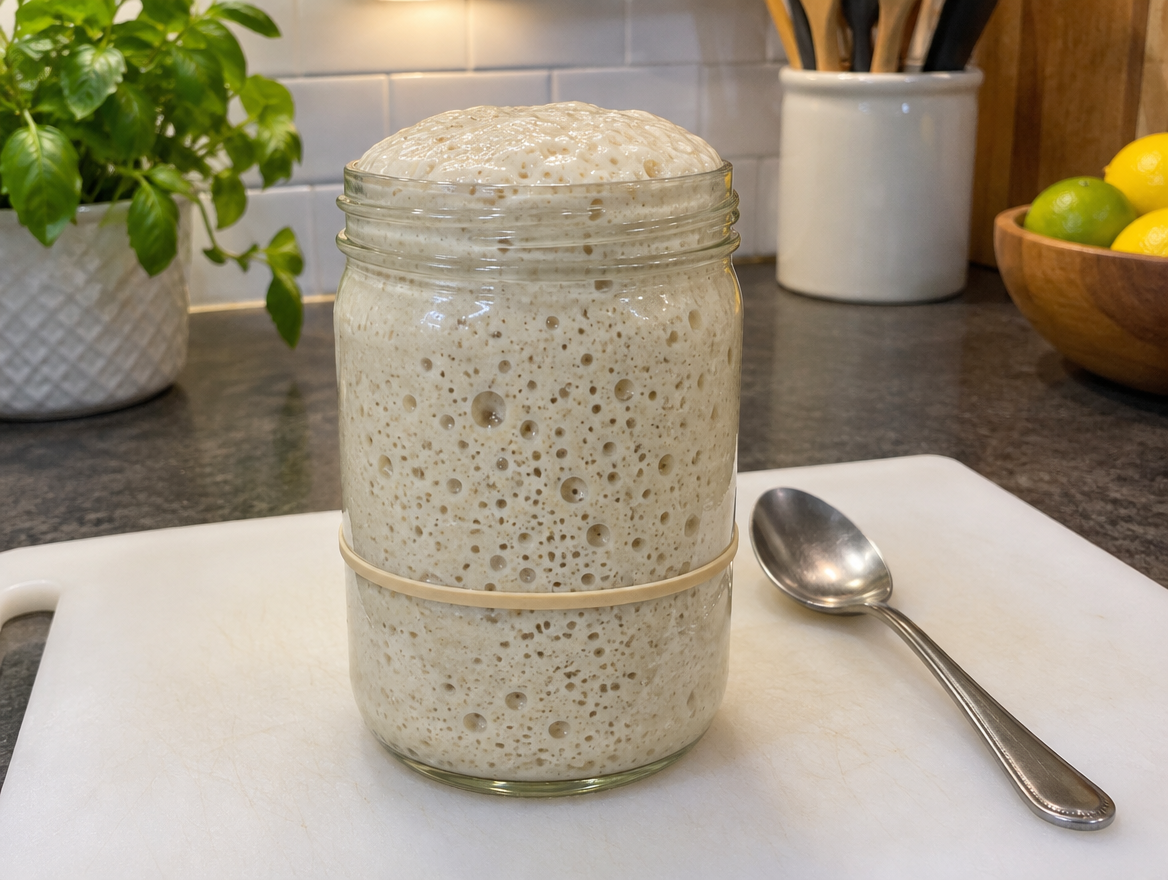
A sluggish starter is the most common reason a first loaf comes out dense. Feed it 4 to 12 hours before you mix, then use it at its peak. It's ready when:
- It has at least doubled since you fed it.
- The top is domed and full of bubbles.
- It smells yeasty and pleasantly tangy, with no sharp, nail-polish smell.
- A small spoonful floats in a glass of water. If it sinks, give it another hour.
Ingredients
Check off ingredients as you go. Cook mode keeps your screen awake.
For the dough
For shaping
Equipment: a kitchen scale, a large bowl, a medium bowl lined with a kitchen towel, parchment paper, and a 5- to 7-quart Dutch oven with a lid.
The scale matters more than any other tool here. Scooped flour packs heavier than spooned flour, and a small difference is enough to turn a soft dough stiff.
If you don't have a starter yet, order it before anything else. A dried starter needs a couple of days to wake up before bake day.
The starter we recommend
The Mother dried sourdough starter
A heritage starter culture shipped dry, with a step-by-step revival guide. The starter is free and you cover shipping. The company replaces it for free if it hasn't activated within 48 hours.
Get the free starter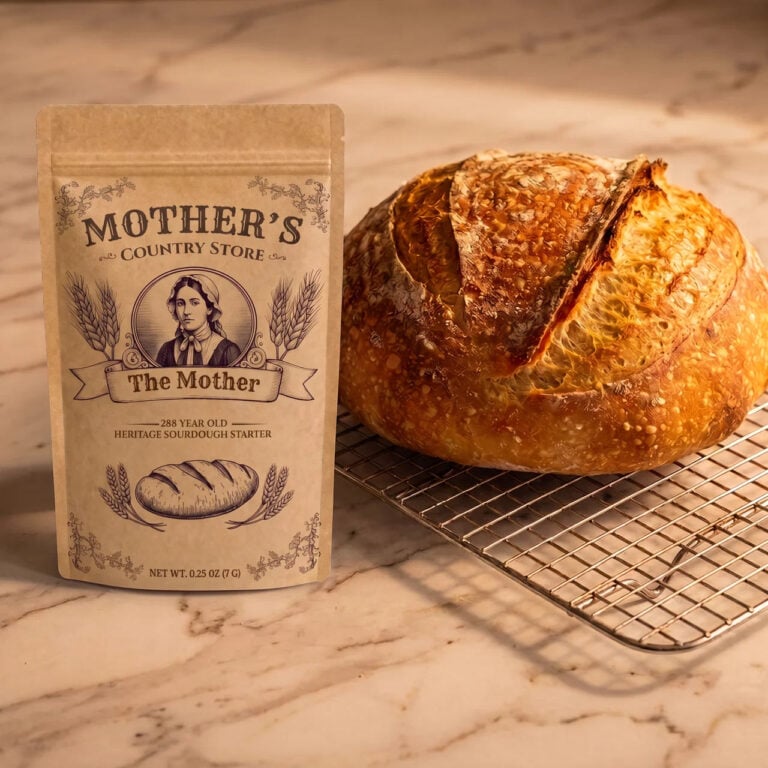
How to make sourdough bread, step by step
The first time you work out how to make sourdough bread, a schedule helps: feed the starter at 8 a.m., mix at noon, shape around 5 or 6 p.m., and bake the next morning. Slide it later if you work days. The overnight rest can stretch to fit.
1. Feed the starter. In a clean jar, stir together 50 g active starter, such as a revived packet of The Mother, with 50 g flour and 50 g water. Slide a rubber band around the jar at the starting level. Wait until it has doubled and domed, usually 4 to 12 hours depending on how warm your kitchen is.
2. Mix the flour and water. In a large bowl, stir the flour with 325 g of the water until no dry flour remains. Cover and let it rest 30 to 60 minutes. Holding back 25 g of water makes it easier to work in the starter and salt.
3. Add the starter and salt. Add the 100 g starter, the salt, and the reserved 25 g water. With a wet hand, squeeze and pinch the dough for 2 to 3 minutes, until you can't feel grains of salt and it comes back together. It will feel sticky, which is normal. Note the time, because the rise starts now.
4. Stretch and fold. After 30 minutes, wet your hand, grab one edge of the dough, stretch it up until it resists, and fold it over the top. Turn the bowl a quarter turn and repeat 4 times. That's one set. Do 4 sets, 30 minutes apart, covering the bowl in between. By the last set the dough should be smoother and stretchier.
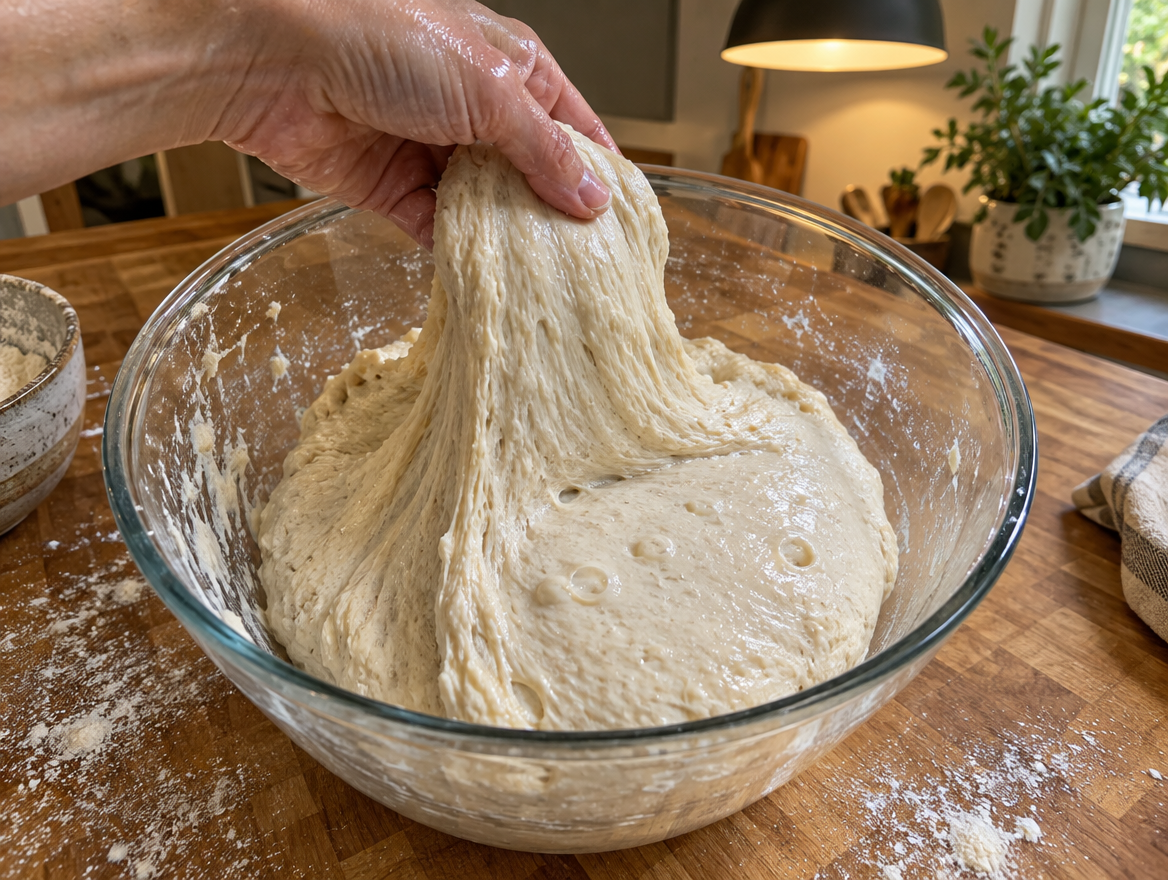
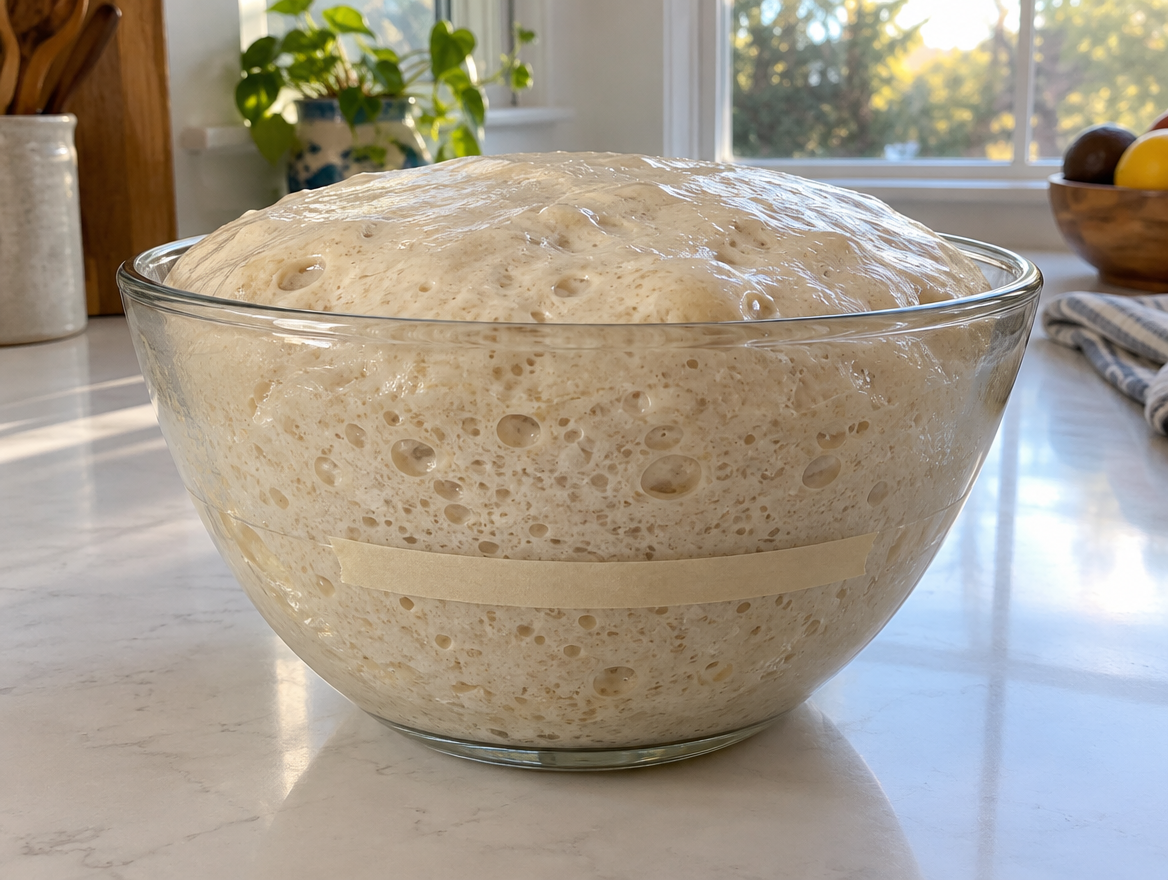
5. Let it rise until it's ready. After the last set, cover the bowl and leave it alone. The full rise, counted from Step 3, usually takes 4 to 6 hours at 75 to 78°F and can run 8 hours or more in a cool kitchen. It's done when the dough has grown 50 to 75 percent, the top is domed, you can see bubbles on the surface and sides, and the whole mass jiggles when you shake the bowl. A strip of tape on the bowl at the starting level makes the growth easy to judge.
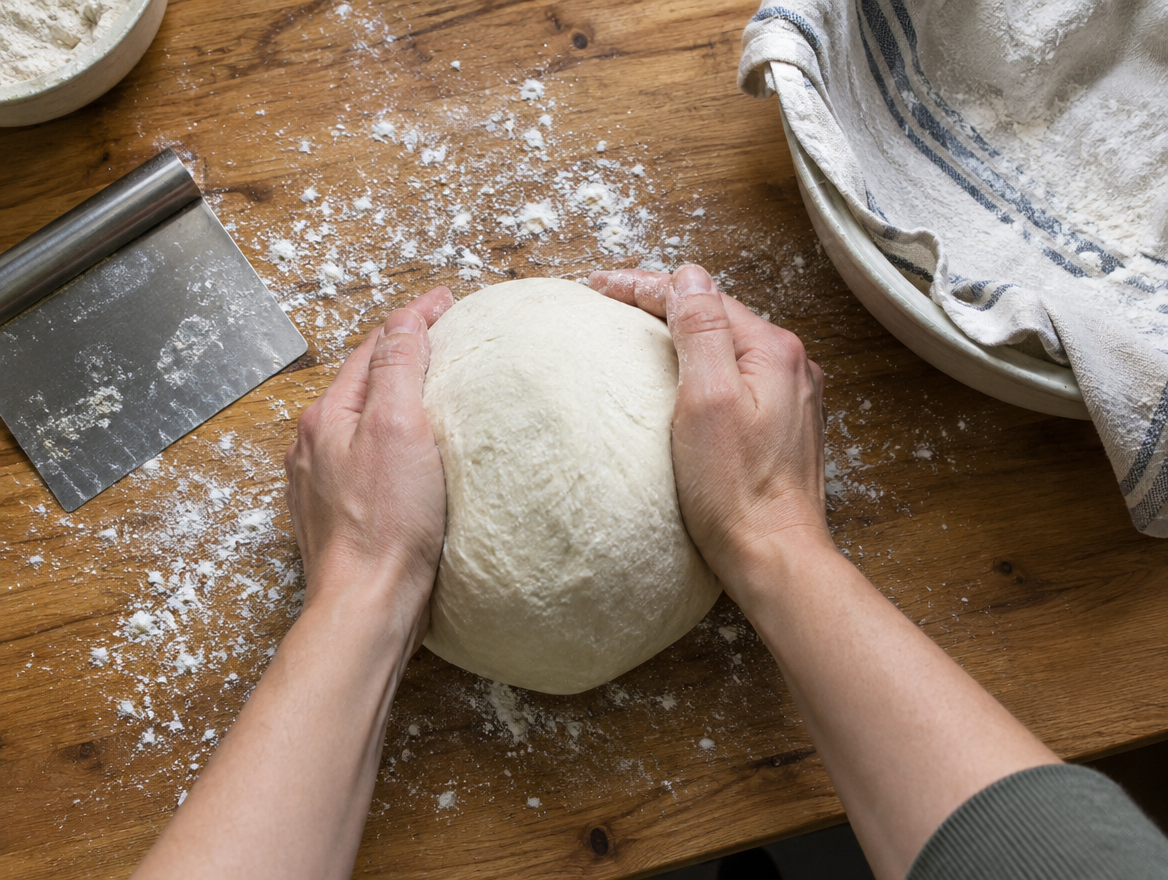
6. Shape the loaf. Tip the dough onto a lightly floured counter. Fold the edges into the center to make a loose round, flip it seam-side down, and let it rest 20 minutes. Then flip it again, fold the bottom third up and the sides in, and roll it from the top toward you. Cup your hands around it and drag it toward you a few times until the surface feels tight. Dust the towel-lined bowl with rice flour and set the dough in it seam-side up.
7. Chill it overnight. Cover the bowl with a plastic bag or a shower cap and refrigerate 8 to 16 hours. The cold slows the rise, builds flavor, and firms the dough so it holds its shape and scores cleanly.
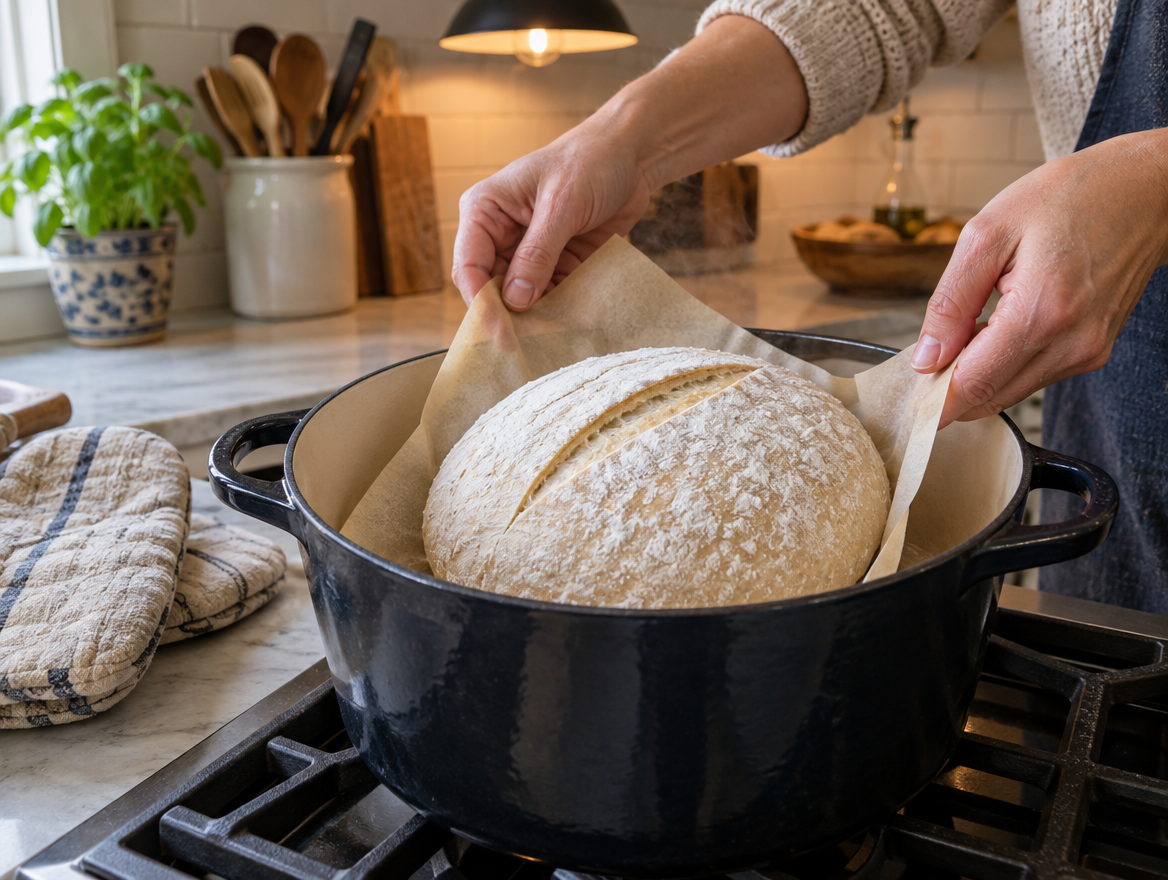
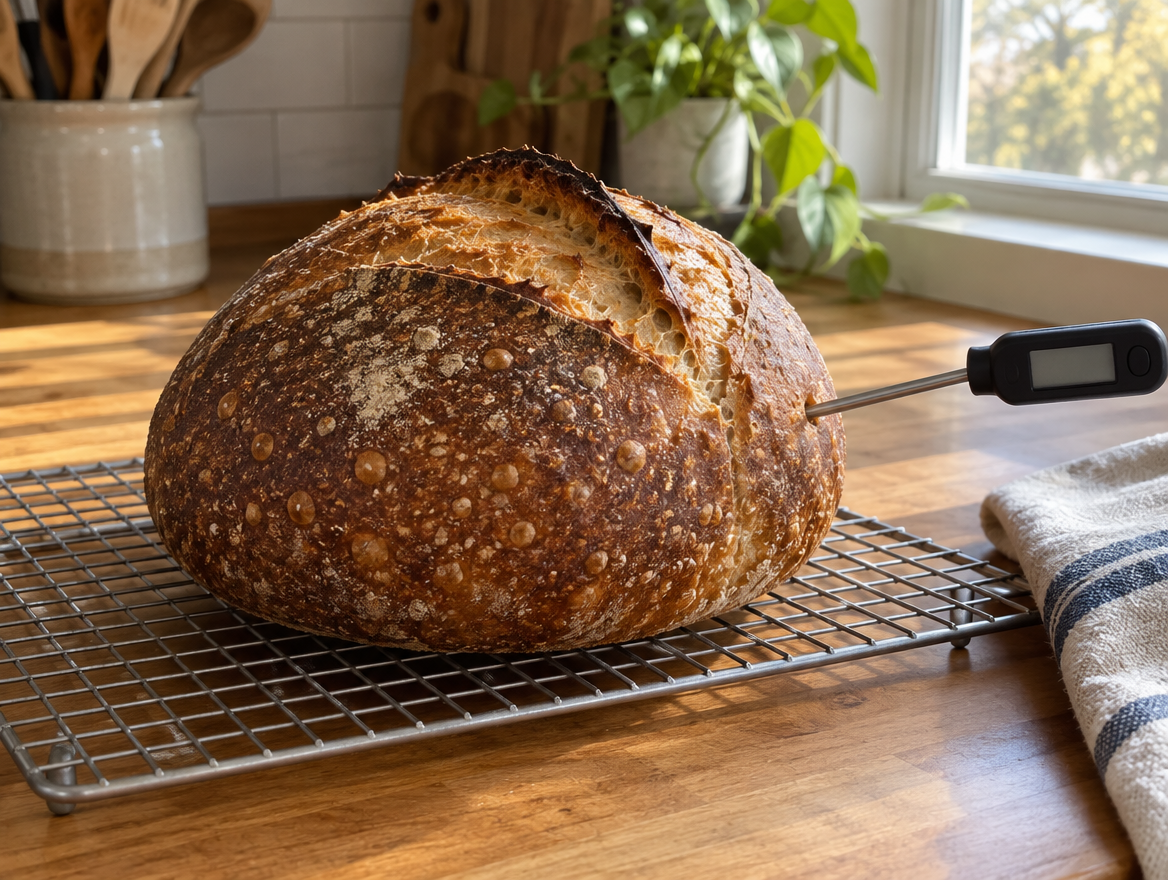
8. Bake, then cool. Put the Dutch oven with its lid on a middle rack and heat the oven to 475°F for 45 minutes. Turn the cold dough onto a sheet of parchment and cut one slash about ½ inch deep across the top. Lower it into the pot by the parchment, cover, and bake 20 minutes. Uncover, lower the heat to 450°F, and bake 20 to 25 minutes more, until the crust is deep brown and the center reads 205 to 210°F. Cool the loaf on a rack for at least 1 hour, because the inside is still setting.
Why did my sourdough come out flat or dense?
Most problems people hit while learning how to make sourdough bread trace back to fermentation, and the loaf itself tells you which way it went.
Dense, tight crumb with a few big holes near the top. The dough didn't ferment enough. Either the starter wasn't at its peak or the rise ended early. Next time, wait for the 50 percent growth and the jiggle, even if the clock says you're done.
Flat loaf that spreads, with slack, sticky dough at shaping. The dough fermented too long. Shorten the rise by an hour, or move the bowl somewhere cooler.
One big tunnel under the crust. Shaping usually trapped a large air pocket. Press out big bubbles gently before the final shape.
Gummy center on a loaf that rose well. It was underbaked or sliced too soon. Bake until the center reads at least 205°F, then wait the full hour.
Pale crust. The pot didn't preheat long enough, or the uncovered bake was too short. Give it the full 45-minute preheat and bake until the crust is deep brown.
Burnt bottom. Slide a baking sheet onto the rack under the pot for the uncovered part of the bake.
Keep your loaf fresh
Once you know how to make sourdough bread, the next job is keeping it fresh. Store the cooled loaf cut side down on a board for the first day. After that, keep it in a bread bag or wrapped in a towel for up to 3 days. The fridge dries it out faster. For longer storage, slice the whole loaf, freeze the slices in a freezer bag for up to 3 months, and toast them straight from frozen.
The starter you pour off before a feeding doesn't have to go in the trash. Use it in our sourdough discard snacks or a loaf of sourdough banana bread. If someone at your table avoids gluten, our gluten-free sourdough bread walks through that version. For more on reading your dough, King Arthur's guide to bulk fermentation goes deeper on the signs.
The real skill is reading the dough
You came here to learn how to make sourdough bread without guessing. The times in this recipe get you close. The signs finish the job: a starter that has doubled and domed, and dough that has grown by half and jiggles in the bowl. Before your first bake, put a rubber band on your starter jar and a strip of tape on your dough bowl so you can see the rise instead of guessing at it.
Frequently Asked Questions
Can I make sourdough bread without a Dutch oven?
Yes. Preheat a baking sheet or pizza stone on the middle rack with a metal pan on the rack below. Slide the loaf onto the hot sheet, pour 1 cup of boiling water into the pan, and shut the door quickly. The steam does the lid's job, though the crust comes out a little less crisp.
Can I make sourdough bread without a kitchen scale?
You can, but expect more variation. Spoon the flour into the cup and level it, then use 4 cups flour, 1½ cups water, ½ cup starter, and 1¾ teaspoons fine salt. If the dough feels stiff after mixing, add water 1 tablespoon at a time.
Why is there gray liquid on top of my starter?
It means the starter is hungry. Pour the liquid off for a milder flavor, or stir it back in for a tangier one, then feed the starter right away. The starter is still alive; it just needs food.
Can I leave the dough in the fridge longer than 16 hours?
Often, yes, up to about 24 hours. Check it with a floured finger: press about ½ inch in. If the dent springs back slowly and leaves a small mark, bake it now; if it doesn't spring back at all, it's overproofed, so bake it right away and expect a flatter loaf.
How do I make my sourdough more or less sour?
It depends on time in the cold. For more tang, give it the full 16 hours in the fridge and use some whole wheat flour. For a milder loaf, bake after 8 hours and use the starter right at its peak.
Can I add cheese, herbs, or jalapeños?
Yes. Add 100 to 150 g of mix-ins during the last set of stretch and folds, spreading them over the dough before you fold. Pat wet ingredients like jalapeños dry first.
What if my kitchen is cold?
Expect a longer rise, sometimes 8 hours or more. Put the covered bowl in the oven with only the light on, and check it now and then, since some ovens get too warm that way. Mixing with 85°F water also gives the dough a head start.
Settle This: Do You Slice Your Sourdough While It's Warm?
Step 8 says to wait an hour. Not everyone does, and this one gets heated in baking circles. One side says warm bread with butter melting into it is the whole reason to bake, and a slightly gummy slice is a fair trade. The other side says the inside is still cooking when the loaf comes out, and cutting early wrecks the crumb you waited a whole day for.
Pick your side.
Why did you vote that way? Drop your take in the comments.