

Quick Answer: High Protein Mac and Cheese
- High protein mac and cheese uses blended cottage cheese in place of (or alongside) a traditional roux
- Delivers 38 to 45 grams of protein per serving without changing the taste or texture
- Blend one cup of cottage cheese until smooth, then combine with sharp cheddar and starchy pasta water over low heat
- Finish with a small amount of acid to brighten the sauce
- Ready in 25 minutes at around $2.80 per serving, and your kids won't know it's in there
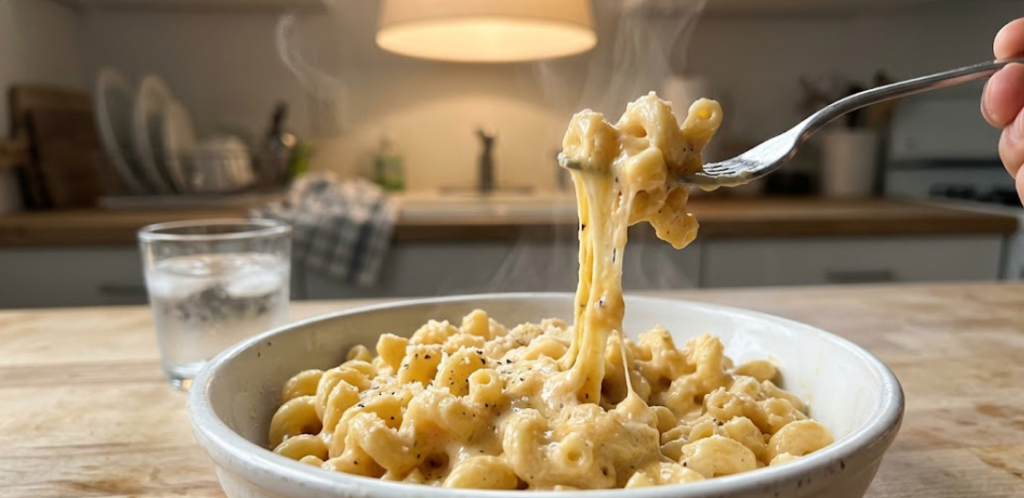
Active time: 10 minutes | Total time: 25 minutes | Servings: 4
You already know mac and cheese is a dinner your family will actually eat. The problem is you're reinventing the wheel every single night, trying to land on something filling, affordable, and quiet at the table. This high protein mac and cheese recipe solves the protein problem without touching anything your kids already love about the dish.
One cup of cottage cheese blended into the sauce adds 20 to 30 grams of protein per serving without changing the taste or texture. Cost per serving sits around $2.80. Active prep runs about 10 minutes while the pasta boils. This is a rotation-worthy weeknight dinner, not a gym-meal compromise dressed up as family food.
Why This High Protein Mac and Cheese Works
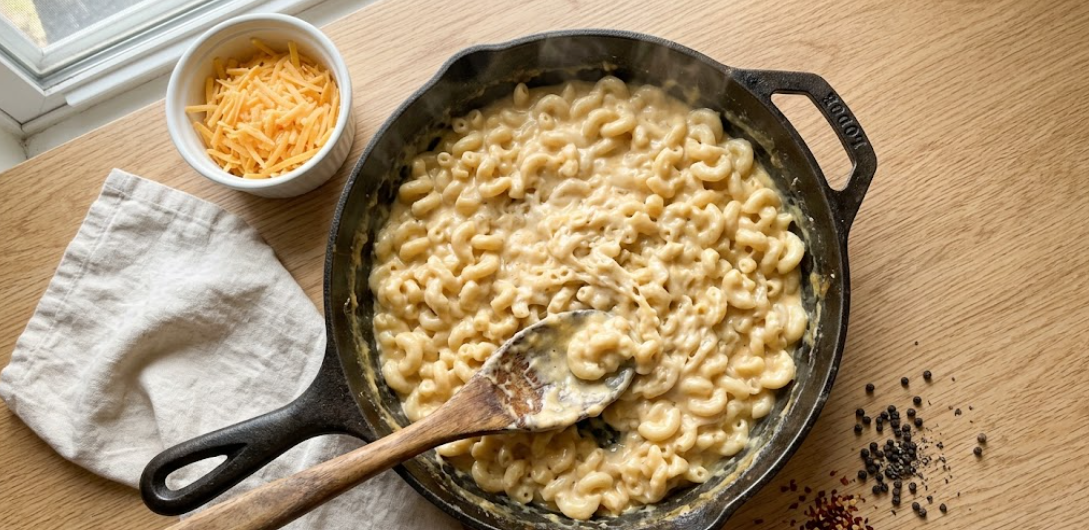
Most people are skeptical because of texture. Cottage cheese straight from the container is lumpy, which leads home cooks to assume it will make the sauce grainy. The fix is simple: blend it first. Sixty seconds in a blender or with an immersion blender breaks down the curds and turns cottage cheese into something close to a smooth cream sauce. Once it hits sharp cheddar and hot pasta water, the result is creamy, clingy, and indistinguishable from a roux-based sauce to anyone at the table.
One home cook on Reddit's r/EatCheapAndHealthy put it plainly: “I fed this to my husband for three weeks before I told him what was in it. He still asks for it.”
How Much Protein Is In High Protein Mac and Cheese Per Serving?
One serving of this high protein mac and cheese (about 1.5 cups) delivers 38 to 45 grams of protein, depending on your pasta and cottage cheese. Regular pasta with full-fat cottage cheese and sharp cheddar lands around 38 grams. Swap in a higher-protein pasta like Barilla Protein+ or Banza chickpea pasta, and you can push that number to 50 grams per serving. Standard boxed mac and cheese delivers roughly 9 grams of protein per serving, so the difference is meaningful for anyone trying to feel fuller at dinner or hit a daily protein target without eating grilled chicken a fifth time this week.
Does High Protein Mac and Cheese Actually Taste Like Cottage Cheese?
No. If you blend it, you won't taste it. Cottage cheese has a mild, slightly tangy flavor that disappears once it is blended smooth and combined with sharp cheddar, garlic powder, and a small amount of mustard powder. The sharpness of the cheddar carries the flavor. The cottage cheese contributes creaminess and protein without contributing any noticeable taste of its own. Reddit threads on r/Cooking have confirmed this repeatedly, with users feeding it to skeptical family members and getting the same verdict every time: it tastes like good mac and cheese.
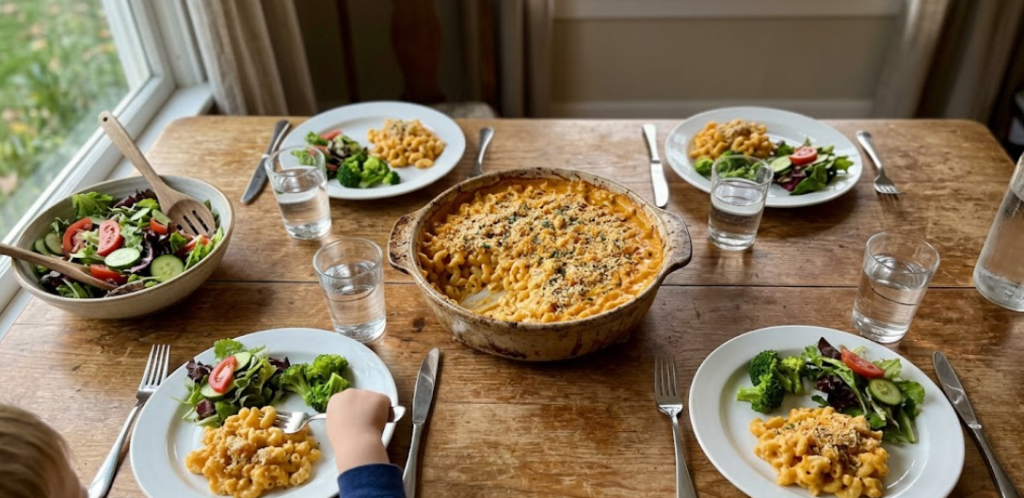
Ingredients for High Protein Mac and Cheese
- 12 oz pasta (elbows, cavatappi, or penne all work; sub Banza or Barilla Protein+ for the higher-protein version)
- 1 cup full-fat cottage cheese (Good Culture or Daisy are the best-tasting options; store-brand works fine)
- 1.5 cups shredded sharp cheddar cheese (pre-shredded works; freshly grated melts smoother)
- 1/2 cup whole milk or Fairlife whole milk (Fairlife adds extra protein)
- 1 tsp garlic powder
- 1/2 tsp mustard powder (or 1 tsp Dijon, which gives the sauce depth without tasting like mustard)
- 1/2 tsp apple cider vinegar (or a small squeeze of lemon juice)
- Salt and black pepper to taste
- Optional: hot sauce, smoked paprika, or everything bagel seasoning on top
Ingredient note: Low-fat cottage cheese works, but full-fat produces a creamier sauce. If you only have large-curd cottage cheese, blend it a few seconds longer than you think you need to.
How to Make High Protein Mac and Cheese
- Salt your pasta water well before adding pasta. It should taste mildly salty, like a light broth. This is the single biggest flavor decision in the whole recipe. Unsalted pasta water makes flat mac and cheese.
- Cook pasta to al dente per package directions. Before draining, scoop out 1/4 cup of the pasta water and set it aside.
- While pasta cooks, blend the cottage cheese. Add cottage cheese and milk to a blender or use an immersion blender in a deep bowl. Blend for 45 to 60 seconds until completely smooth with no visible curds. This step is not optional if you want a smooth sauce. No blender? Mash the cottage cheese with a fork until mostly smooth. Small remaining curds will dissolve in the hot pasta, and the texture will land at about 85% of the blended version.
- Drain pasta and return it to the pot over low heat.
- Add the blended cottage cheese mixture, cheddar, garlic powder, mustard powder, and reserved pasta water. Stir continuously for 2 to 3 minutes until the cheese is fully melted and the sauce coats every piece of pasta. Low heat here prevents the sauce from breaking.
- Add the apple cider vinegar, stir to combine, then taste for salt. This small amount of acid lifts the flavor of the dairy and prevents the sauce from tasting flat or chalky. Add a pinch more salt if needed.
- Serve immediately with optional toppings. Leftovers reheat well with a tablespoon of milk stirred in.
A handheld immersion blender is the single tool that makes this recipe repeatable on a weeknight, because you can blend the cottage cheese directly in the measuring cup with no extra cleanup.
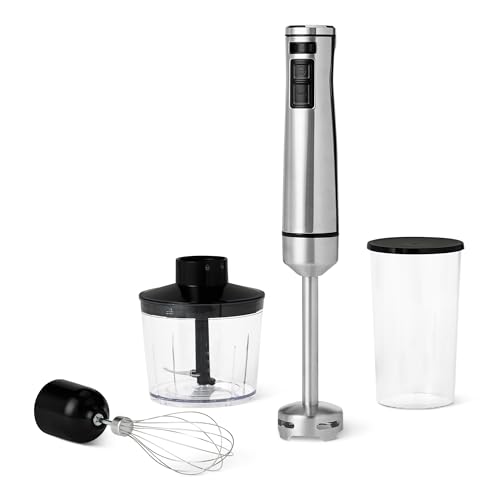
- VERSATILE KITCHEN COMPANION: Hand-held immersion blender perfect for mixing soups, sauces, smoothies and...
- POWERFUL MOTOR WITH TURBO: 500 watts of power with reliable DC motor, metal housing, and turbo button for...
Last update on 2026-10-12 / Affiliate links / Images from Amazon Product Advertising API
(As an Amazon Associate, we earn from qualifying purchases.)
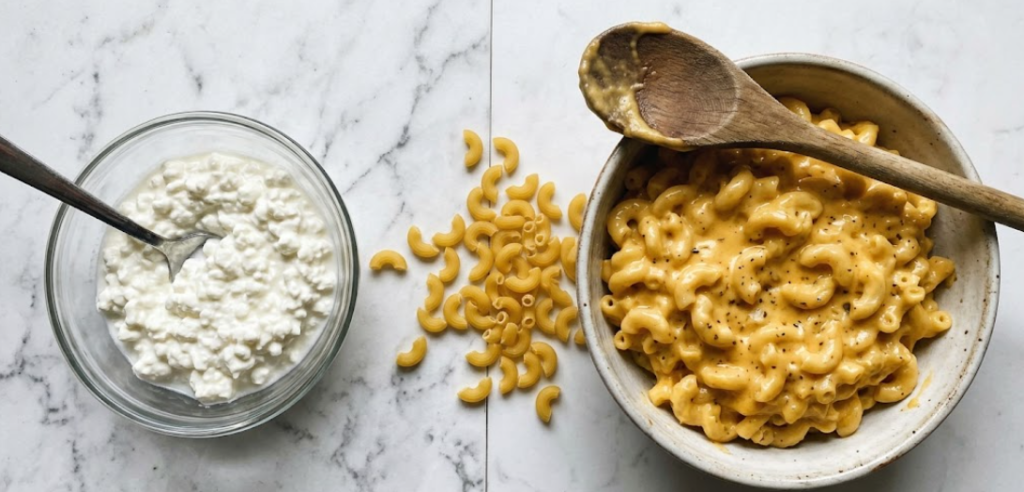
Common Mistakes When Making High Protein Mac and Cheese
Skipping the blend. Unblended cottage cheese curds do not disappear in the heat the way people hope. You will end up with lumpy high protein mac and cheese and skeptical family members. Take the 60 seconds to blend.
Using unsalted pasta water. This is where most home cooks lose the flavor before they even start. If the pasta water does not taste seasoned, the pasta will taste flat no matter how good the sauce is.
Turning the heat too high when finishing the sauce. High heat causes the dairy proteins to seize and the sauce to separate into a greasy, gritty mess. Low heat plus the reserved pasta water starch is what makes the sauce stay creamy and cohesive.
A silicone spatula with a flexible edge lets you keep the sauce moving across the bottom of the pot without scratching your cookware, which is exactly what prevents the bottom layer from scorching and splitting the dairy.

- A necessary tool when cooking with non-stick cookware and bakeware; will not scratch pots and pans
- Has a thin, flexible edge that glides easily beneath foods; perfect for flipping fragile foods and...
Last update on 2026-10-12 / Affiliate links / Images from Amazon Product Advertising API
(As an Amazon Associate, we earn from qualifying purchases.)
Forgetting the acid. The apple cider vinegar or lemon is the step most people skip, and it is the step that makes the dish taste finished rather than bland. Dairy needs a small amount of acid to taste bright rather than heavy. Half a teaspoon is not detectable as vinegar. It just makes everything taste better.
Can You Meal Prep High Protein Mac and Cheese?
Yes, and it holds up well. Mac and cheese is one of the few pasta dishes that reheats reliably because the starchy sauce acts as an emulsifier and helps reconstitute it. For meal prep, portion the cooled mac into individual containers (OXO Pop containers or Rubbermaid Brilliance work well for this) immediately after cooking so it sets in even portions rather than in one congealed block.
The container you portion into decides whether the mac sets evenly or congeals into one block, and stackable glass with tight-sealing lids holds up best in the fridge for the full 5 days.
No products found.
(As an Amazon Associate, we earn from qualifying purchases.)
How Long Does High Protein Mac and Cheese Last in the Fridge?
Stored in an airtight container, it keeps for 4 to 5 days in the refrigerator. When reheating, add one tablespoon of milk per serving and heat on medium-low, stirring occasionally, until the sauce comes back together. Microwave reheating works fine: add the milk, cover loosely, and heat in 45-second intervals, stirring between each. It does not freeze well. The dairy sauce separates when frozen and does not come back together cleanly on reheating. Keep it in the fridge for the week and make a fresh batch if you need more.
What to Do With Leftover High Protein Mac and Cheese
Leftover high protein mac and cheese has more than one use. Reheat it as-is for a weekday lunch. Stir in a handful of frozen peas and a spoonful of canned tuna or rotisserie chicken to turn it into a complete meal with even more protein. Or spread the leftover mac into an oven-safe dish, top with breadcrumbs and a drizzle of olive oil, and bake at 375 degrees for 15 minutes to make a baked version with a crunchy top, which kids often receive more enthusiastically than the stovetop version.
If you want to build more high-protein, family-approved dinners around this recipe, our weeknight dinner rotation guide walks you through building a 10-dinner list your household actually eats. And if you cook pasta regularly, see our one-pot pasta recipes for more options in the same time range.
If you want to turn leftovers into a baked version with a crunchy top the next night, a cast iron skillet takes you from stovetop to oven without transferring anything to a second dish.
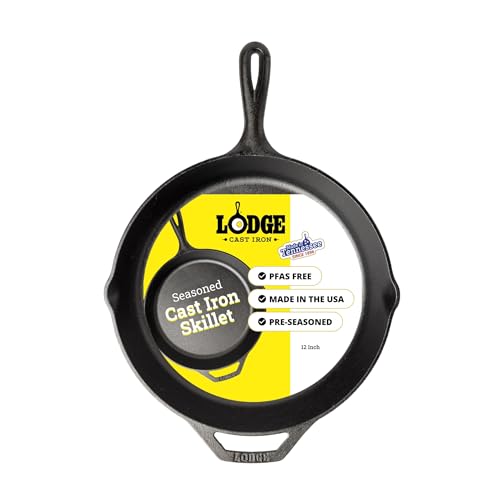
- Quality Cast Iron Frying Pan: The Lodge Seasoned Cast Iron Skillet is loved for its great heat retention...
- Naturally Seasoned for Non-Stick Finish: Each pre-seasoned skillet arrives ready to use with a smooth...
Last update on 2026-10-12 / Affiliate links / Images from Amazon Product Advertising API
(As an Amazon Associate, we earn from qualifying purchases.)
Free Printable: High Protein Mac and Cheese Recipe Card
Want this recipe in a format you can stick to the fridge or slide into your recipe binder? Download the free printable version below. It includes the full ingredient list, step-by-step instructions, protein counts per serving for both the regular and Banza versions, and the common mistakes to avoid, all on a single clean page.
No sign-up required. Print it once, cook it for years.
[Download the Free High Protein Mac and Cheese Printable Recipe Card]
The Bottom Line
This is a weeknight dinner worth adding to the regular rotation. It solves the protein problem without asking anything extra from the cook or the family. The total cost is under $3 per serving. The active time is 10 minutes. Your kids will not notice the cottage cheese is in there if you blend it. That is a lot of boxes checked for a Tuesday night.
If you want a week of dinners built around this idea, download our free 5-Day High Protein Comfort Meal Plan below. It includes this recipe as the anchor with four more macro-dense comfort food dinners that follow the same format: familiar enough that everyone eats, filling enough that you're not in the kitchen again at 8pm.
Shop the recipe: Good Culture cottage cheese (cleanest label, best texture for blending) | Banza chickpea pasta (for the higher-protein version) | OXO Pop meal prep containers (the best for portioning and stacking)
FAQs
Q: Can I use cottage cheese mac and cheese if I don't have a blender?
Yes, but you need to mash the cottage cheese with a fork until it's mostly smooth before adding it to the pasta. Small curds will dissolve in the heat, though the final texture will be slightly less creamy than the blended version. A food processor or immersion blender works better than a fork if you have one.
Q: What's the best pasta shape for high protein mac and cheese?
Go with elbows, cavatappi, shells, or cellentani. Shapes with ridges or curves hold the sauce better than smooth pasta like penne. If you're using Banza or another chickpea pasta, rinse it briefly after draining to remove excess starch that can make the sauce gluey.
Q: Can I make this high protein mac and cheese gluten-free?
Yes. Banza chickpea pasta is gluten-free and adds protein at the same time, which is a useful double-duty swap. Cook it one minute less than the package directions to keep it from going mushy in the hot sauce.
Q: Why did my cottage cheese sauce turn grainy?
Either the cottage cheese wasn't blended smooth enough, or the heat was too high when you added the cheese. Dairy proteins seize above a certain temperature and create that gritty texture. Keep the heat on low once the pasta is back in the pot, and stir constantly.
Q: Can I add vegetables to high protein mac and cheese?
Yes, and it's a good way to add fiber without fighting anyone at the table. Stir in frozen peas, chopped spinach, or roasted broccoli florets after the sauce comes together. Thawed frozen vegetables work better than fresh ones because they don't release water into the sauce.
Q: Is cottage cheese mac and cheese good for kids who are picky eaters?
If you blend the cottage cheese fully, picky eaters won't notice it's in there. The sauce looks and tastes like regular mac and cheese. Don't announce the swap at the table. Let them eat it, decide they like it, and have the conversation later if you want to.
Q: Can I make this recipe dairy-free?
Not really, no. This recipe is built around the protein content and melting behavior of dairy cheese and cottage cheese, which plant-based alternatives don't replicate well. If you need dairy-free, a cashew-based cream sauce with nutritional yeast is a better starting point than trying to substitute one-for-one here.
Quick Poll
Why did you vote that way? Drop your take in the comments.