

Quick Summary: Grilled Chicken Recipes
- One locked technique, seven rotating marinades, no new skill required each week
- Fixes the number one grilled chicken failure: dry, rubbery texture
- Built for chicken breast and thigh, with cut-specific pull temperatures
- Includes a flat-flavor fix so no marinade gets thrown out by mistake
Most grilled chicken recipes get made once or twice before they get abandoned. The chicken comes out dry, the marinade tastes the same as the one from two weeks ago, and by week three the grill sits unused.
That pattern is not a failure of skill. It is a system problem. Grilled chicken recipes only survive a full season when the system separates two things that usually get treated as one: the cooking technique and the flavor.
Building grilled chicken recipes around that separation is the difference between a rotation that lasts all summer and one that quietly disappears by July.
This rotation locks the technique once so it never has to be relearned, then rotates seven marinades through that same technique. Grilled chicken recipes built this way do not ask for a new skill every week. They ask for one swap.
Why Grilled Chicken Goes Stale by Week Three
Grilled chicken recipes go stale for two separate reasons, and most advice only addresses one of them.
The first reason is textural. Chicken breast is lean, and lean protein punishes even small timing mistakes with a rubbery, dry result. Food writers have called chicken breast “one of meat's biggest snoozefests,” and that reputation is earned when the same overcooked piece shows up every week.
The second reason is flavor repetition. Even grilled chicken recipes that turn out juicy every time will feel like the same dinner if the marinade never changes.
The fix is not more recipes. It is one locked technique paired with a flavor rotation that keeps moving. That single separation is what makes these grilled chicken recipes different from a roundup of unrelated dinners.
Lock the Technique Once
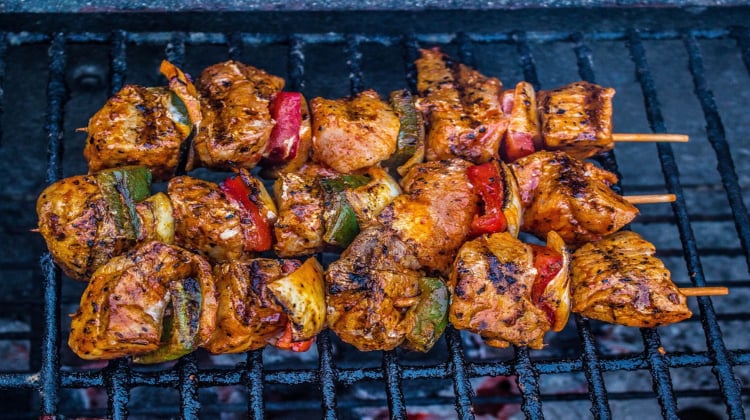
1. Pick the cut. Chicken thighs carry more fat and forgive a longer stretch on the grill, which makes grilled chicken recipes built around thighs more forgiving for a distracted weeknight. Chicken breast cooks faster and dries out faster, so it rewards more attention.
2. Set up two heat zones. One direct, one indirect. Grilled chicken recipes that only use one heat zone tend to either char the outside before the inside finishes or dry out the whole piece.
A chimney starter gets coals fully lit and ready to bank into two zones in under 20 minutes, without lighter fluid affecting the flavor.

- Chimney starter system lights charcoal quickly and evenly
- Made from aluminized steel with a stay-cool thermoplastic handle
Last update on 2026-10-21 / Affiliate links / Images from Amazon Product Advertising API
(As an Amazon Associate, we earn from qualifying purchases.)
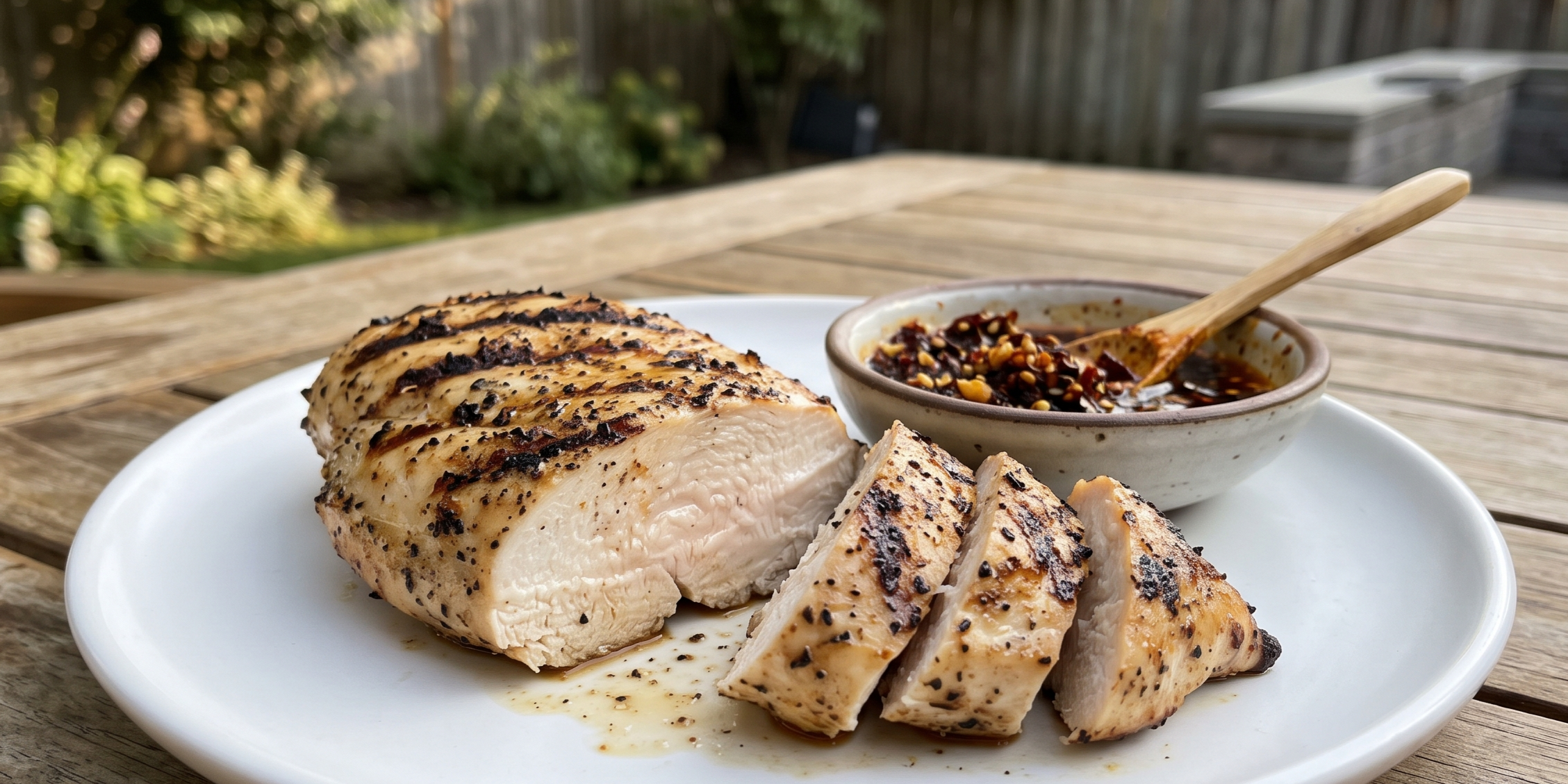
3. Pull at the right temperature for the cut. Pull chicken breast at 160 to 162°F and let carryover heat finish the last few degrees during the rest. Pull bone-in thighs at 175°F, since the extra fat and connective tissue need the higher temperature to render properly.
An instant-read thermometer takes the guesswork out of hitting 160–162°F on breast and 175°F on thighs, so pulling early or late stops being a coin flip.
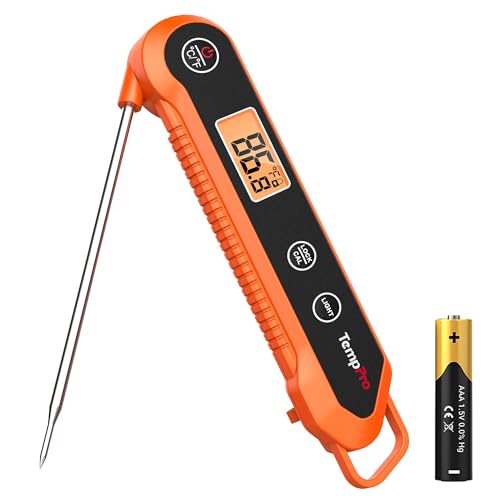
- Completely Waterproof: IPX6 waterproof rating means you can wash this cooking thermometer under running...
- Easy to Read: The large, easy-to-read numbers and bright backlit display make this instant read...
Last update on 2026-10-21 / Affiliate links / Images from Amazon Product Advertising API
(As an Amazon Associate, we earn from qualifying purchases.)
4. Rest before cutting. Five minutes, minimum. Skipping this step lets the juices run out onto the cutting board instead of staying in the meat, which is one of the most common reasons grilled chicken recipes taste dry even when the cook time was correct.
For a deeper dive into grill heat zones and cheap cuts, the Memorial Day BBQ on a Budget guide covers the same setup applied to a full spread.
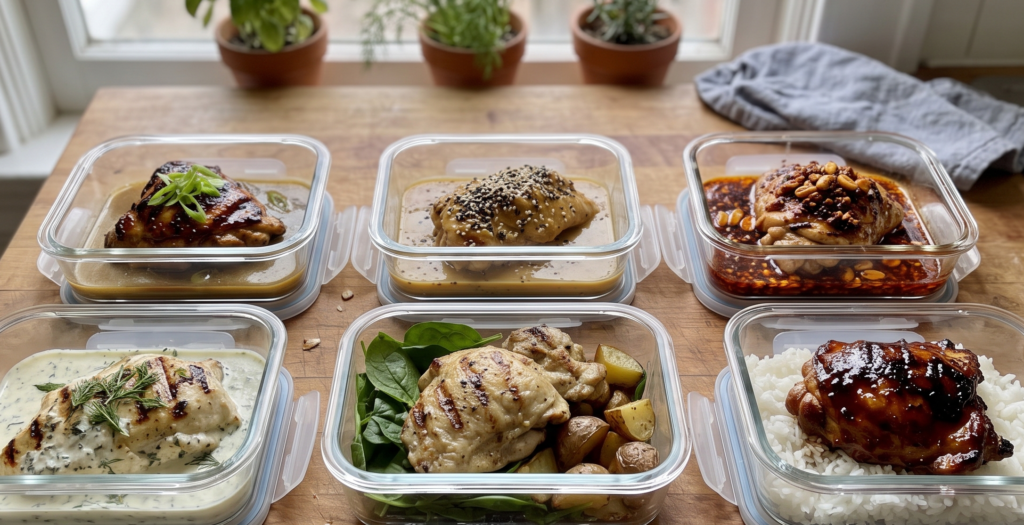
Build the Rotation: One Base, Seven Swaps
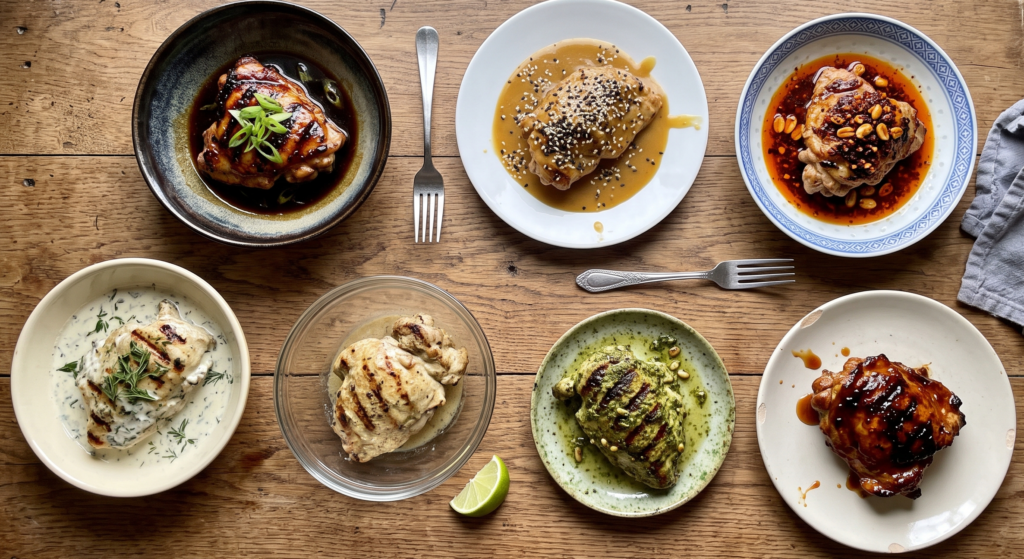
The base marinade stays the same for every one of these grilled chicken recipes: oil, an acid, and salt. What changes each week is a single pantry-staple flavor element.
Anyone missing an ingredient in one of these grilled chicken recipes can swap in what is already in the pantry. These seven grilled chicken recipes all start from that same three-ingredient base.
Swap one: soy sauce and ginger. Savory and salty. Works well with rice or noodles.
Swap two: honey and Dijon mustard. Sweet and tangy. Holds up on a sandwich the next day.
Swap three: chili crisp. Heat and crunch. A spoonful reserved for serving turns leftovers into a different lunch entirely.
Swap four: plain yogurt. Replaces some of the oil and tenderizes gently while carrying warm spices like cumin and coriander.
Swap five: lime juice and cumin. Bright and smoky. Pairs naturally with corn or black beans.
Swap six: a spoonful of pesto. Herb flavor without needing fresh herbs on hand every week.
Swap seven: barbecue sauce. Brushed on during the last few minutes, added after the base marinade rather than instead of it, so the char doesn't burn.
For a rub-based variation, the homemade BBQ seasoning guide has a dry rub that works as an eighth option once the seven marinades above are in regular rotation.
When a Marinade Tastes Flat, Run This Fix
The problem is almost always one missing element out of salt, fat, acid, or heat, not a missing ingredient.
Tastes flat? Add more acid right before grilling. Acid brightens a dish that otherwise reads as heavy or dull.
Tastes bland even after grilling? It wasn't salted early enough. Salt needs time to reach the inside of the meat, not just coat the surface.
Running this check before assuming a marinade recipe has failed saves a reader from throwing out a variation that only needed one adjustment. Most disappointing grilled chicken recipes are one missing element away from working, not a wrong recipe entirely.
Get the FREE Printable
Grilled chicken recipes do not need to be reinvented every season. They need one technique locked in place and a flavor rotation that keeps the dinner from repeating itself. That is the whole system behind this set of grilled chicken recipes.
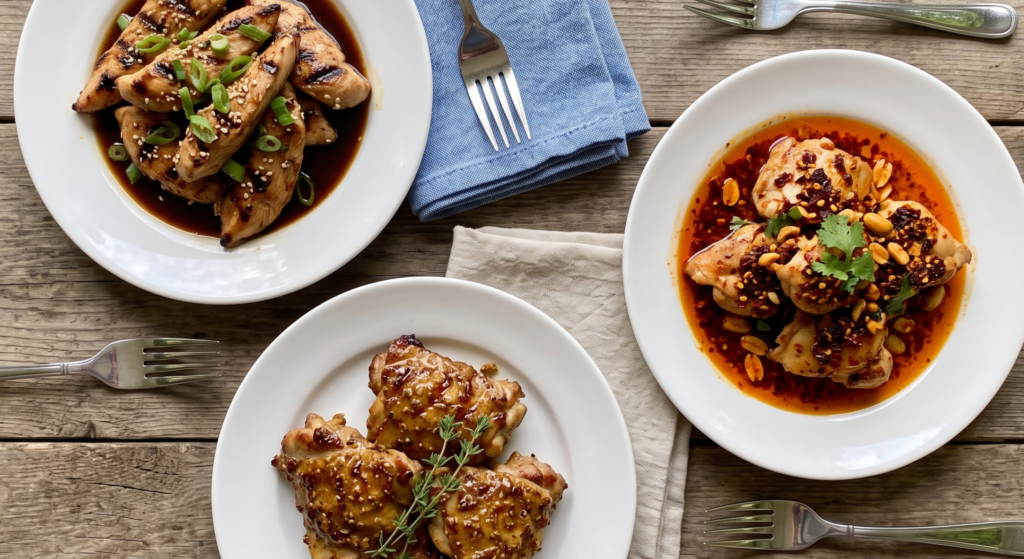
Keep the Rotation Going Past Week Three
The rotation holds up because the technique never changes and the flavor always does. Grilled chicken recipes fail long term when the cook has to relearn a method every time, or eats the exact same marinade until it stops tasting good.
Restocking the pantry with ingredients from all seven swaps at once means grilled chicken recipes for the whole week are covered without a mid-week grocery run. A jar of chili crisp, a bottle of soy sauce, a container of plain yogurt, and a jar of Dijon mustard cover four of the seven swaps and last for weeks.
Sealed glass containers keep sliced or chopped chicken fresh for the full four days and go straight from fridge to microwave without a transfer step.

- LEAK-PROOF AND AIRTIGHT: Rubbermaid Brilliance Glass Food Storage Containers have crystal-clear lids that...
- EASY STORAGE AND REHEATING: Glass containers have vented, microwave-safe lids for easy...
Last update on 2026-10-21 / Affiliate links / Images from Amazon Product Advertising API
(As an Amazon Associate, we earn from qualifying purchases.)
For a budget angle on stretching a grilling rotation across cheaper cuts, the budget grilling guide breaks down cost per pound alongside the same technique used here.
FAQ
Do chicken breasts or thighs work better for this rotation?
Thighs generally work better because the extra fat forgives a longer stretch on the grill. Breast works fine too, as long as the pull temperature is checked closely.
How long should I marinate the chicken?
At least 30 minutes, up to four hours. Going past four hours with an acid-heavy marinade can soften the meat past the point of pleasant.
What if I don't have one of the swap ingredients?
Swap in whatever acid, condiment, or spice is already in the pantry and keep the base of oil, acid, and salt intact. The specific bottle matters less than the role it plays.
How long does leftover grilled chicken keep?
Up to four days in a sealed container in the fridge. For longer storage, slice or chop it before freezing so it thaws quickly for salads, wraps, or grain bowls.
Why does my grilled chicken always turn out rubbery?
Overcooking past the correct pull temperature for the cut. Breast should come off at 160 to 162°F, thighs at 175°F.
Is this rotation dairy-free friendly?
Yes, with one swap. Skip the yogurt-based marinade and use a plain oil and acid base instead. The other six swaps don't contain dairy.
Do I need any special equipment to make this work?
No. One instant-read thermometer and a grill with two heat zones covers the whole rotation. Nothing else is required.
Poll
Why did you vote that way? Drop your take in the comments.