

Quick Answer: Cowboy Butter Chicken Pasta Recipe
- Cowboy butter chicken pasta is pasta tossed with seared chicken in a sauce built from compound butter, pasta water, and broth.
- Compound butter (cowboy butter) is softened butter folded with garlic, fresh herbs, lemon zest, and a pinch of cayenne or red pepper flakes.
- The sauce gets its creaminess from the emulsion between butter, starchy pasta water, and broth. No heavy cream required.
- Active prep runs about 15 minutes. Total time from start to plate is around 25–30 minutes depending on pasta cook time.
- Cowboy butter holds in the fridge for up to a week and freezes for up to 3 months, so the prep can be split across two nights.
- Works with fettuccine, pappardelle, or any flat pasta that holds sauce. Rotisserie chicken cuts the recipe to about 15 minutes.
- One pan handles the sear, the sauce, and the toss. Cleanup is a single skillet plus the pasta pot.

Why This Cowboy Butter Chicken Pasta Recipe Earns a Spot in the Rotation
Compound butter is the engine of this dish. Softened butter mixed with garlic, fresh herbs, lemon zest, and a pinch of heat carries enough flavor to season the entire pan once it melts down. That single make-ahead step is what turns a 30-minute weeknight cook into something that tastes like more.
The cowboy butter chicken pasta recipe has been moving across food publications and recipe forums in 2026, and the reason is structural. A reader on r/EatCheapAndHealthy put it cleanly: “You need meals you can assemble rather than cook.” — AskMetaFilter Compound butter recipes fit that brief almost perfectly. The hard work happens once, in three minutes, with a fork and a bowl. Everything after that is just cooking pasta and chicken.
This is also a recipe that holds up against the most common weeknight failure mode: bland sauce. The lemon zest and herbs in cowboy butter are doing flavor work the broth alone never could.
What Makes Cowboy Butter Sauce Pasta Different From Other Creamy Pasta
Most creamy weeknight pastas lean on heavy cream or cream cheese to carry the texture. This one doesn't. The silky finish on cowboy butter sauce pasta comes from an emulsion: starch from the pasta water, fat from the butter, and broth as the bridge. Whisked together at the right temperature, those three ingredients hold a coating consistency that clings to noodles and chicken without weight.
That's the food science underneath the trend. Pasta water carries dissolved starch from the cooking process. Starch is an emulsifier. When it meets warm fat in a moderately heated pan, the two stay suspended together as a sauce instead of separating into greasy puddles. Heavy cream gets credit for richness in most American pasta recipes, but pasta water and butter were doing the same job in Italian kitchens long before cream entered the conversation.
The lemon at the finish is non-negotiable. Acid cuts through fat and reads as brightness on the palate. Without it, the dish goes flat halfway through the bowl.
Ingredients for Cowboy Butter Chicken Pasta
For the Cowboy Butter
- 1/2 cup (1 stick) unsalted butter, softened to room temperature
- 4 to 5 cloves garlic, minced (or 1.5 tablespoons jarred minced garlic)
- 2 tablespoons fresh parsley, finely chopped
- 1 tablespoon fresh thyme, finely chopped
- 1 tablespoon fresh basil, finely chopped
- Zest of 1 lemon
- 1/4 teaspoon crushed red pepper flakes
- 1/4 teaspoon smoked paprika (optional, adds depth)
- Salt and black pepper to taste
Substitution note: Dried herbs work in a pinch at 1/3 the volume of fresh. Use 2 teaspoons dried parsley, 1 teaspoon dried thyme, 1 teaspoon dried basil. Flavor will be earthier, less bright.
For the Pasta and Chicken
- 1 lb boneless, skinless chicken breasts (thighs also work and stay juicier)
- 1 lb fettuccine, pappardelle, or another flat pasta
- 3 tablespoons olive oil
- 2 cups low-sodium chicken broth
- Juice of 1/2 lemon, plus more to taste
- Freshly grated parmesan cheese for finishing
- Fresh parsley and lemon slices for garnish
- Salt and black pepper to taste
Substitution note: Rotisserie chicken cuts the recipe down to about 15 minutes. Shred 2 cups and skip the searing steps. Shrimp works too. Use 1.5 lb large shrimp added to the broth-butter sauce in the final 2–3 minutes.

How to Make Cowboy Butter Chicken Pasta
Step 1: Make the Cowboy Butter (3 minutes)
In a small bowl, combine the softened butter, minced garlic, chopped parsley, thyme, basil, lemon zest, red pepper flakes, smoked paprika if using, salt, and pepper. Mash with a fork until everything is fully incorporated. Taste and adjust the salt. Set aside at room temperature so it stays soft enough to melt evenly later.
Make-ahead note: Cowboy butter can be made up to 2 days ahead and refrigerated, or shaped into a log in parchment and frozen for up to 3 months.
Skillet Frame Prompt [Close-up overhead shot, high-definition, natural home kitchen setting. A fork mashing softened pale-yellow butter in a small white ceramic bowl with visible flecks of finely chopped green parsley, thyme leaves, minced garlic, bright yellow lemon zest, and red pepper flakes. The butter is glossy and partially mixed, with herb pieces still visible on the surface. Late afternoon light through a kitchen window falls on a light wooden countertop. No brand logos, no readable product labels, no visible packaging.]
Step 2: Prep the Chicken (2 minutes)
Pat the chicken breasts completely dry with paper towels. Dry chicken sears properly. Wet chicken steams. Season generously with salt and black pepper on both sides.
Skillet Frame Prompt [Eye-level close-up shot, high-definition, natural home kitchen setting. Two raw boneless skinless chicken breasts on a white cutting board, the surface visibly dry and lightly seasoned with coarse salt and freshly cracked black pepper. A pair of paper towels sits crumpled to the side. Overhead task lighting falls on the cutting board, casting soft shadows. No brand logos, no readable product labels, no visible packaging.]
Step 3: Sear the Chicken (8 to 10 minutes)
Heat the olive oil in a large skillet over medium-high heat until the surface shimmers. Place the chicken in the pan and leave it alone. Sear for 4–5 minutes until the underside is deeply golden, then flip and sear another 3–4 minutes on the second side. The chicken does not need to be cooked through at this stage. It will finish in the sauce.
Resist moving the chicken around the pan. The crust forming on the bottom is where most of the dish's flavor comes from.
Skillet Frame Prompt [Eye-level close-up shot, high-definition, natural home kitchen setting. Two chicken breasts searing in a large stainless steel skillet, the bottom side a deep golden-brown crust, with visible olive oil bubbling at the edges and faint steam rising. Browned bits are forming around the chicken on the pan surface. Overhead pendant lighting reflects off the metal of the skillet. A neutral light gray stovetop is visible at the edge of the frame. No brand logos, no readable product labels, no visible packaging.]
Step 4: Rest and Slice the Chicken (3 minutes)
Transfer the seared chicken to a cutting board and let it rest for 2 minutes. Slice into 1/2-inch strips or shred with two forks into bite-sized pieces. Resting lets the juices redistribute, which keeps the chicken moist when it goes back into the sauce.
Skillet Frame Prompt [Overhead close-up shot, high-definition, natural home kitchen setting. A golden-brown seared chicken breast resting on a wooden cutting board, sliced halfway across into 1/2-inch strips that reveal pale, juicy interior meat. A sharp chef's knife rests on the board beside the chicken. A small pool of clear chicken juice has collected on the wood. Late afternoon light through a kitchen window casts warm tones across the scene. No brand logos, no readable product labels, no visible packaging.]
Step 5: Cook the Pasta (8 to 10 minutes, alongside Steps 3 and 4)
While the chicken sears and rests, bring a large pot of well-salted water to a boil. Add the pasta and cook according to package directions until al dente. Before draining, scoop out 1 cup of pasta water and set it aside. The starch in that water is the backbone of the sauce.
Substitution note: Spaghetti or linguine works if flat pasta isn't available. Sauce coverage drops slightly but the dish still holds.
Skillet Frame Prompt [Overhead close-up shot, high-definition, natural home kitchen setting. A large pot of bubbling salted water with strands of fettuccine pasta swirling and softening in the rolling boil. Steam rises from the surface. A glass measuring cup half-filled with cloudy starchy pasta water sits on the counter beside the pot. Overhead task lighting reflects off the rising steam. The stovetop and counter are a neutral white. No brand logos, no readable product labels, no visible packaging.]
Step 6: Build the Sauce (4 minutes)
Return the empty skillet to medium heat. Do not clean it. The browned bits left behind from the chicken sear are flavor concentrate. Pour in the chicken broth and use a wooden spoon to scrape up the fond from the bottom of the pan. Bring to a low simmer. Add 3–4 tablespoons of the cowboy butter and stir until fully melted. The broth will turn a glossy, herb-flecked golden color. Taste and adjust the salt.
Keep the heat at medium, not high. Aggressive heat breaks the butter emulsion and the sauce splits into greasy puddles instead of holding together.
Skillet Frame Prompt [Eye-level close-up shot, high-definition, natural home kitchen setting. A large stainless steel skillet over a stovetop burner with a glossy golden-brown sauce simmering inside, flecked with green herb pieces and red pepper flakes. A wooden spoon stirs the sauce, lifting browned fond from the pan bottom. Small bubbles rise across the surface. Warm pendant light overhead reflects on the rim of the pan. No brand logos, no readable product labels, no visible packaging.]
Step 7: Combine the Pasta, Chicken, and Sauce (2 minutes)
Add the drained pasta and sliced chicken directly into the skillet with the sauce. Toss gently with tongs until every strand is coated. If the sauce looks tight or dry, add reserved pasta water 1/4 cup at a time and keep tossing until the sauce reaches a silky, clinging consistency. Squeeze in the juice of 1/2 lemon and grate a generous handful of parmesan over the top. Toss once more to combine.
Skillet Frame Prompt [Overhead close-up shot, high-definition, natural home kitchen setting. A large stainless steel skillet filled with fettuccine pasta and sliced chicken being tossed together with metal tongs. The pasta is glossy with a golden-yellow sauce coating each strand, flecked visibly with green herbs and red pepper flakes. A small wedge of grated parmesan dust sits on top of the pile. Steam rises gently. Warm pendant light catches the surface of the noodles. No brand logos, no readable product labels, no visible packaging.]
Step 8: Plate and Garnish (1 minute)
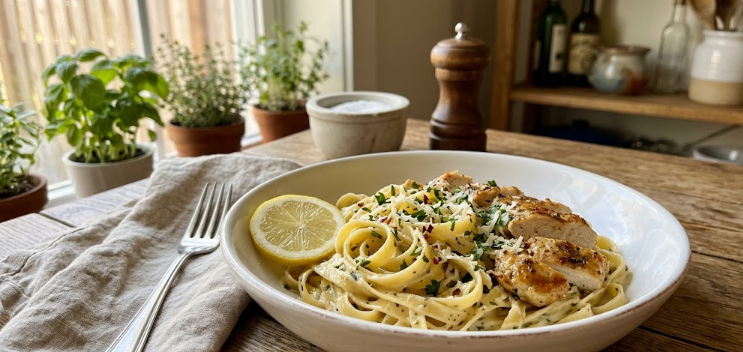
Divide the pasta between bowls. Top with extra grated parmesan, a scattering of fresh chopped parsley, an additional pinch of red pepper flakes for anyone who wants more heat, and a thin slice of fresh lemon on the rim of the bowl.
Skillet Frame Prompt [Eye-level close-up shot, high-definition, natural home kitchen setting. A wide ceramic pasta bowl filled with twirled fettuccine and sliced golden chicken in a glossy herb-flecked sauce. A fresh sprinkle of grated parmesan, chopped parsley, and red pepper flakes sits on top. A thin lemon wheel rests on the bowl's rim. The bowl sits on a wooden table. Warm late afternoon light through a kitchen window falls across the scene. No brand logos, no readable product labels, no visible packaging.]
Total active time: about 15 minutes. Total time start to plate: 25–30 minutes depending on pasta cook time.
Why the Cowboy Butter Method Works
Three things are happening in this pan that explain why a recipe with no cream tastes this rich.
- Fat carries flavor. Butter is one of the most effective flavor carriers in a home kitchen. Garlic, herbs, lemon zest, and chili compounds dissolve into the fat the moment the butter is mixed. When that butter melts into the sauce, every flavor is delivered evenly across every bite.
- Starch builds the body. Pasta water carries dissolved wheat starch from the cooking process. Starch holds water and emulsifies with fat. The result is a coating sauce instead of a watery one.
- Acid resets the palate. A squeeze of lemon at the end keeps the dish from feeling heavy. Without it, the fat dominates and the bowl gets harder to finish past the halfway point.
That's the structural reason this works as a weeknight dinner. The compound butter does the flavor heavy lifting up front. The pan and the pasta water handle the texture. The lemon keeps it eating bright.
For anyone building this dish into a regular weekly cook, a heavy stainless steel skillet makes the sear easier and the sauce-building cleaner. A 12-inch tri-ply pan gives enough surface area to cook two chicken breasts without crowding and holds heat steadily once the butter goes in. [AAWP placement: 12-inch stainless steel skillet recommendation]
Variations Worth Knowing
Shrimp version. Replace the chicken with 1.5 lb large peeled shrimp. Skip the searing step. After the broth simmers in Step 6, add the shrimp directly into the sauce and cook for 2–3 minutes until pink and curled. Toss with the pasta as written.
Vegetable-forward version. Swap the chicken for 2 cups of mixed vegetables: asparagus tips, snap peas, halved cherry tomatoes, or thinly sliced zucchini. Sauté the vegetables in the olive oil for 3–4 minutes before building the sauce. The cowboy butter pulls everything together without the dish feeling like it's missing protein.
Lighter finish. Cut the cowboy butter quantity in the sauce to 2 tablespoons and replace the missing fat with 1/4 cup dry white wine added to the broth. The sauce comes out thinner but still emulsified.
Smoky version. Add 1/4 teaspoon smoked paprika and 2 tablespoons of crispy crumbled bacon to the cowboy butter mix. Use bacon fat instead of olive oil for the chicken sear.
A microplane is the difference between properly grated lemon zest that distributes evenly through the butter and chunky strips that read as bitter pith. Worth the drawer space if you cook with lemon often. [AAWP placement: microplane zester recommendation]
Storage and Reheating
Cowboy butter holds in an airtight container in the fridge for up to a week, or frozen for up to 3 months. The easiest format for freezing is a parchment-wrapped log that can be sliced into rounds straight from the freezer.
Cooked cowboy butter chicken pasta keeps in the fridge for 3 days. Reheat gently in a skillet over medium-low heat with a splash of broth or water to loosen the sauce. If the sauce separates during reheating, take the pan off the heat and whisk in 1–2 tablespoons of cold water until the emulsion comes back together.
Conclusion
Cowboy butter chicken pasta works because the structure does the work, not the cook. A compound butter mixed in three minutes carries enough flavor to season the entire pan. Pasta water and broth build the sauce. A squeeze of lemon at the end keeps every bite eating bright. None of these moves require advanced technique, and none of them require ingredients outside a standard pantry refresh.
The bigger lesson under this dish is that creamy weeknight pasta does not need heavy cream. Butter, starch, and acid have been doing the same job in working kitchens for generations. Make a double batch of cowboy butter on Sunday and the same compound butter finishes a steak on Tuesday, melts onto roasted vegetables on Wednesday, and lands back on pasta the following Friday. Cook it once, adjust the salt and lemon to taste, and the recipe earns its place in the rotation.
Frequently Asked Questions
Q: What is cowboy butter and where did it come from? Cowboy butter is a compound butter built from softened butter, garlic, fresh herbs, lemon, and a hit of heat. The name traces back to its use as a steakhouse condiment served alongside grilled meat. The flavor profile is rustic and bold, which is where the cowboy framing comes from.
Q: Can I use dried herbs instead of fresh? Yes, at 1/3 the volume listed for fresh. For this recipe that means 2 teaspoons dried parsley, 1 teaspoon dried thyme, 1 teaspoon dried basil. The flavor will be earthier and less bright. Fresh herbs deliver more complexity, but dried is the right call when fresh isn't available.
Q: Why is my cowboy butter sauce greasy or broken? The pan was too hot. Butter emulsions break above a low simmer. If the sauce splits, pull the skillet off the heat and whisk in 1–2 tablespoons of cold pasta water or broth until the sauce comes back together.
Q: Can I make this without any kind of cream? This recipe is already cream-free. The creaminess comes from the emulsion between butter, pasta water starch, and broth. Heavy cream is optional, not necessary. If a richer mouthfeel is the goal, 1/4 cup half-and-half can be stirred in at Step 6, but the dish doesn't need it.
Q: What pasta shape holds the sauce best? Flat ribbon pasta. Fettuccine and pappardelle have the most surface area for sauce to cling to. Linguine and spaghetti work but coverage drops. Avoid short shapes like penne or rotini for this one. The sauce slides off the smooth surfaces too easily.
Q: How long does cowboy butter keep? Up to 1 week in the fridge in an airtight container, or up to 3 months in the freezer. Freezing as a parchment log makes portioning easy. A 1-tablespoon round melts straight onto a hot steak, vegetable side, or fresh batch of pasta with no thawing needed.
Q: Is this meal-prep friendly? Yes, with one adjustment. Cook the chicken and pasta separately, store separately, and finish the sauce fresh at dinner. Reheating fully assembled pasta tends to overcook the noodles and break the sauce. The cowboy butter itself is the ideal make-ahead component.
Quick Poll
Is “one-pan” cooking actually less work, or is it a marketing term that ignores the pasta pot in the sink?
A) One-pan is real. The pasta pot is just a pasta pot. Cleanup still drops by half. B) “One-pan” is recipe-blogger marketing. There's almost always a second pot, and pretending otherwise is annoying. C) The whole debate is silly. People care about active time, not pan count.
Why did you vote that way? Drop your take in the comments.