
Quick Answers: Choosing the Right Thermometer
- The best instant read thermometer for meat cooking accuracy is a fast, calibrated digital model with ±1°F accuracy and a response time under 3 seconds.
- It matters because internal temperature, not color, determines doneness and food safety.
- A quality instant read meat thermometer for food safety prevents undercooked poultry and overcooked steak.
- Home cooks who grill, roast, pan sear, or meal prep proteins weekly benefit the most.
- If you care about precision cooking, consistency, and confidence, a digital meat thermometer for precision cooking is a core kitchen tool.
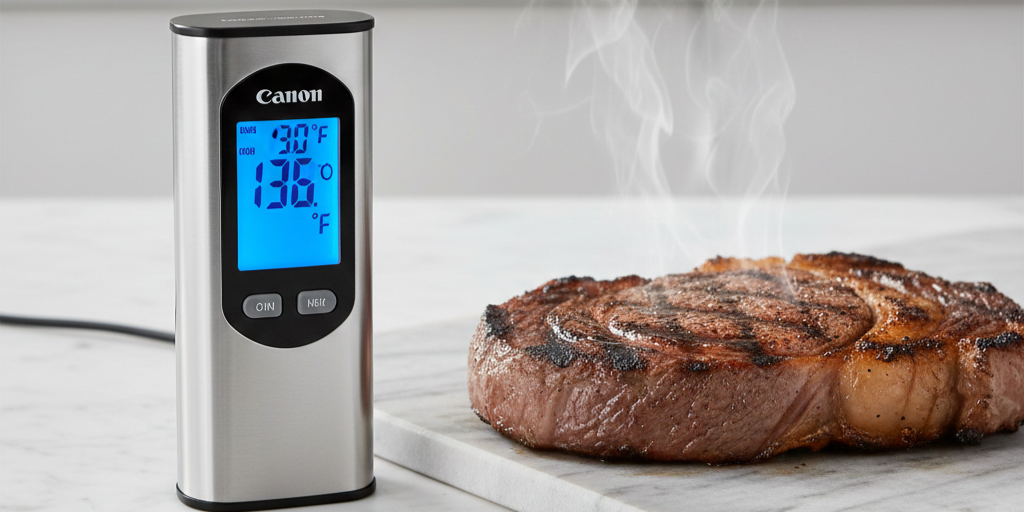
Most home cooks still rely on guesswork. They cut into chicken to check for pink. They press a steak to judge doneness. They trust oven timers that may be off by 25 degrees.
The result is predictable: dry pork chops, overcooked burgers, and anxiety around poultry.
The best instant read thermometer for meat cooking accuracy removes that uncertainty in seconds. It replaces guessing with data. That shift alone changes how confidently you cook.
Color is unreliable. Juices are misleading. Thickness varies. But internal temperature tells the truth every time.
Food safety agencies recommend cooking poultry to 165°F, ground meats to 160°F, and whole cuts like steak or pork to safe minimums with rest time. Without an accurate thermometer, you are estimating.
For busy households, especially families managing weeknight dinner pressure, guessing creates stress. A thermometer creates calm.
What an Instant Read Thermometer Actually Does
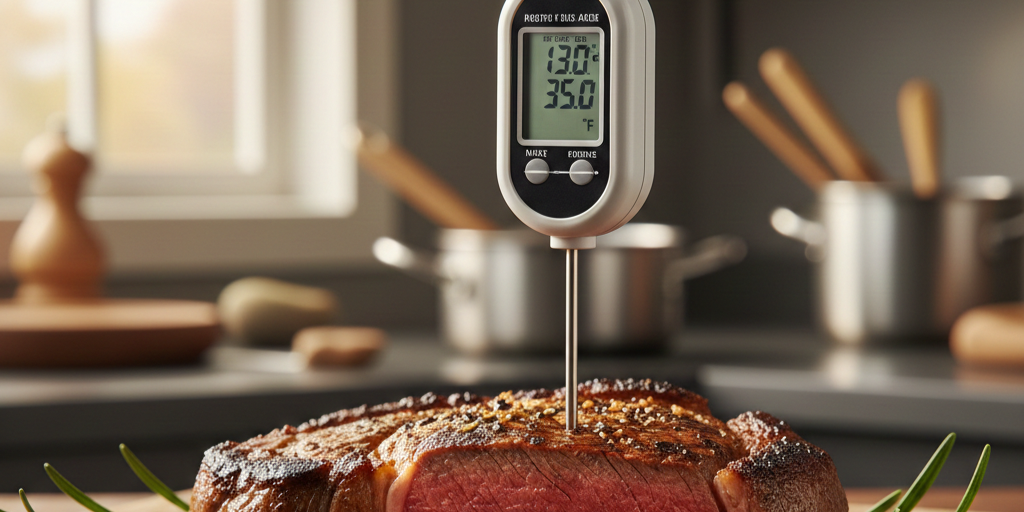
An instant read thermometer measures the internal temperature of meat by inserting a thin metal probe into its center. The probe contains a sensor that registers heat and converts it into a digital reading.
Unlike oven thermometers or leave-in probes, instant read models are designed to give a reading quickly and then be removed.
The best models:
- Deliver readings in 2 to 3 seconds
- Maintain ±1°F accuracy
- Have thin probes that minimize juice loss
- Offer backlit displays for grill or oven use
This speed matters. When grilling steaks or roasting chicken thighs, temperature can climb quickly near the finish. A fast reading thermometer for grilling and roasting helps you pull meat at exactly the right moment.
That timing difference can mean the difference between juicy and dry.
Why Digital Beats Guesswork Every Time
A high-quality digital meat thermometer for precision cooking changes how meat turns out.
Here is what improves immediately:
1. Food Safety
An instant read meat thermometer for food safety ensures poultry reaches safe internal temperatures without overcooking. That protects your household and eliminates second-guessing.
No more slicing into chicken mid-roast.
2. Consistency
If your steak was perfect once but disappointing the next time, temperature control was likely the issue.
A thermometer allows you to replicate results. Medium rare means 130 to 135°F. Medium means 140 to 145°F. You are no longer relying on visual cues that vary.
3. Confidence
Confidence is underrated in home cooking. When you know the internal temperature, you stop hovering. You stop worrying. You cook with intention.
That shift matters for beginners and experienced cooks alike.
Grilling, Roasting, Pan Searing, and Meal Prep
Different cooking methods create different temperature challenges.
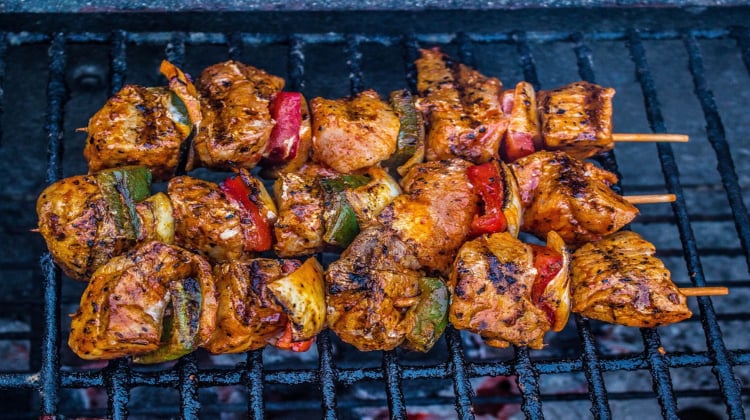
Grilling
High heat and open flames cause rapid temperature swings. Meat continues cooking after removal due to carryover heat.
A fast reading thermometer for grilling and roasting lets you check quickly without losing heat from the grill lid being open too long.
For thick steaks, pull them 5 degrees before target temperature to account for carryover.
Roasting
Ovens cycle on and off. Even modern ovens fluctuate. The only reliable indicator is internal temperature.
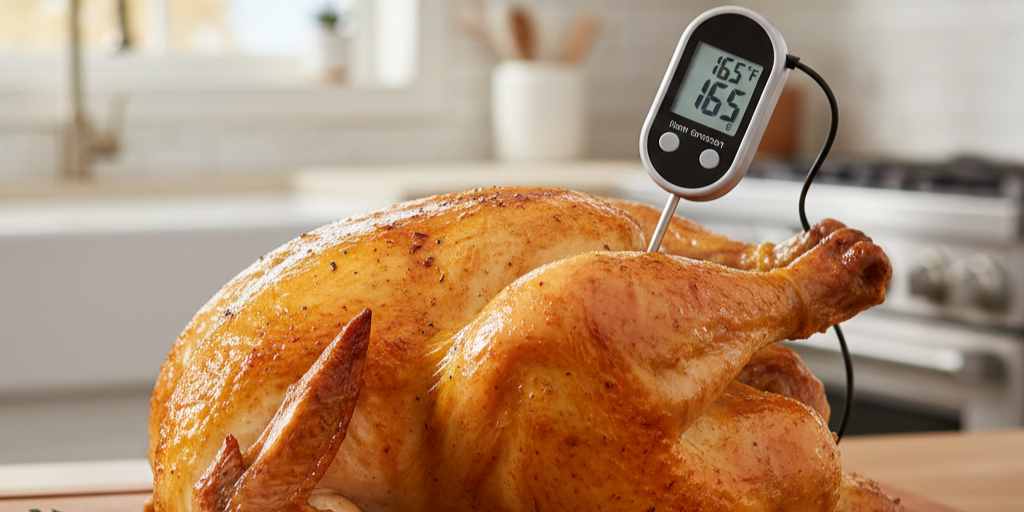
When roasting whole chicken, check the thickest part of the thigh without touching bone. For pork loin, insert from the side into the center.
Roasting becomes predictable when temperature replaces timing.
Pan Searing
Searing creates a crust, but crust does not equal doneness.
Many home cooks overcook meat because they focus on exterior browning. A thermometer tells you when the interior is done so you can remove it before it dries out.
Meal Prep
Batch cooking proteins for the week requires precision. Overcooked chicken becomes rubbery by day three.
Using a digital meat thermometer for precision cooking during meal prep ensures proteins remain juicy after reheating.
That is especially helpful for planners who rely on consistent weekday lunches.
Features That Actually Matter
Not all thermometers are equal. Here is what to prioritize.
Speed
Look for 2 to 3 second read time. Anything slower increases heat loss during grilling and invites overcooking while you wait.
Accuracy
±1°F accuracy is ideal. A difference of 4 or 5 degrees can shift steak from medium rare to medium.
Probe Quality
A thin probe creates a smaller puncture and gives a faster reading. It should be stainless steel and at least 4 inches long for thick cuts.
Calibration
A good thermometer allows recalibration. You can test accuracy in ice water, which should read 32°F.
Display
Backlit screens help when grilling at dusk. Large numbers reduce squinting.
Durability
Look for splash resistance and sturdy hinge mechanisms on folding models.
Avoid unnecessary extras. Bluetooth and app connectivity are rarely needed for an instant read thermometer. Simplicity improves reliability.
How to Use It Correctly
Even the best instant read thermometer for meat cooking accuracy will fail if used improperly.
Follow these guidelines:
- Insert the probe into the thickest part of the meat.
- Avoid touching bone or the pan surface.
- For thin cuts, insert from the side.
- Check multiple spots for large roasts.
- Let meat rest after reaching target temperature.
Resting allows juices to redistribute. Temperature often rises 3 to 5 degrees during this time.
Common Mistakes That Lead to Dry Meat
- Relying solely on cook time.
- Checking temperature too close to the surface.
- Not accounting for carryover cooking.
- Using slow, low-quality thermometers that delay removal.
- Ignoring calibration.
These small errors compound. A reliable instant read meat thermometer for food safety eliminates nearly all of them.
Who Really Needs One
Some kitchen tools are optional. This is not one of them.
You need an instant read thermometer if:
- You cook poultry regularly.
- You grill steaks or burgers.
- You batch cook protein for the week.
- You want consistent results.
- You are learning to cook meat confidently.
For gear-focused cooks, it is a foundational tool alongside a good skillet and chef’s knife. For busy parents, it removes dinner anxiety. For structured meal planners, it improves repeatability.
It is one of the rare tools that improves both safety and quality at the same time.
Why It Improves Everyday Cooking
Cooking meat well is about managing heat. Heat is invisible. Temperature makes it visible.
When you use the best instant read thermometer for meat cooking accuracy, you gain:
- Predictable doneness
- Reduced waste from overcooked proteins
- Greater food safety confidence
- Better texture and juiciness
- Less stress at the stove
Precision cooking does not require complicated equipment. It requires reliable measurement.
Final Thoughts
Choosing the best instant read thermometer for meat cooking accuracy is less about brand names and more about speed, accuracy, and usability.
A fast, calibrated digital model transforms guesswork into certainty. It protects your household by ensuring safe internal temperatures and improves texture by preventing overcooking.
Whether you grill on weekends, roast chicken on Sunday, or batch cook for the week, a dependable thermometer brings confidence, consistency, and control to your kitchen.
It is a small tool with an outsized impact.
FAQs: Best Instant Read Thermometer
What temperature should chicken be cooked to for food safety?
Chicken should reach an internal temperature of 165°F in the thickest part.
How do I know if my instant read thermometer is accurate?
Place it in ice water and confirm it reads 32°F.
Can I leave an instant read thermometer in the oven?
No, instant read thermometers are designed to be inserted briefly and removed.
Where should I insert the thermometer in a steak?
Insert it into the center of the thickest part from the side.
Is a digital meat thermometer better than an analog one?
Yes, digital thermometers provide faster and more precise readings.
How often should I calibrate my thermometer?
Check calibration every few months or if it has been dropped.
Does meat continue cooking after I remove it from heat?
Yes, most meats rise 3 to 5 degrees during resting due to carryover cooking.