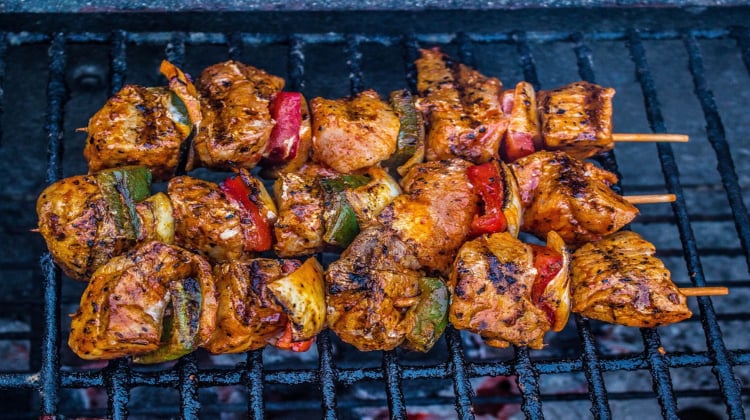

Four one-pan dinners with exact amounts, all at 425°F. Each one gives the slow ingredient a head start, so nothing steams and nothing overcooks.
What's in this list
- Dinners: caprese chicken, spicy salmon and broccoli, harvest bowl, shrimp fajitas
- Serves: 4 each
- Oven: 425°F for all four
- Total time: 30 to 40 minutes each, including prep
- Equipment: one heavy half-sheet pan (a second pan helps for the harvest bowl)
Sheet pan dinners for busy weeknights work when three things happen: the food sits in a single layer with space around it, slow ingredients go in first, and something sour goes on at the end. Skip any of those and you get pale, steamed vegetables and a flat-tasting dinner.
Below are four dinners with exact amounts and oven times, all at 425°F, so you can pick one tonight and put the rest into your rotation.
Why sheet pan dinners come out soggy
Most sheet pan letdowns look the same: soggy vegetables, protein that cooks unevenly, and a dinner that somehow tastes flatter than the sum of its parts.
Those three problems have three causes.
The pan is crowded. Food releases water as it cooks. With space around each piece, that water steams off and the edges brown. Packed tight, the water pools and everything steams. A half-sheet pan (about 18 by 13 inches) holds about 2½ to 3 pounds of food in one layer. More than that needs a second pan.
Everything went in at once. Sweet potatoes need about 35 minutes at 425°F. Shrimp needs about 7. Put them on together and one is raw or the other is rubbery. Every recipe below gives the slow ingredient a head start.
Nothing sour at the end. Roasting builds deep, sweet, browned flavor. A squeeze of lemon, a splash of vinegar, or a drizzle of balsamic glaze right before serving keeps it from tasting heavy. If a sheet pan dinner tastes flat, it usually needs acid more than salt.
The formula behind all four
Once you see the pattern, you can build your own. Each dinner here uses the same five parts:
- Protein: about 1½ pounds for 4 people
- Vegetables: 1½ to 2 pounds, cut to cook in the same time as the protein, or started earlier
- Fat: 2 to 3 tablespoons of olive oil per pan, tossed to coat, not drizzled on top
- Seasoning: salt, pepper, and one flavor driver like smoked paprika, garlic powder, or fajita seasoning
- Finish: one acid after the oven
A thin pan warps at 425°F and browns unevenly. A heavy aluminum half-sheet stays flat, which matters more than any seasoning choice.

- Naturals bakeware is made of pure aluminum for superior heat conductivity and produces consistently...
- These premium pans are built for lifetime durability, ensuring they will never rust, providing you with...
Last update on 2026-10-15 / Affiliate links / Images from Amazon Product Advertising API
(As an Amazon Associate, we earn from qualifying purchases.)
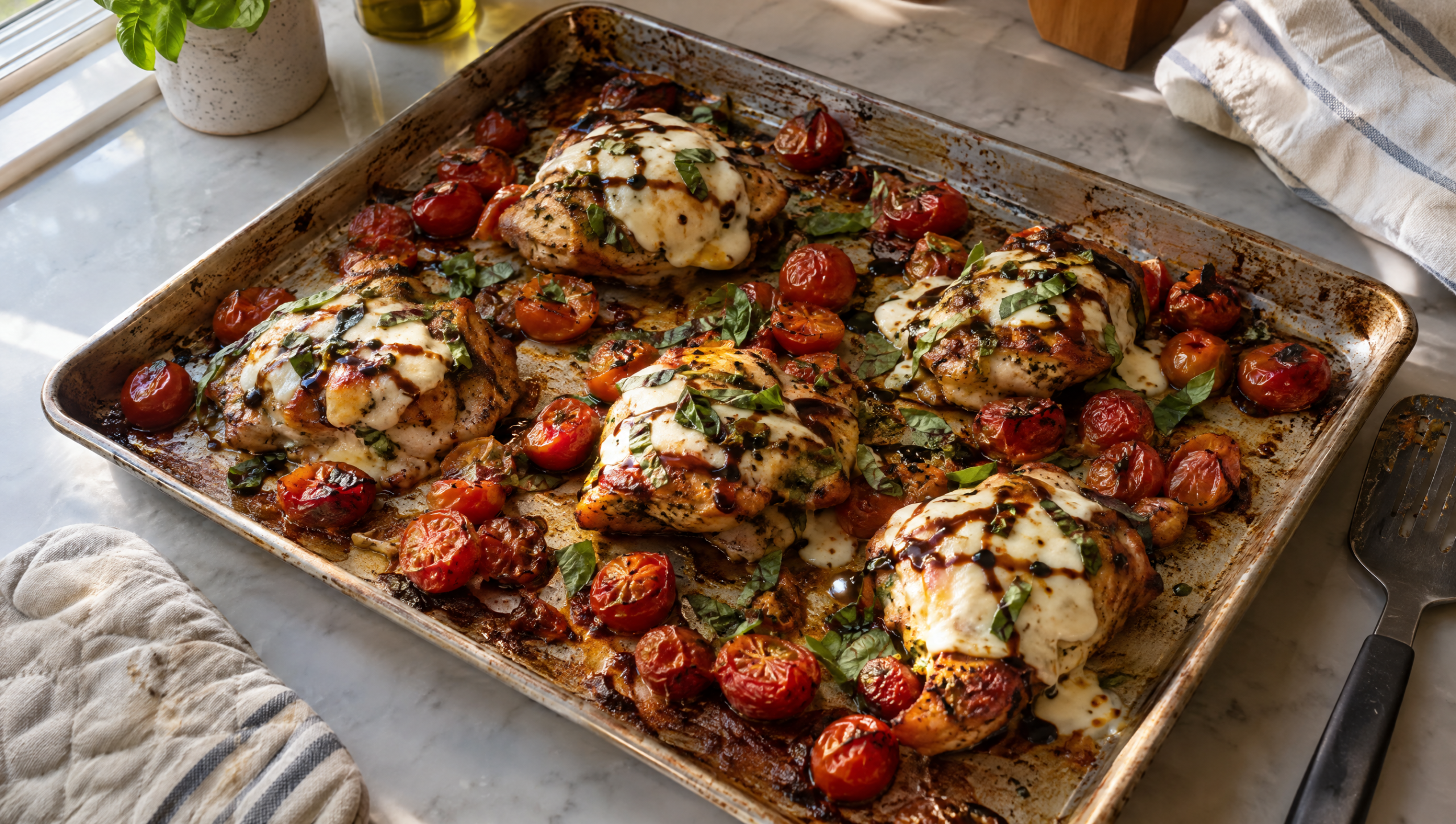
1. Caprese chicken
The easiest of the four. Chicken thighs stay juicy at high heat, and the tomatoes turn jammy in the pan juices.
Ingredients
Check off ingredients as you go. Cook mode keeps your screen awake.
1. Season and spread. Heat the oven to 425°F. On the sheet pan, toss the chicken and tomatoes with the oil, Italian seasoning, salt, and pepper. Spread everything out so the thighs lie flat with space between them.
2. Roast. Roast 20 to 25 minutes, until the chicken is browned at the edges and reads at least 165°F in the thickest part.
3. Melt the cheese. Lay the mozzarella on the chicken and return the pan to the oven for 2 to 3 minutes, just until it softens.
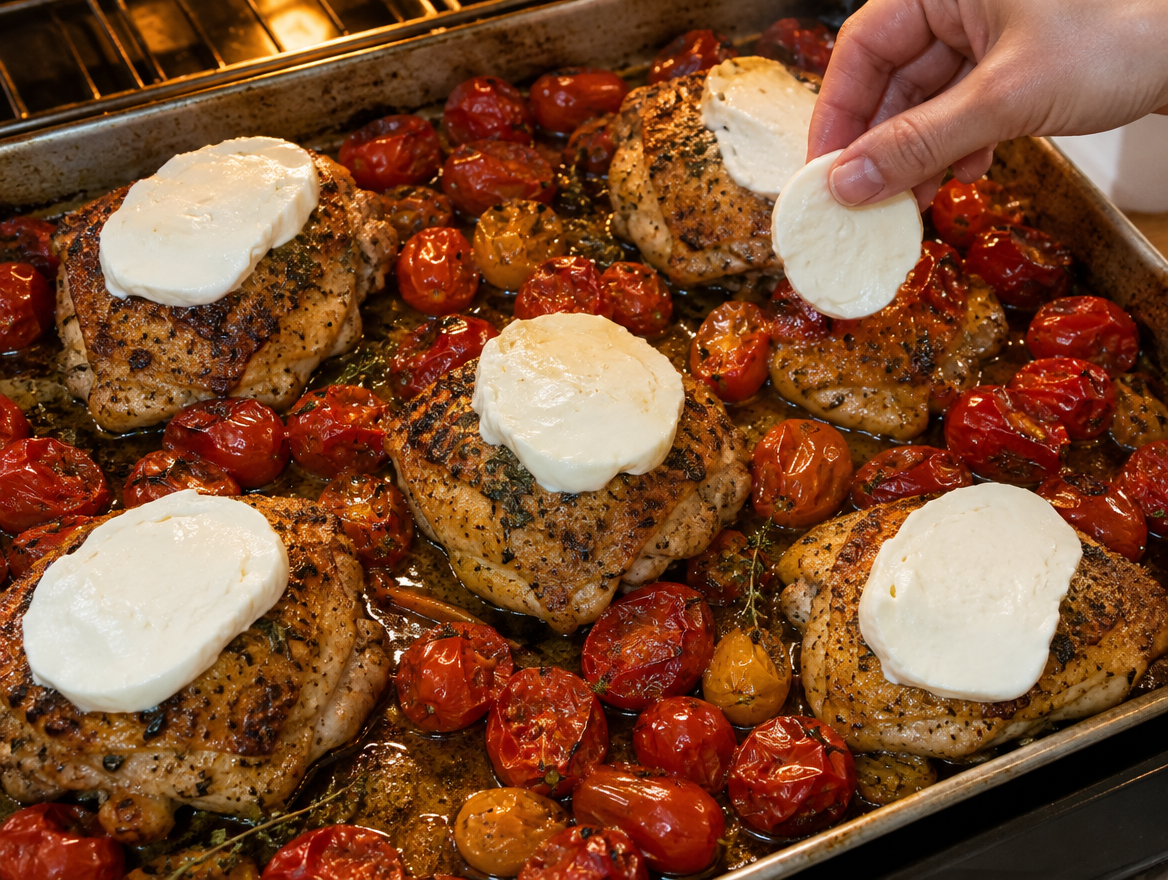
4. Finish. Drizzle with balsamic glaze and scatter basil over the top.
2. Spicy salmon and broccoli
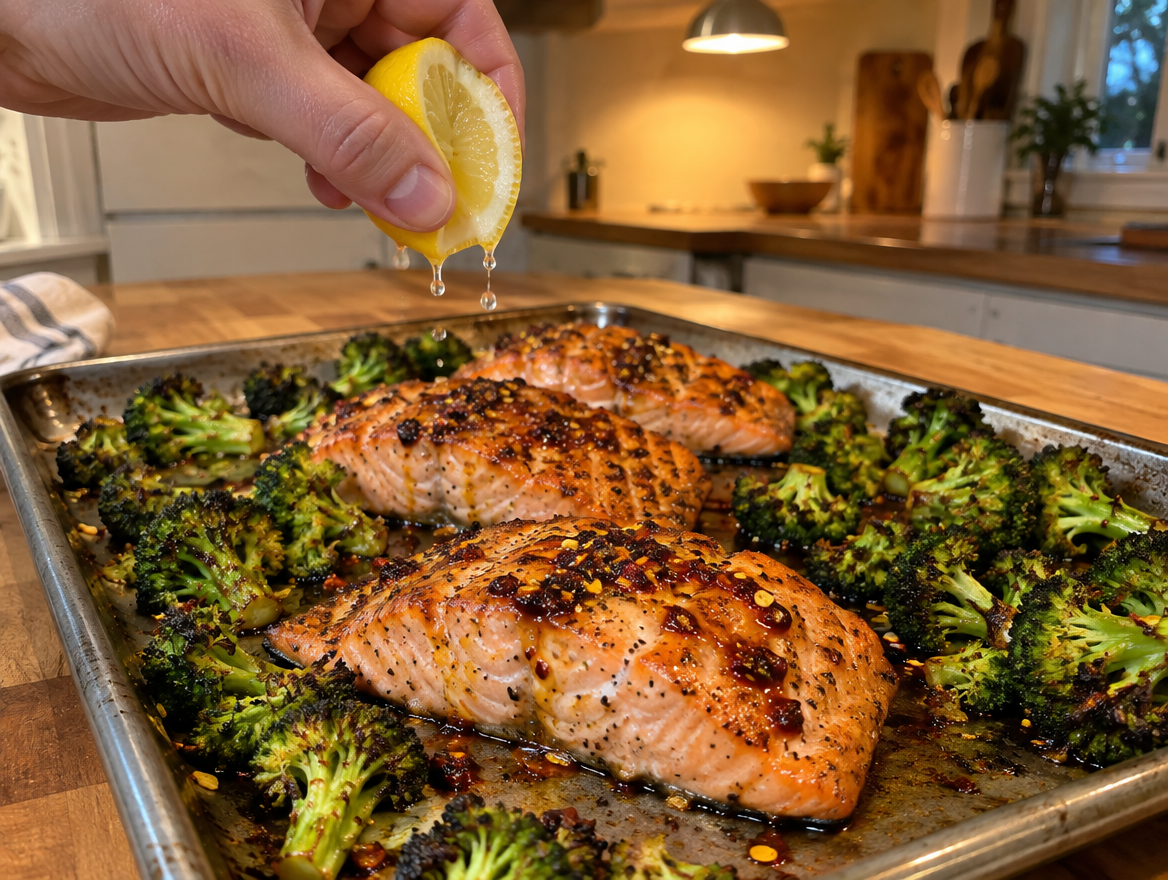
This one moves fast, so the broccoli gets a 10-minute head start. That way it chars while the salmon stays tender.
Ingredients
1. Start the broccoli. Heat the oven to 425°F. Toss the broccoli with 2 tablespoons of the oil, half the garlic powder, and half the salt. Spread on the pan and roast 10 minutes.
2. Add the salmon. Push the broccoli to the sides. Rub the salmon with the remaining oil, garlic powder, salt, and the pepper flakes, and set it in the middle. Roast 10 to 12 minutes, until the salmon flakes easily or reads 145°F.
3. Finish. Squeeze lemon over everything and drizzle the salmon with sriracha or chili crisp.
3. Harvest bowl
The dinner with the biggest timing gap. Sweet potatoes need a 15-minute head start, and this one is the most likely to need a second pan.
Ingredients
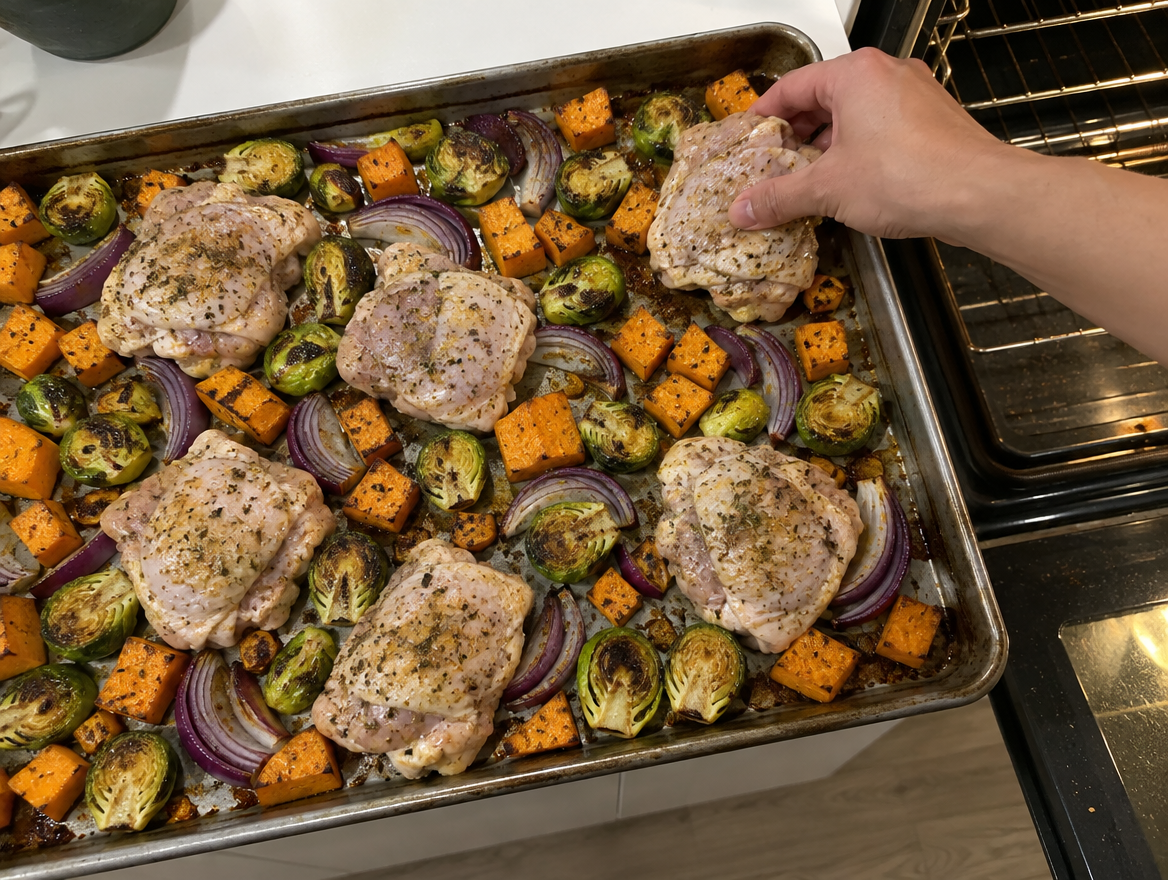
1. Start the vegetables. Heat the oven to 425°F. Toss the sweet potatoes, Brussels sprouts, and onion with 2 tablespoons of the oil, the paprika, maple syrup, and half the salt. Spread on the pan cut sides down and roast 15 minutes. If everything won't fit in one layer, use two pans.
2. Add the chicken. Toss the chicken with the remaining oil, salt, and pepper. Nestle it into the open spaces on the pan and roast 18 to 20 minutes more, until the chicken reads 165°F and the sweet potatoes are browned and tender.
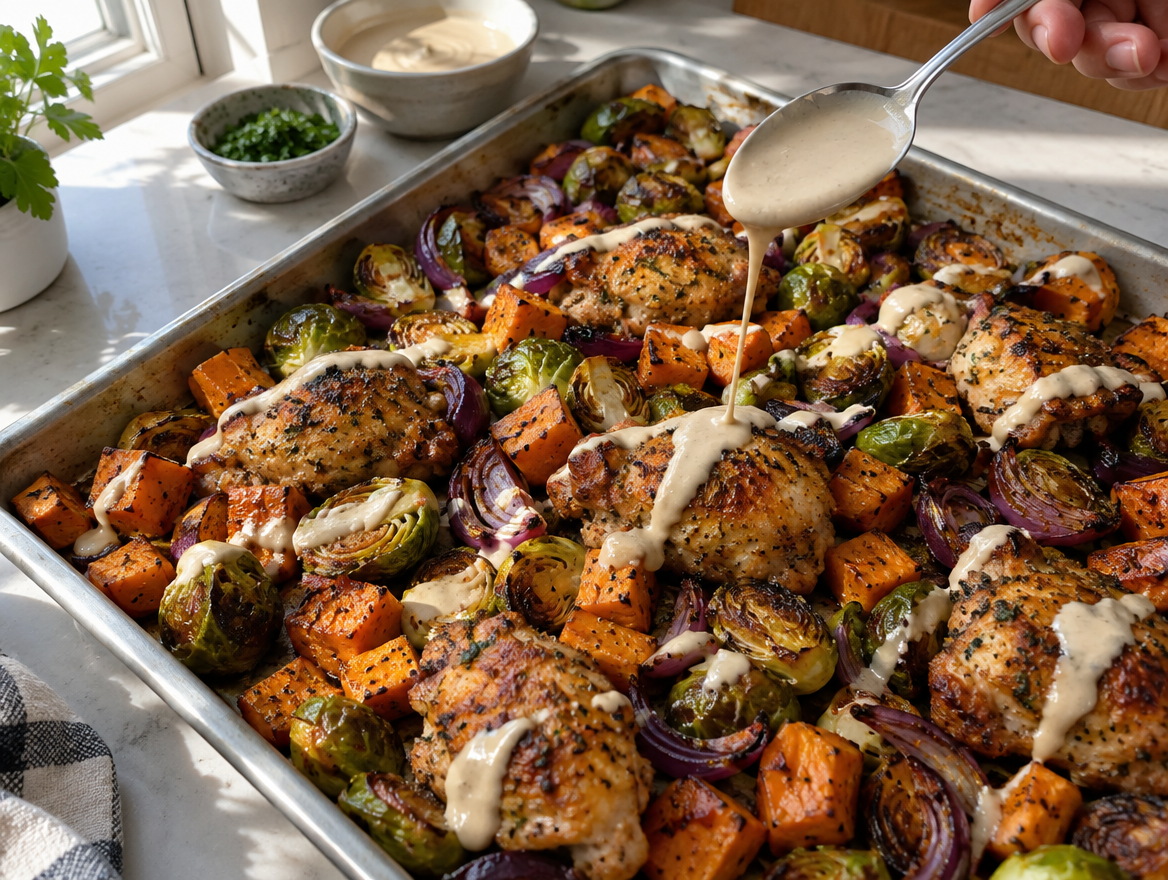
3. Drizzle and serve. Whisk the tahini, lemon juice, and water until pourable. Spoon it over the pan or over bowls of rice.
4. Shrimp fajitas
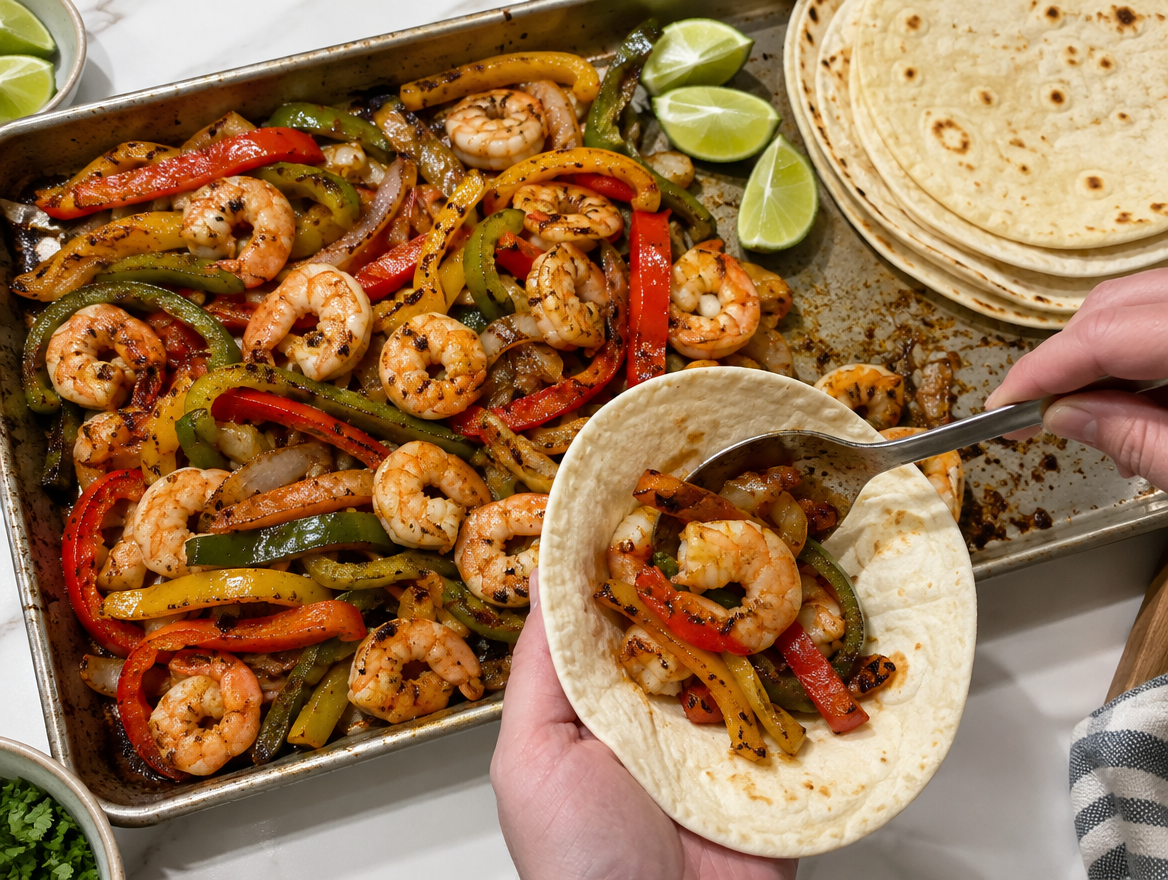
Shrimp cooks in minutes, so the peppers roast first. Pull it the moment it turns pink, and it stays tender.
Ingredients
1. Roast the vegetables first. Heat the oven to 425°F. Toss the peppers and onion with 2 tablespoons of the oil and half the seasoning. Roast 15 minutes, until the edges start to char.
2. Add the shrimp. Toss the shrimp with the remaining oil and seasoning, scatter over the vegetables, and roast 6 to 8 minutes, just until pink and opaque. Warm the tortillas on the oven rack for the last 2 minutes.
3. Serve. Squeeze lime over the pan and let everyone build their own.
Turn leftovers into lunch
Any of these doubles easily if you have two pans. Leftover chicken and vegetables become a grain bowl with whatever sauce is in the fridge. Leftover salmon flakes into pasta with olive oil and lemon.
Store leftovers covered in the refrigerator for 3 to 4 days, the window the USDA gives for leftovers. Reheat in an air fryer or oven at 350°F for 4 to 5 minutes instead of the microwave, which softens roasted vegetables.
For more one-pan ideas, try our ground beef sheet pan dinners, the kid-tested family-friendly sheet pan recipes, or our sheet pan shrimp gnocchi.
The two pans that are worth owning
The appeal is simple: you dirty one sheet pan and one utensil to stir whatever's on it. But that only works if the pan can handle the job.
Good: one heavy aluminum half-sheet pan. It won't warp at 425°F.
Better: two of them. The fix for crowding is always a second pan.
Best: a set that includes a wire cooling rack. Setting chicken on the rack lets air reach the bottom so it browns on both sides without flipping.
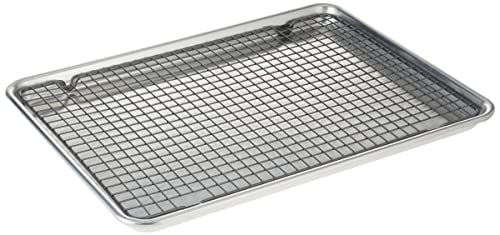
- Our popular natural aluminum half sheet with a nesting, oven-safe and nonstick steel grid
- This set can be used together in the oven for crisping bacon, roasting veggies or more. Separately use...
Last update on 2026-10-15 / Affiliate links / Images from Amazon Product Advertising API
(As an Amazon Associate, we earn from qualifying purchases.)
A roll of parchment with a printed grid lets you cut a sheet that fits the pan in seconds. Cleanup turns into tossing the paper.
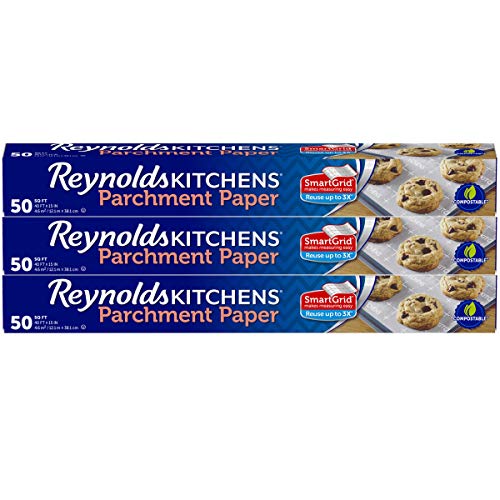
- REYNOLDS PARCHMENT PAPER—Contains three rolls of Reynolds Kitchens Parchment Paper with SmartGrid...
- SMARTGRID LINES FOR EVEN SPACING—1- and 2-inch guidelines on these baking parchment sheets take the...
Last update on 2026-10-15 / Affiliate links / Images from Amazon Product Advertising API
(As an Amazon Associate, we earn from qualifying purchases.)
Get the grocery list
One printable covers all four dinners, with swaps for the ingredients people most often don't have on hand.
What a good sheet pan dinner comes down to
You came here because sheet pan dinners kept coming out soggy or flat. Each of the four recipes above fixes that the same way: space on the pan, a head start for the slow ingredient, and acid at the end. Tonight, give the slowest thing on your pan its own 10 to 15 minutes in the oven before anything else goes on.
Frequently Asked Questions
Can I prep sheet pan dinners ahead of time?
Yes. Cut and season everything up to 24 hours ahead, but store the protein and vegetables in separate containers. Stored together, the vegetables sit in the meat juices and brown less in the oven.
Can I use frozen vegetables for sheet pan dinners?
Yes, roast them straight from frozen and don't thaw them first. Spread them out with extra room and add about 5 to 10 minutes, since they release more water.
Should I use bone-in chicken thighs instead?
You can, but they take longer. Roast bone-in thighs 35 to 40 minutes at 425°F, and give dense vegetables the same total time so they finish together.
Can I cook two sheet pans at once?
Yes. Put one pan on the upper-middle rack and one on the lower-middle rack, and swap them halfway through. Expect a few extra minutes, since two pans cool the oven more than one.
What if I don't have a half-sheet pan?
A 9×13 metal baking pan works for half of any recipe here. The sides are taller, so food browns a little less; leave the pan uncovered and give it an extra 5 minutes.
Why does my sheet pan smoke in the oven?
Usually it's oil or drippings burning on bare spots of the pan. Keep the food spread across the whole pan, wipe up any big oil puddles before it goes in, and line the pan if your oven runs hot.
Are sheet pan dinners good for meal prep?
Chicken and roasted vegetables hold up best and reheat well for 3 to 4 days. Shrimp and salmon are better eaten within a day or two, since they dry out when reheated.
Settle This: Should You Ever Line a Sheet Pan?
This one splits kitchens down the middle.
One side says to use parchment paper on the sheet pan because cleanup is easier. Makes sense. Who doesn't want that?
The other side says anything between the food and the metal gets in the way of browning. And browning is the whole point.
Pick your side.
Why did you vote that way? Drop your take in the comments.