

Quick Summary
- One base sauce, five regional swaps, no five-bottle grocery run
- Fixes the real reason noodles turn gummy or clumped
- Works with any noodle already in the pantry, spaghetti included
- Caps the swap pantry at five ingredients so nothing expires unused
Most budget asian noodle recipes online fall into one of two traps. Either they're a single dish from a single country, which gets boring after the third week, or they're a novelty list built around instant ramen packets, which stops being a real dinner after the first laugh. Neither one solves the actual weeknight problem, and neither one is built to survive more than a few uses as budget asian noodle recipes go.
The actual problem is a grocery bill. Building real budget asian noodle recipes across several cuisines usually means buying five different sauce bottles for five different dishes, and most of them sit half used in the fridge door by month two. That is not a budget system. That's five one-off recipes wearing a budget label instead of five genuine budget asian noodle recipes.
This rotation fixes that by locking one base sauce and rotating a single regional swap through it. Every one of these budget asian noodle recipes starts from the same four ingredients: soy sauce, garlic, oil, and a touch of sugar.
Fix the Noodles Before the Sauce
Before any of these budget asian noodle recipes get built, the noodles themselves need one fix. Gummy or clumped noodles are the most common reason budget asian noodle recipes taste like a failed experiment instead of a fast dinner, and the fix has nothing to do with the sauce. This technique applies across every one of the budget asian noodle recipes in this rotation, no matter which regional swap is used.
1. Reserve the starch water.
A small cup of starchy cooking water before draining is what helps the sauce cling instead of pooling at the bottom of the bowl.
Skillet Frame Prompt: Close-up overhead shot, high definition, natural home kitchen setting. A ladle scooping cloudy starchy water from a pot of boiling noodles into a small glass measuring cup. Warm stovetop lighting, steam rising, no branding visible.
2. Toss immediately, while hot.
Waiting even a few minutes lets the noodles start to stick together, which no amount of sauce can fix once it happens.
Skillet Frame Prompt: Close-up eye-level shot, high definition, natural home kitchen setting. Hot drained noodles being tossed with glossy sauce in a wide skillet, steam visible, tongs mid-motion. Bright stovetop light, no packaging visible.
3. Skip the rinse.
Never rinse under cold water unless a recipe specifically calls for a cold noodle salad. Rinsing strips away the starch these recipes depend on.
Skillet Frame Prompt: Close-up overhead shot, high definition, natural home kitchen setting. A colander of freshly drained noodles, still steaming, no water droplets clinging to the strands. Bright natural daylight, plain stainless steel colander, no packaging visible.
Build the Rotation: One Base, Five Swaps
With the technique locked, the base sauce for every one of these budget asian noodle recipes stays the same: two tablespoons soy sauce, one tablespoon oil, two cloves of garlic, and a half teaspoon of sugar, whisked together and adjusted at the end. All five swaps below start from this exact ratio.
Swap one: fish sauce and lime juice. Thai-leaning, works well with rice noodles and fresh herbs.
Swap two: gochujang and rice vinegar. Korean-leaning, best with chewy wheat noodles and a fried egg on top. Gochujang is one of the more versatile pantry items here since a small spoonful goes a long way.
Swap three: oyster sauce and a pinch of five spice. Cantonese-leaning, especially good with egg noodles and quick-cooked vegetables. Oyster sauce keeps for months in the fridge.
Swap four: chili crisp and a spoonful of peanut butter. Sichuan-leaning, dan dan style, works with any long noodle already in the pantry.
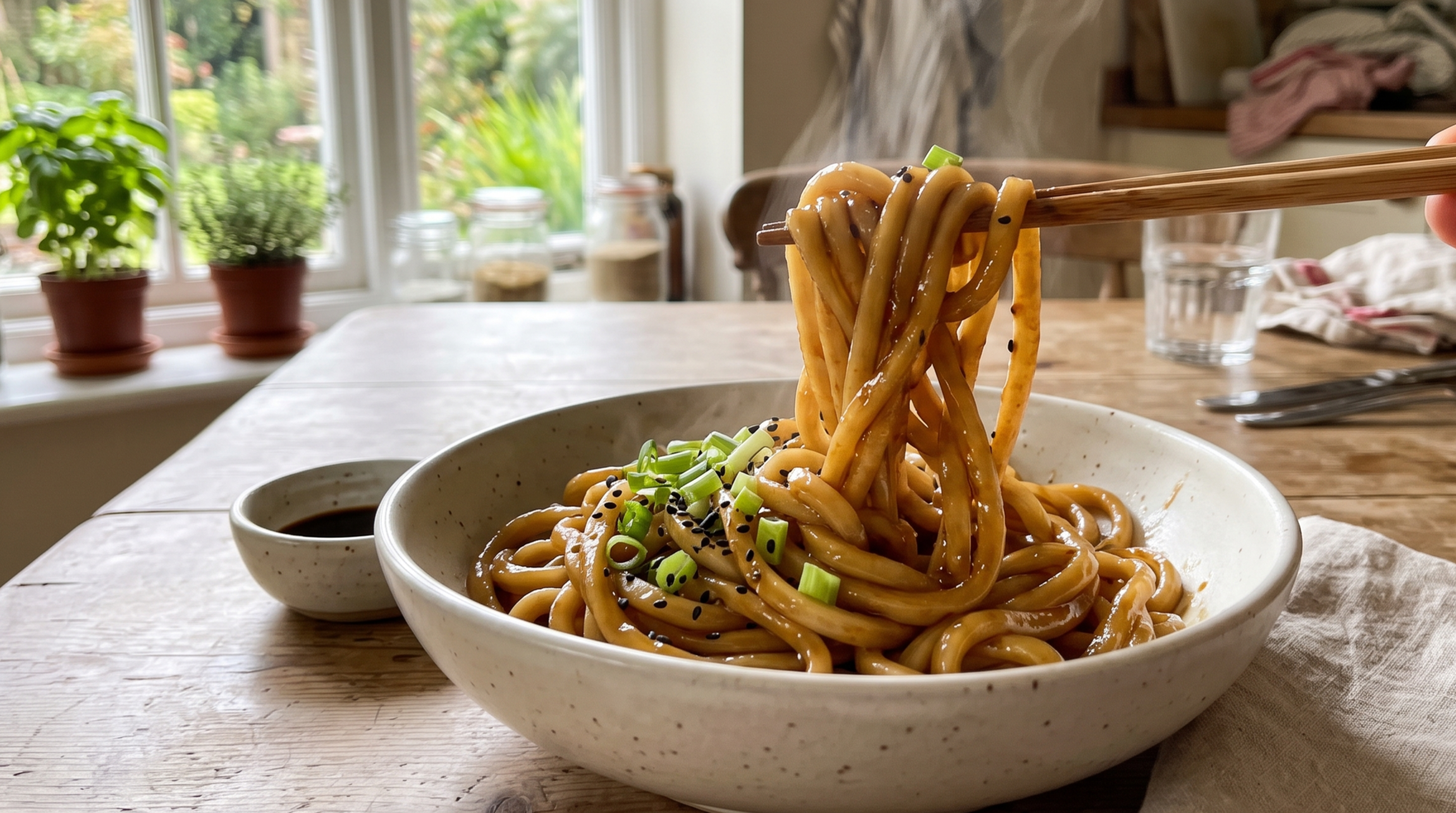
Swap five: miso paste and a drizzle of sesame oil. Japanese-leaning, especially good with udon or soba. Miso keeps for months, making this one of the more efficient swaps in the rotation.
Anyone missing a specific swap ingredient can rotate through whichever one is already in the fridge. Budget asian noodle recipes built this way don't require all five bottles at once, one or two swap ingredients is enough to keep the rotation from repeating the same bowl every week.
For a deeper look at building a full pantry stocked for this kind of rotation, the tofu stir fry recipe on this site covers similar sauce-base thinking applied to vegetables instead of noodles.
Keep the Pantry Honest
Five swap ingredients is the ceiling, not a suggestion. Budget asian noodle recipes that keep adding condiments for the sake of variety stop being a budget system and turn back into five separate grocery lists.
Capping the pantry at five keeps every bottle in regular use instead of expiring in the door of the fridge.
Any noodle already in the pantry works here too. Spaghetti, egg noodles, rice noodles, or ramen minus the seasoning packet all pick up the sauce the same way once the starch water and immediate toss steps are handled correctly.
Budget asian noodle recipes don't need a specialty grocery run to taste like five different cuisines. One base sauce, one tested noodle technique, and a rotating swap from five pantry staples is enough to keep a weeknight rotation from repeating itself for months. That's the whole system behind this set of budget asian noodle recipes.
📥 Get the printable version of this rotation, the base sauce ratio plus all five swaps, so it's on hand every time noodle night rolls around.
FAQ
How do I stop my noodles from getting gummy?
Reserve a cup of starchy cooking water before draining, and toss the noodles with sauce while they're still hot. Cold or over-drained noodles won't hold the sauce properly.
Can I use regular spaghetti instead of Asian noodles?
Yes. Spaghetti and other wheat pasta stand in for udon or lo mein in most of these recipes without changing the sauce ratios.
Can I combine more than one swap in the same bowl?
Keep it to one or two per bowl. Stacking too many condiments at once loses the clean flavor identity each regional swap is supposed to deliver.
How long does the sauce keep?
The base sauce and cooked noodles both keep up to four days separately in the fridge. Store them apart and combine just before reheating.
Is this rotation vegetarian-friendly?
Yes, with simple swaps. Replace fish sauce with soy sauce and a splash of lime, and swap oyster sauce for hoisin or mushroom sauce.
Why does my sauce taste bland?
It usually needs more acid or salt at the end, not a completely different recipe. Taste and adjust before starting over.
Do I need any special equipment?
No. A pot for boiling, a mixing bowl for the sauce, and a skillet or wok cover everything here.
What should we cook up next?
We'd love to keep the pantry-to-bowl ideas coming. What are you hoping to see from us next?
- More one-sauce rotations 🍜
- Budget protein swaps 🥩
- Regional dinner deep dives 🌶️
- Pantry staple guides 🧂
- Quick weeknight stir-fries 🥢
Let us know in the comments, your picks help shape what we cook up next.