

Quick Summary: Spam Musubi Recipe
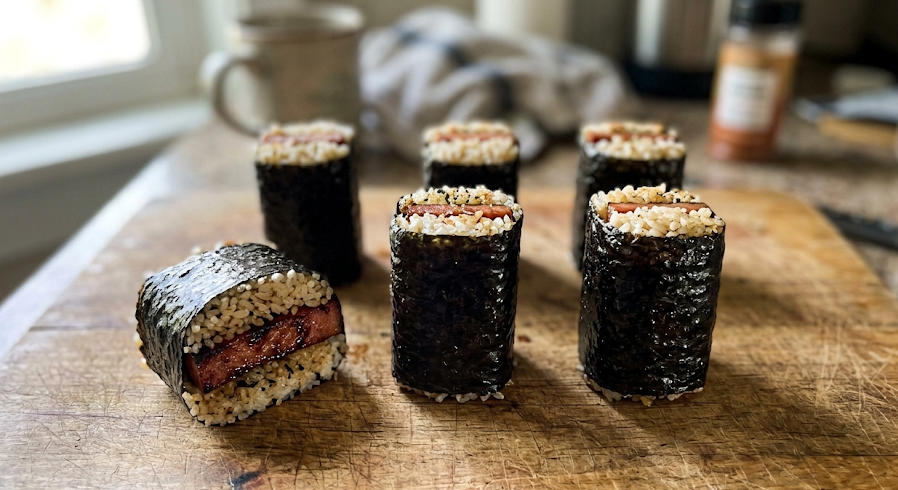
- Spam musubi is a Hawaiian handheld snack made from soy-glazed Spam, sticky rice, and nori
- The classic spam musubi recipe takes about 30 minutes and uses 6 pantry-friendly ingredients
- Three variations covered: classic teriyaki glaze, furikake-layered, and spicy sriracha
- A musubi mold or empty Spam can works as the press; no specialty equipment required
- Make-ahead friendly: assemble up to 24 hours ahead and refrigerate wrapped in plastic
- Works as a summer party appetizer, lunchbox snack, or potluck contribution
- Short-grain or sushi rice is required; long-grain rice won't hold its shape
If you've never made a spam musubi recipe at home, the first thing to know is that it's faster than it looks. This snack runs on a short ingredient list: canned Spam, short-grain rice, nori, soy sauce, and a little sugar, and the whole thing comes together in about 30 minutes. It's one of those easy Hawaiian appetizers that travels well, holds at room temperature, and disappears fast at summer cookouts.
The spam musubi recipe you'll find here covers the classic version and two variations worth knowing. The furikake build adds a savory, sesame-forward layer between the rice and the Spam. The sriracha version pushes the glaze into spicy-sweet territory that works well for adults. All three follow the same core assembly process, so once you make spam musubi the first time, the variations take almost no extra effort.
What Is Spam Musubi?
Spam musubi is a Hawaiian snack built in the tradition of Japanese onigiri. A block of seasoned rice gets pressed into a rectangular shape, topped with a slice of soy-glazed Spam, and wrapped in a strip of nori. The result is a handheld bite that's savory, slightly sweet, and satisfying in a way that's hard to explain until you've had one.
It became a staple in Hawaii during World War II, when Spam was widely available and affordable. The Japanese-American community on the islands adapted their onigiri tradition to include it, and the combination stuck. Today you'll find spam musubi at Hawaiian convenience stores, gas stations, school lunch programs, and family cookouts. It crossed to the mainland steadily, and interest picked up sharply in 2025 when the brand rolled out pre-made spam musubi at Kroger locations nationwide.
For home cooks, the appeal is practical: it's cheap, it's portable, and it's genuinely good.
If you've got a can of Spam and want to see what else it's capable of beyond musubi, our roundup of 14 Spam recipes covers everything from Spam fried rice to Korean army stew, all using the same pantry staple.
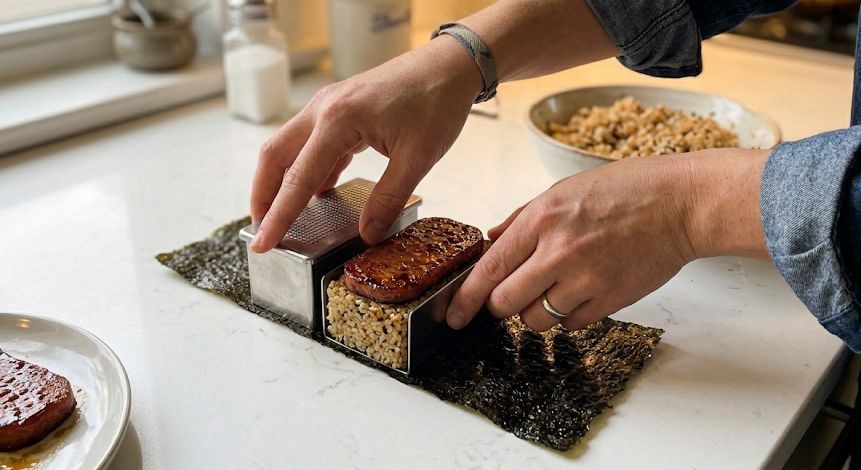
What You'll Need to Make This Spam Musubi Recipe
For the rice:
- 2 cups short-grain or sushi rice
- 2 cups water
- 2 tablespoons rice wine vinegar
- 1 tablespoon sugar
- 1/2 teaspoon salt
For the Spam and glaze:
- 1 can (12 oz) Spam, cut into 8 slices
- 3 tablespoons soy sauce
- 2 tablespoons brown sugar
- 1 tablespoon mirin (or 1 extra teaspoon sugar + 1 teaspoon water)
For assembly:
- 4 to 5 full sheets nori, cut in half lengthwise
- Neutral oil for the pan
For the furikake variation (optional):
- 2 to 3 tablespoons furikake seasoning
For the sriracha variation (optional):
- 1 tablespoon sriracha added to the glaze
- 1 teaspoon sesame oil added to the glaze
Nori quality makes a bigger difference than most people expect: thin, papery sheets tear during wrapping and go soggy fast, while a properly roasted full sheet holds its shape and seals cleanly.

- PREMIUM RESTAURANT QUALITY : No more buying Sushi. Enjoy and Eat like you are in a Sushi Restaurant. Make...
- KOREAN SEAWEED WITH NATURAL UMAMI FLAVOR : Our Roasted Seaweed Sheets are roasted twice and have a crispy...
Last update on 2026-09-30 / Affiliate links / Images from Amazon Product Advertising API
(As an Amazon Associate, we earn from qualifying purchases.)
Equipment:
- Musubi mold or the empty, cleaned Spam can
- Plastic wrap
- A heavy skillet
Substitution note: Mirin can be swapped for dry sherry or skipped entirely — add a pinch more sugar to compensate. If you can't find furikake, a mix of sesame seeds and a crumble of nori works. Turkey Spam or Spam Lite runs slightly drier in the pan; reduce cook time by 30 seconds per side.
How to Make Spam Musubi: Step-by-Step
Step 1: Cook and Season the Rice
Rinse your short-grain rice under cold water until the water runs mostly clear — about 3 to 4 rinses. Cook it according to package directions or use the 1:1 ratio of rice to water. While the rice is still hot, stir in the rice wine vinegar, sugar, and salt. Spread it on a sheet pan or wide bowl to cool slightly. You want the rice warm and pliable when you assemble, not steaming hot and not cold.
Step 2: Sear the Spam
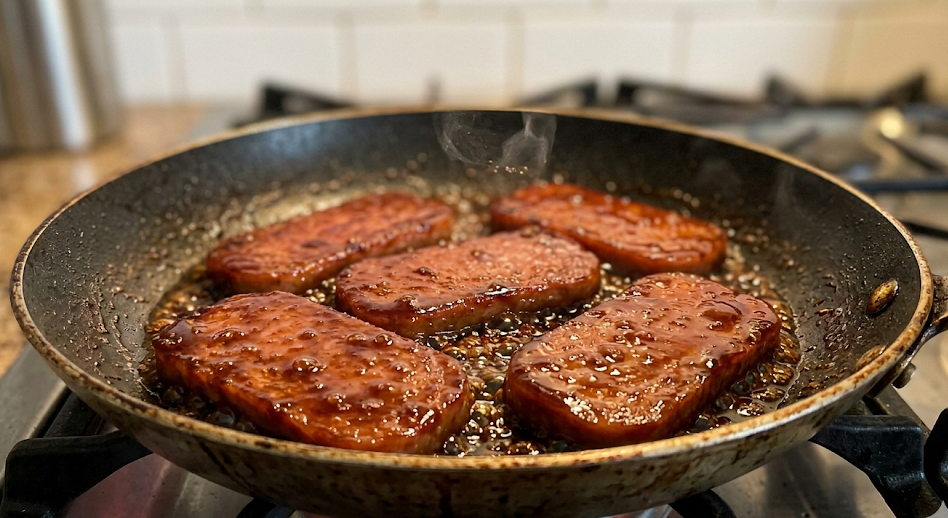
Pat your Spam slices dry with a paper towel. Heat a thin film of neutral oil in a heavy skillet over medium-high heat. Add the Spam slices in a single layer and cook without moving them for about 2 to 3 minutes per side. You're looking for a deep golden-brown crust on each face. Don't crowd the pan — if your slices won't fit in one layer, work in batches.
Step 3: Make the Glaze and Coat the Spam
Reduce the heat to medium. Pour the soy sauce, brown sugar, and mirin directly into the skillet with the Spam. The liquid will bubble immediately. Flip the Spam slices quickly to coat them on both sides. Let the glaze reduce for about 60 seconds until it thickens slightly and clings to the Spam. Turn off the heat and leave the Spam in the pan while you set up for assembly.
The soy-sugar glaze scorches fast in a thin pan, a heavy-bottomed cast iron skillet holds heat evenly and gives you that 60-second reduction window without burning the bottom:
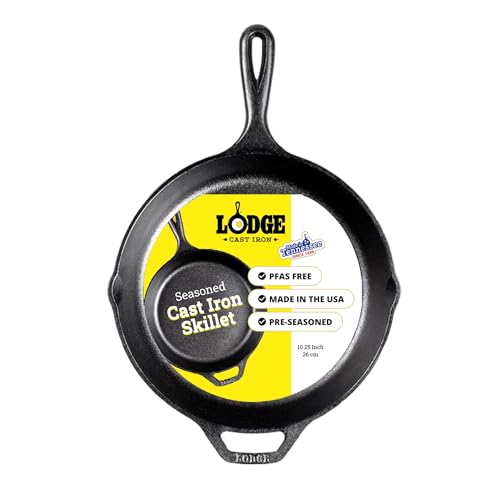
- Quality Cast Iron Frying Pan: The Lodge Seasoned Cast Iron Skillet is loved for its great heat retention...
- Naturally Seasoned for Non-Stick Finish: Each pre-seasoned skillet arrives ready to use with a smooth...
Last update on 2026-10-01 / Affiliate links / Images from Amazon Product Advertising API
(As an Amazon Associate, we earn from qualifying purchases.)
Step 4: Prep Your Mold
Cut each nori sheet in half lengthwise so you have strips roughly 4 inches wide and 10 inches long. Line your musubi mold (or your cleaned Spam can with both lids removed) with plastic wrap, leaving enough overhang on the sides to help lift the finished musubi out cleanly.
If you're planning to make spam musubi more than once, and most people do after the first batch, a dedicated musubi mold gives you cleaner edges and consistent pressure without wrestling with the Spam can every time:

- IMPRESA Musubi Maker Delight: Discover the joy of crafting authentic Hawaiian musubi with the IMPRESA...
- Versatile Culinary Tool: Elevate your kitchen experience by using this musubi press mold to create...
Last update on 2026-09-30 / Affiliate links / Images from Amazon Product Advertising API
(As an Amazon Associate, we earn from qualifying purchases.)
Step 5: Assemble the Classic Spam Musubi
Place a nori strip on a clean surface. Set the mold in the center of the nori strip. Add 3 to 4 tablespoons of seasoned rice to the mold and press it down firmly with the mold's plunger or the back of a spoon until it's compacted to about 3/4 inch thick. Lay one glazed Spam slice on top of the rice. Add another 2 tablespoons of rice on top of the Spam and press again. Lift the mold straight up, then fold the nori ends up and over the stack, overlapping them slightly. Dampen the nori end with a finger dipped in water to seal it. Repeat with remaining rice, Spam, and nori.
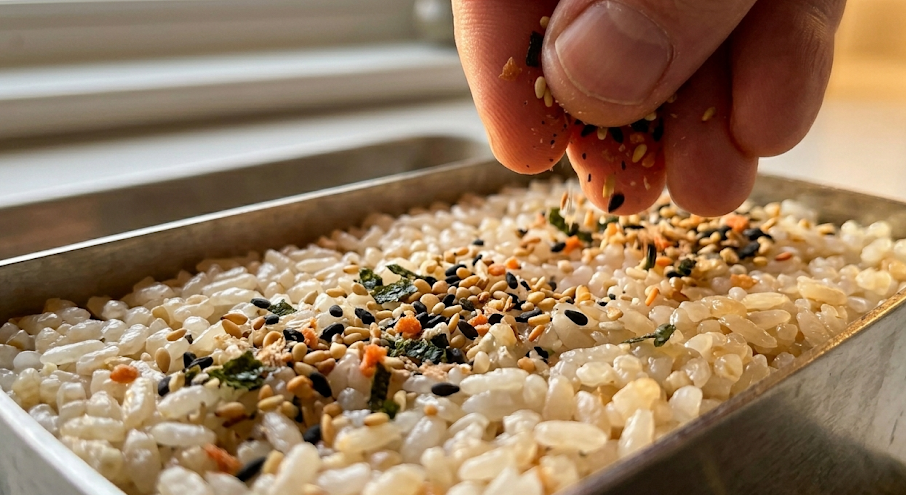
Spam Musubi with Furikake: The Upgrade Worth Making
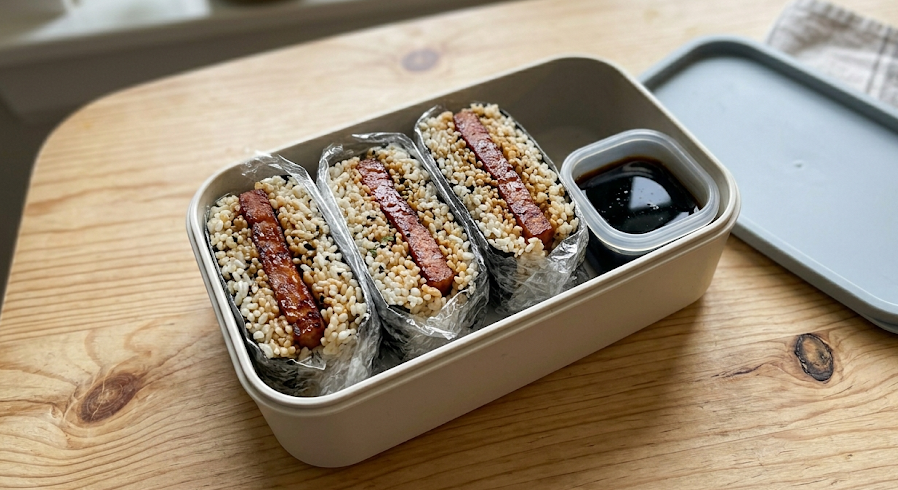
The furikake version of this spam musubi recipe adds one step and changes the whole character of the bite. After you press the first rice layer into the mold, sprinkle a generous pinch of furikake directly on top of the rice before you add the Spam. Add a second pinch on top of the Spam before the final rice layer goes in. The furikake brings toasted sesame, dried seaweed, and a faint fish-forward umami that makes the whole thing taste less like a snack and more like something you'd pay for.
Furikake is sold at most Asian grocery stores and increasingly at mainstream retailers. If you can't find it, a combination of toasted sesame seeds, a crumble of nori, and a pinch of salt gets you about 80% of the way there.
Furikake is the ingredient most first-timers skip because they've never bought it before, and then buy permanently once they taste what it does to the rice layer:
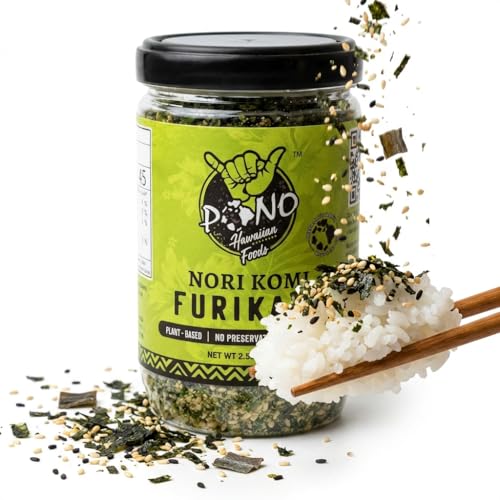
- Versatile seasoning: Pono Hawaiian nori komi furikake transforms ordinary meals into flavorful...
- Pure, premium ingredients: Made with premium sourced ingredients, including nori seaweed, seaweed powder...
Last update on 2026-09-30 / Affiliate links / Images from Amazon Product Advertising API
(As an Amazon Associate, we earn from qualifying purchases.)
Spam musubi with furikake assembly:
- Press first rice layer into mold
- Sprinkle 1 teaspoon furikake over rice
- Add glazed Spam slice
- Sprinkle another 1/2 teaspoon furikake over Spam
- Press second rice layer
- Seal with nori as usual
Everything else in the process stays the same.
The Sriracha Variation: For the Summer Party Platter
This version adjusts the glaze rather than the assembly. When you add the soy sauce and brown sugar to the skillet in Step 3, also add 1 tablespoon of sriracha and 1 teaspoon of sesame oil. The glaze picks up heat and a faint smokiness that holds up well at room temperature — which matters for a summer cookout where the food sits out for a while.
The sriracha build works well on a platter alongside the classic version so guests can pick their heat level. Label them with a small card if you're bringing this to a party; the two versions look nearly identical once wrapped.
How to Store and Serve Spam Musubi
Spam musubi holds well at room temperature for 2 to 3 hours — ideal for summer party timing. For anything longer, wrap each piece individually in plastic wrap and refrigerate. They'll keep refrigerated for up to 24 hours. Cold spam musubi is edible but the rice firms up considerably; 15 to 20 seconds in the microwave (still wrapped in plastic) brings it back to a better texture.
Don't freeze assembled musubi. The rice turns grainy when thawed and the nori goes soft. If you want to prep ahead more than a day out, cook and season the rice, make the glaze, and refrigerate the glazed Spam separately. Assemble the day of serving.
Serving for a crowd: One can of Spam yields 8 slices, which makes 8 pieces of spam musubi. Budget roughly 2 to 3 pieces per person for a party appetizer portion.
Getting the rice-to-Spam ratio right is the detail that separates a musubi that holds together from one that falls apart on the first bite, a digital kitchen scale takes the guesswork out of portioning every time:

- Stainless Steel is Smudge and fingerprint-resistant
- Zero function for taring the scale before weighing additional ingredients
Last update on 2026-09-30 / Affiliate links / Images from Amazon Product Advertising API
(As an Amazon Associate, we earn from qualifying purchases.)
Printable Spam Musubi Recipe Card
This spam musubi recipe fits on one page. Print it, stick it on the fridge, and skip the phone screen next time you're assembling a batch.
Conclusion
The spam musubi recipe isn't complicated once you've done it once. The rice seasoning and the glaze are the two variables that actually matter. Get those right and the assembly becomes routine. Start with the classic version, then run the furikake build the second time. By the third batch, you'll be adjusting the glaze to your own taste without thinking about it.
If you're making this for a summer party, double the batch. They go faster than you expect.
Frequently Asked Questions
Q: Can I make spam musubi ahead of time?
Yes. Assemble them up to 24 hours in advance, wrap each piece tightly in plastic wrap, and refrigerate. Microwave for 15 to 20 seconds before serving if you want the rice soft again.
Q: What rice works best for this spam musubi recipe?
Short-grain or sushi rice is the right choice. It has enough starch to stick together and hold the musubi shape. Long-grain rice won't bind properly and the musubi will fall apart during assembly.
Q: Do I need a musubi mold to make spam musubi?
No. The cleaned empty Spam can with both ends removed works just as well. Line it with plastic wrap for easy release. You can also shape the rice by hand using plastic wrap, though the edges won't be as clean.
Q: Why is my nori getting soggy?
The nori absorbs moisture from the rice quickly. This is normal and actually helps it seal. If you want to serve the spam musubi recipe with crispier nori, wrap within 30 minutes of serving rather than assembling hours ahead.
Q: Can I use a different protein instead of Spam?
Yes. Teriyaki chicken thighs sliced thin, canned tuna mixed with mayo and soy sauce, or firm tofu pressed and pan-fried all work in this format. The glaze and assembly process stays the same.
Q: How do I keep the rice from sticking to the mold?
Dip the mold or the Spam can in cold water between each musubi. A thin film of water on the inside surface is enough to prevent sticking without affecting the rice texture.
Q: Is spam musubi with furikake the most popular version?
In Hawaii, yes — furikake is considered the standard upgrade and most home cooks add it by default. On the mainland, the classic teriyaki glaze version is more widely known because furikake is newer to mainstream grocery shelves, though that's changing fast.
Poll: The Spam Musubi Debate
Why did you vote that way? Drop your take in the comments.