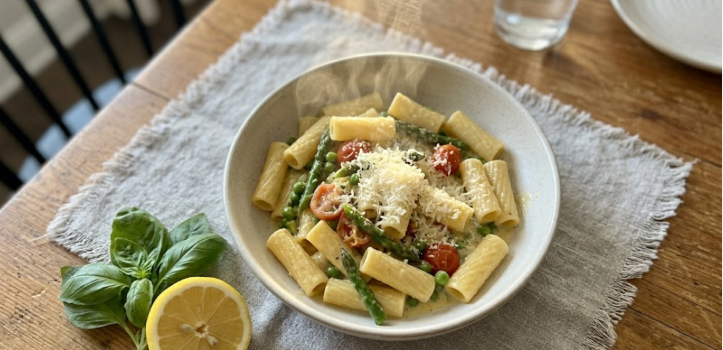


Quick Summary: Pasta Primavera
- Pasta primavera combines fresh seasonal vegetables with a light cream-lemon sauce
- Ready in 30 minutes with one pan and whatever vegetables sit in your crisper
- Best vegetables for spring: asparagus, peas, zucchini, cherry tomatoes, and spinach
- Skip the heavy cream: a small amount of pasta water and parmesan builds a silky sauce without weight
- Stores well for 3 days; reheat with a splash of water to loosen the sauce
What Is Pasta Primavera (And Why May Is the Right Time for It)
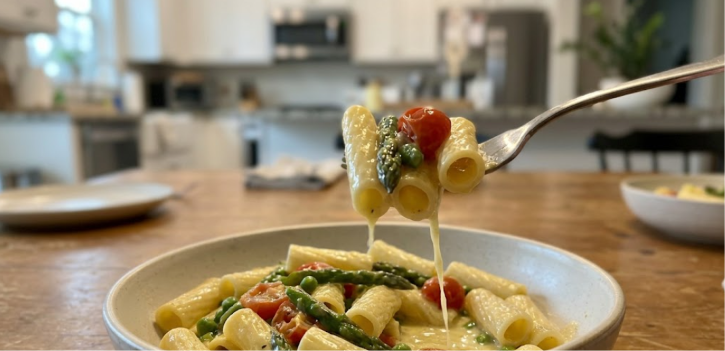
Pasta primavera is a simple spring pasta recipe that uses whatever fresh vegetables are cheapest and best right now. The name means “spring pasta” in Italian, and the concept matches: pasta and vegetables in a light sauce that lets the produce do the work.
The original restaurant version from the 1980s leaned heavily on cream and butter. What home cooks are making now is different. The current version uses a small amount of cream or skips it entirely, leans on pasta water and parmesan to build the sauce, and keeps the vegetables crisp rather than stewed. It's lighter and less fussy than the original.
May is when this spring recipe earns its place in the weekly rotation. Asparagus is still cheap and widely available, peas are fresh or frozen and interchangeable, and cherry tomatoes are coming into season and dropping in price. That crisper drawer full of vegetables you bought with good intentions becomes the actual recipe. This version comes together in 30 minutes, uses one pan beyond the pasta pot, and doesn't require a grocery run if you have any combination of the vegetables listed below.
Which Pasta Primavera Vegetables to Use (And What's Actually in Season)
The spring pasta recipe is forgiving by design. You don't need all five vegetables listed here; you need at least two, preferably three, and they should be whatever's fresh and affordable right now.
- Asparagus anchors the dish in May, but grab it soon. Its season ends in a few weeks and zucchini and cherry tomatoes take over from there. Cut it into 1-inch pieces so it cooks at the same rate as the pasta. Look for medium-thickness stalks because thin ones overcook in seconds and thick ones stay woody.
- Peas add sweetness and color with zero prep. Fresh shelled peas are ideal if you can find them. Frozen peas work just as well; add them in the last 60 seconds so they warm through without turning grey.
- Zucchini slices into thin half-moons and cooks fast. It absorbs the lemon-cream sauce well and adds bulk without changing the flavor. Don't overcook it; two to three minutes in the pan is enough.
- Cherry tomatoes go in late and soften just enough to release juice into the sauce. They add acidity and brightness that balance the cream. If you only have regular tomatoes, cut them into chunks and use them the same way.
- Spinach wilts down to almost nothing, which means you can add a large handful without it overwhelming the dish. It goes in last, right when the pasta hits the pan.
Other vegetables that work: broccoli florets (blanch first), snap peas, bell pepper strips, or artichoke hearts from a jar. If it cooks fast and tastes good raw, it belongs in this recipe.
The Light Cream Sauce: How to Build It Without Heavy Cream
This is where most spring pasta recipe either overcomplicate or underwhelm.
The sauce builds in three stages, and each one matters.
Stage 1: Aromatics. Cook garlic in olive oil over medium heat for 60 seconds. Don't let it brown; it should turn fragrant and pale gold. This flavor base carries everything that follows.
Stage 2: Liquid. A small amount of cream, two to three tablespoons per serving, goes in with a ladle of starchy pasta water. The starch in the pasta water acts as an emulsifier, holding the cream and the fat together into a cohesive sauce rather than letting them separate. If you skip the pasta water, the sauce breaks, so don't skip it.
The one tool that makes both jobs easier here is a good Microplane. It zests the lemon without pulling pith and grates the parmesan into fine, melt-ready shreds that fold into the sauce in seconds rather than clumping. Pre-grated parmesan from a bag won't behave the same way at this step.
No products found.
(As an Amazon Associate, we earn from qualifying purchases.)
Stage 3: Finish. Lemon juice and zest go in off the heat. Parmesan follows immediately. The residual heat melts the cheese into the sauce. Toss the pasta through it and check the consistency; if it looks tight, add another splash of pasta water and toss again.
The lemon keeps it bright, the parmesan adds enough depth, and the small amount of cream makes it feel like a proper dinner rather than a side dish.
No cream at all? Replace it with an extra ladle of pasta water and an additional tablespoon of parmesan. The sauce will be thinner but still cohesive. Add a teaspoon of olive oil at the finish to compensate for the missing fat.
The Full Spring Pasta Recipe
Yield: 4 servings Active time: 20 minutes Total time: 30 minutes
Ingredients
- 12 oz pasta (rigatoni, penne, or farfalle; see shape note below)
- 2 tablespoons olive oil
- 4 garlic cloves, thinly sliced
- 1 bunch asparagus (about 12 oz), cut into 1-inch pieces
- 1 medium zucchini, halved and sliced into half-moons
- 1 cup cherry tomatoes, halved
- 1 cup peas, fresh or frozen
- 2 large handfuls baby spinach
- 3 tablespoons heavy cream (or skip; see sauce note above)
- 1 cup reserved pasta water, divided
- Zest and juice of 1 lemon
- 3/4 cup freshly grated parmesan, plus more to serve
- Salt and black pepper
Instructions For Cooking Pasta Primavera
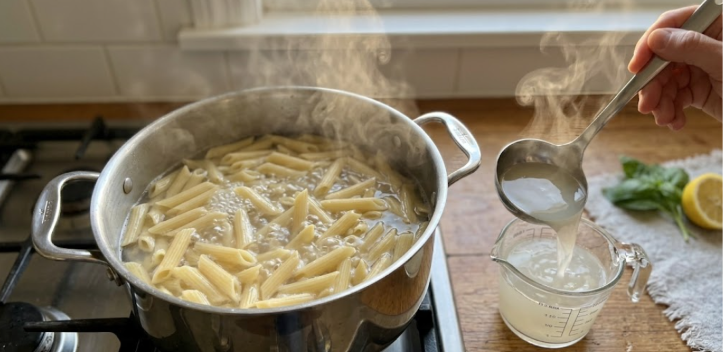
Step 1. Bring a large pot of water to a boil. Salt it heavily; it should taste like mild seawater. Cook the pasta according to package directions until just al dente, one minute less than the package says. Before draining, scoop out at least 1½ cups of pasta water and set it aside. Drain the pasta.
No products found.
(As an Amazon Associate, we earn from qualifying purchases.)
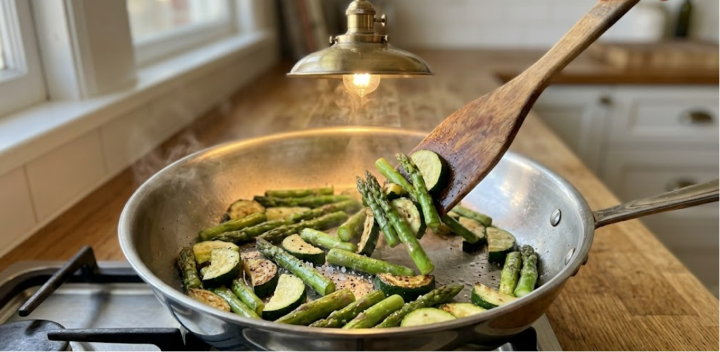
Step 2. While the pasta cooks, heat olive oil in a large skillet over medium-high heat. Add the asparagus and zucchini in a single layer. Season with salt. Cook without stirring for 2 minutes, then toss and cook another 1 to 2 minutes until the vegetables show light browning at the edges and turn just tender. Move them to one side of the pan.
No products found.
(As an Amazon Associate, we earn from qualifying purchases.)
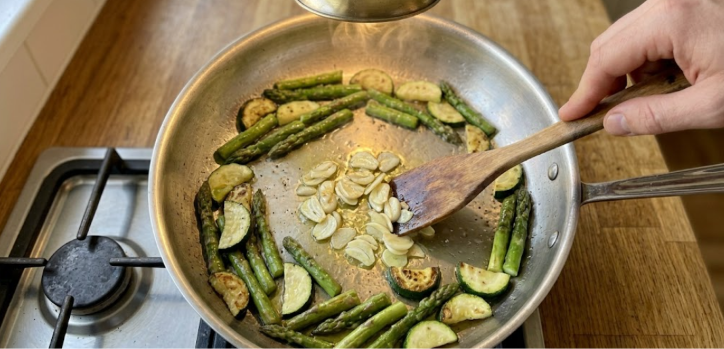
Step 3. Reduce heat to medium. Push the vegetables to the edge of the pan and add the garlic to the center. Cook 60 seconds, stirring constantly, until fragrant and pale gold. Don't let it darken.
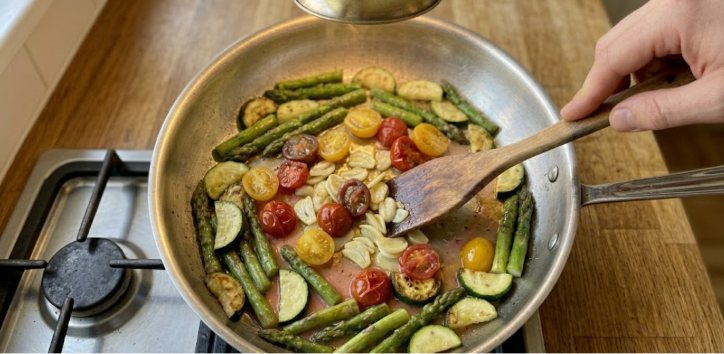
Step 4. Add the cherry tomatoes to the pan. Stir everything together and cook 2 minutes until the tomatoes begin to soften and release juice into the pan
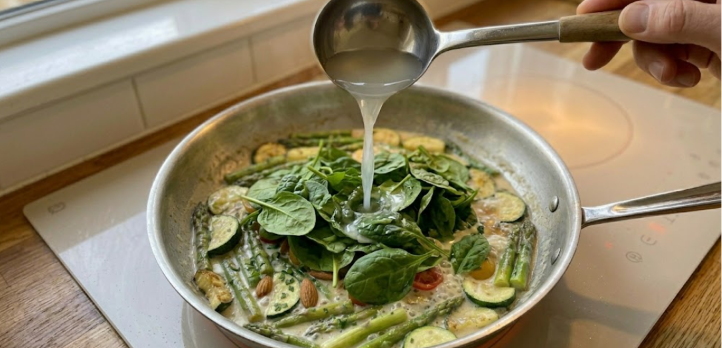
Step 5. Pour in 3/4 cup of the reserved pasta water and the heavy cream. Stir to combine. Add the peas. Bring to a gentle simmer for 1 minute. Add the spinach and stir until it wilts, about 30 seconds.
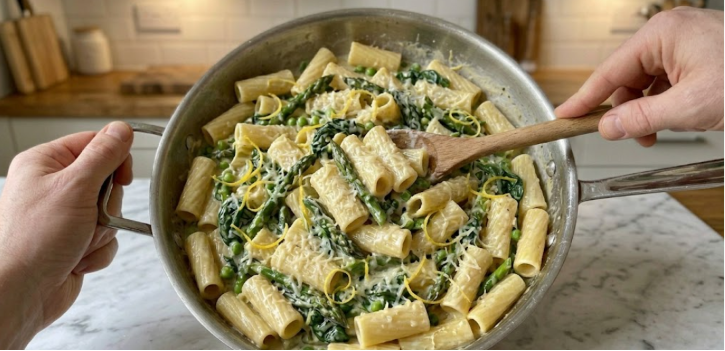
Step 6. Remove the pan from heat. Add the drained pasta directly to the skillet. Add lemon zest, lemon juice, and parmesan. Toss continuously for 1 to 2 minutes until the sauce coats every piece of pasta. If the sauce looks tight or isn't flowing freely, add pasta water a splash at a time and continue tossing. Taste and adjust salt, pepper, and lemon.
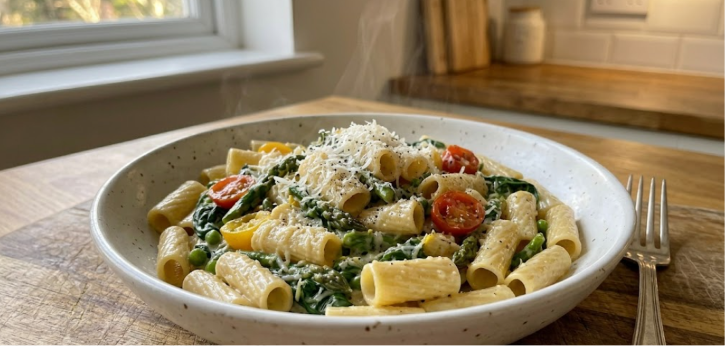
Step 7. Serve immediately with extra parmesan and a few turns of black pepper.
What Pasta Shape Works Best for Pasta Primavera
Short, textured shapes hold the sauce and vegetables better than long strands. Rigatoni is the first choice; the ridges catch the sauce and the open tube traps vegetables inside. Penne and farfalle work equally well.
Avoid spaghetti and linguine here. Long pasta tangles around itself, the vegetables fall out, and the sauce pools at the bottom of the bowl rather than coating the pasta evenly. If long pasta is all you have, it works; just serve it immediately and toss it again at the table.
Smaller shapes like orzo or ditalini can substitute if that's what's in the pantry. The sauce-to-pasta ratio shifts slightly, so add a little more pasta water to loosen it.
Making It Ahead and Reheating
Eat this right away for best results. The sauce tightens as it sits, the vegetables soften further, and the pasta absorbs the liquid. That said, leftovers reheat well.
To store: Transfer to a sealed container with a small splash of water or olive oil stirred through. Refrigerate for up to 3 days.
To reheat: Stovetop works best. Add a splash of water to a pan over medium-low heat, add the pasta, and toss until it warms through and the sauce loosens again. Microwave works if you add water and cover the bowl; stir halfway through.
Skip the freezer. The vegetables turn mushy and the cream sauce separates on thawing.
Can You Make It Dairy-Free?
Yes, with two changes. Replace the cream with an equal amount of full-fat coconut milk, or skip it and use extra pasta water. Swap the parmesan for nutritional yeast; start with two tablespoons, taste, and add more. The sauce won't be as rich, but it'll still coat the pasta.
Keep the lemon either way. Without the acid, the dish tastes flat.
Save the Recipe for Later
Want to keep this one on hand for weeknight rotations? Download the free printable recipe card below. It fits on a single page with no ads and no scrolling.
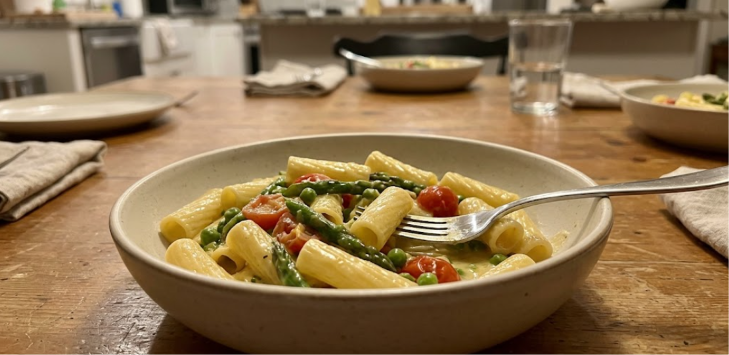
The Pasta Primavera Bottom Line
Pasta primavera isn't a complicated spring recipe. It's a structure: hot pan, fast vegetables, starchy pasta water, lemon, cheese. Once you know that structure, the specific vegetables stop mattering. Use asparagus this week and zucchini next week, or whatever the crisper holds. The sauce stays the same and dinner comes together in 30 minutes without tasting like a compromise.
A spring pasta recipe should use what's cheap and fresh right now, stay out of its own way, and put something light on the table without much effort. This one does all of that.
FAQs on Pasta Primavera
Q: What vegetables go in a traditional pasta primavera?
The original version included broccoli, peas, zucchini, and cherry tomatoes, but nobody ever fixed the list. “Primavera” refers to the season, not a specific set of vegetables; use whatever's fresh and affordable.
Q: Can I make pasta primavera without heavy cream?
Yes. Use an extra ladle of starchy pasta water and a tablespoon more parmesan in its place. The sauce will be lighter but still cohesive. A teaspoon of olive oil stirred in at the finish adds back some richness.
Q: What pasta shape works best for pasta primavera?
Short, ridged shapes like rigatoni or penne hold the sauce and trap vegetables best. Long pasta like spaghetti works in a pinch but tends to pull away from the vegetables and let the sauce collect at the bottom of the bowl.
Q: Why does my sauce look greasy or broken?
You likely skipped the pasta water or added the cream over too much heat. The starch from the pasta water emulsifies the sauce; without it, fat and liquid split apart. Pull the pan off the heat before adding the cream and parmesan, then add pasta water a splash at a time while tossing until the sauce pulls back together.
Q: Can I use frozen vegetables instead of fresh?
Frozen peas work perfectly; add them in the last 60 seconds of cooking. Frozen broccoli or zucchini tends to go mushy, so if you use them, add them straight from frozen and give them minimal time in the pan. Fresh asparagus and tomatoes are worth buying because they're inexpensive in spring and the frozen versions lose texture.
Q: Is pasta primavera healthy?
It's vegetable-heavy and lighter than most pasta dishes, especially in this cream-reduced version. For more protein, add a can of drained white beans or pull some rotisserie chicken off the bone and toss it in. For more fiber, swap half the pasta for a short whole-grain shape.
Q: Can I make pasta primavera ahead for meal prep?
It's better fresh, but leftovers keep well for up to 3 days. Stir a splash of water in before storing, then reheat on the stovetop with a little more water to loosen the sauce. Skip the freezer; the vegetables go soft and the sauce separates on thawing.
Do You Actually Use Pasta Water When Making Sauce?
Why did you vote that way? Drop your take in the comments.