

QUICK SUMMARY: Homemade Hot and Sour Soup
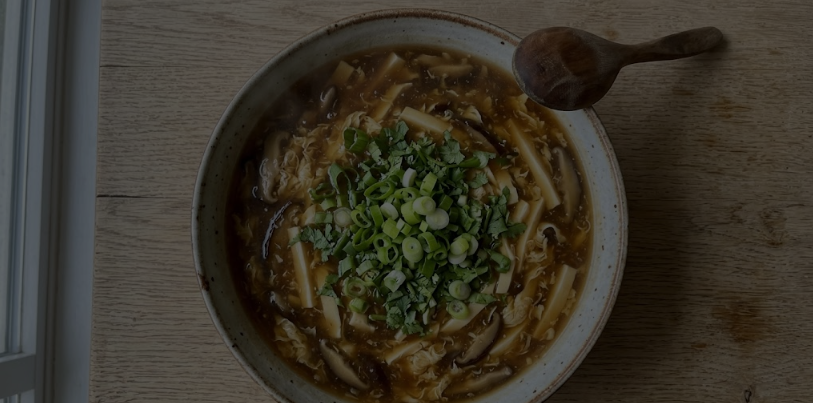
- What it is: A thick, tangy, peppery Chinese-American soup built on broth, tofu, mushrooms, bamboo shoots, and egg ribbons
- Active prep time: 15 minutes
- Total time: 35 minutes
- Servings: 6
- Key technique: A cornstarch slurry creates restaurant-style body; white pepper and rice vinegar are the two non-negotiable flavor drivers
- Grocery store accessible: Yes — all 8 core ingredients are available at a standard supermarket
- Storage: Refrigerates up to 5 days; freezes up to 3 months (freeze before adding egg ribbons)
- Dietary options: Easily made vegetarian or vegan with vegetable broth and no pork
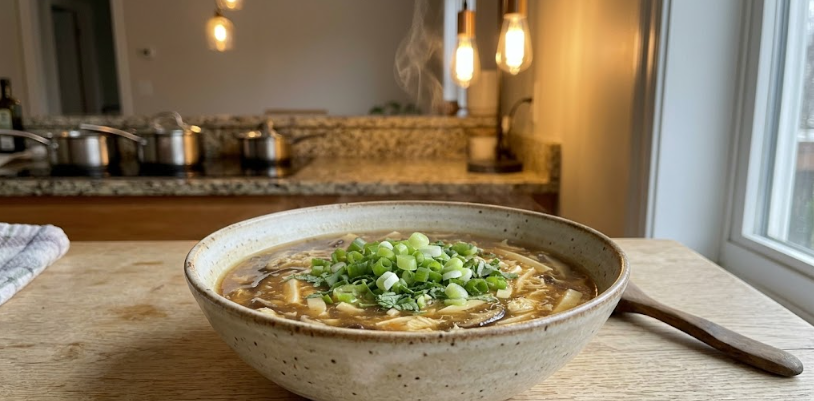
Hot and sour soup is one of the most-ordered items on any Chinese-American takeout menu. It is also one of the most-assumed-to-be-complicated recipes in the home kitchen. Most cooks hear “hot and sour soup” and picture a trip to an Asian grocery store, a shelf of unfamiliar bottles, and a technique they have never practiced.
None of that is required.
The two flavor drivers in this soup are white pepper and rice vinegar. Both sit on the spice and vinegar aisle of every standard grocery store. The rest of the ingredient list is chicken broth, firm tofu, shiitake mushrooms, canned bamboo shoots, soy sauce, and cornstarch. That is eight ingredients. Everything else, including the eggs, sesame oil, and green onions, is already in most kitchens.
This hot and sour soup recipe is also built for batch cooking. One pot feeds six people. It refrigerates for five days and freezes for three months, which makes it a legitimate meal prep asset rather than just a one-night dinner.
“I try too hard to do variety. I need to get better at cooking 2 for 1 meals.” — Glassdoor
This soup is a 2-for-1 by design. Make it Sunday, eat it twice by Wednesday.
What Actually Makes Hot and Sour Soup Taste the Way It Does
Most home cooks assume the heat in hot and sour soup comes from chili oil or hot sauce. It does not. The heat comes from white pepper, which produces a sharp, nose-forward warmth that is completely different from the mouth-heat of chili. If you have ever ordered hot and sour soup and felt the heat hit at the back of your throat rather than on your tongue, that is white pepper doing its job.
The sour comes from rice vinegar, added at the end of the cook rather than at the beginning. Adding it early cooks off the acidity. Adding it at the end keeps it sharp and bright.
The thickness comes from a cornstarch slurry, which is just cornstarch and cold water whisked together and poured into simmering soup. The soup thickens within sixty seconds. No roux, no cream, no special equipment.
The egg ribbons are the last step. You drizzle beaten eggs through a fork or chopstick into simmering soup while stirring slowly in one direction. The eggs cook on contact and form the thin, silky strands that are characteristic of restaurant hot and sour soup.
These four techniques — white pepper for heat, vinegar at the finish, cornstarch slurry for body, and the egg ribbon method — are everything you need to know before you start cooking.
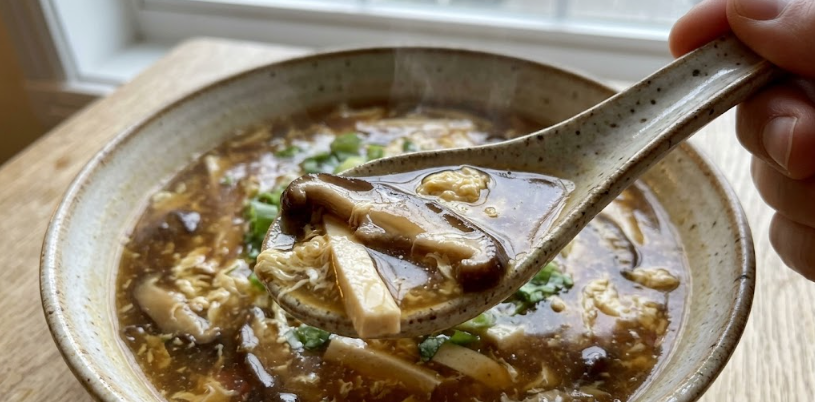
The 8 Grocery Store Ingredients That Build This Soup
1. Chicken broth (or vegetable broth). Low-sodium gives you control over the salt level. If you use regular broth, hold back on the soy sauce and taste before adding more.
2. Firm tofu. Cut it into quarter-inch strips. Silken tofu breaks apart during cooking and gives you an unpleasant texture. Firm tofu holds its shape.
3. Shiitake mushrooms. Fresh or dried both work. If you use dried, soak them in hot water for 20 minutes first, then slice thinly. Cremini mushrooms are a workable substitute if shiitakes are not available.
4. Canned bamboo shoots. Found in the Asian foods aisle of most major grocery chains. Drain and rinse before using. If your store does not carry them, thinly sliced water chestnuts are the closest substitute in terms of texture.
5. Soy sauce. Regular or low-sodium. This is the primary salt source in the soup. Tamari works for gluten-free versions.
6. Rice vinegar. Plain rice vinegar, not seasoned. Seasoned rice vinegar contains added sugar and salt. White wine vinegar is the closest substitute if rice vinegar is unavailable — use slightly less since it is more acidic.
7. White pepper. This is the ingredient most home cooks skip or substitute with black pepper. Do not skip it. White pepper produces a fundamentally different flavor that black pepper cannot replicate in this context. It is on the spice aisle at every major grocery store.
8. Cornstarch. The thickening agent. Keep a box in your pantry and you can make this soup on short notice anytime.
How to Get the Thickness Right Every Time
The cornstarch slurry is the most common point of failure in hot and sour soup. Three mistakes cause thin or lumpy soup.
Mistake 1: Adding cornstarch directly to hot liquid. Cornstarch added without a slurry clumps immediately. Always whisk cornstarch with cold water first.
Mistake 2: Adding the slurry to liquid that is not simmering. The soup needs to be actively simmering for the starch to activate. If the heat is too low, the soup stays thin.
Mistake 3: Adding all the slurry at once without checking consistency. Add two-thirds of the slurry, stir for one minute, and check. If the soup coats the back of a spoon lightly, it is at restaurant consistency. If it still feels like water, add the rest.
The soup will also thicken slightly as it cools. If you are making a batch to refrigerate, aim for a slightly looser consistency than your target, since it will tighten in the container.
A heavy-bottomed pot distributes heat evenly and keeps the simmer steady without hot spots that can break the egg ribbons apart. If you are making this soup regularly, a 6-quart Dutch oven handles the full batch without crowding and transitions cleanly from stovetop to storage.
[AAWP: 6-quart Dutch oven — e.g., Lodge Enameled Cast Iron or Le Creuset equivalent]
RECIPE
Easy Homemade Hot and Sour Soup
Prep time: 15 minutes Cook time: 20 minutes Total time: 35 minutes Servings: 6 Calories: ~120 per serving (without pork)
Ingredients
- 6 cups low-sodium chicken broth (or vegetable broth)
- 8 oz firm tofu, cut into quarter-inch strips
- 6 oz fresh shiitake mushrooms, stems removed, thinly sliced
- 1 can (8 oz) bamboo shoots, drained, rinsed, cut into matchsticks
- 3 tablespoons soy sauce
- 3 to 4 tablespoons rice vinegar, divided (start with 3, adjust at the end)
- 1½ teaspoons white pepper
- 3 tablespoons cornstarch
- 3 tablespoons cold water
- 2 large eggs, beaten
- 1 teaspoon sesame oil
- 2 green onions, thinly sliced
Optional: 4 oz pork tenderloin, thinly sliced (add with the tofu in Step 3)
Substitution note: No shiitakes? Use cremini mushrooms. No bamboo shoots? Use thinly sliced water chestnuts. No rice vinegar? Use white wine vinegar, but reduce to 2 tablespoons since it is more acidic. For gluten-free, swap soy sauce for tamari.
Instructions
1. Bring the broth to a steady simmer. Pour the broth into a large pot over medium-high heat. Bring it to a simmer — not a rolling boil. You want small, steady bubbles at the surface, not a hard boil. Adjust the heat to maintain that simmer throughout the cook.
2. Add the mushrooms, bamboo shoots, and soy sauce. Add the sliced shiitake mushrooms, bamboo shoot matchsticks, and soy sauce to the simmering broth. Stir once to combine. Let the pot simmer uncovered for 5 minutes. The mushrooms will soften and the broth will deepen in color.
3. Add the tofu (and pork, if using). Add the tofu strips to the pot. If you are using pork tenderloin, add it at the same time. Simmer for 3 minutes. The tofu needs only to heat through. The pork is done when it turns from pink to white with no pink remaining.
4. Add the white pepper and rice vinegar. Stir in the white pepper and 3 tablespoons of rice vinegar. The soup will smell noticeably sharper. Taste the broth — it should have a clear sour note and a warm, throat-level heat. Hold the final vinegar adjustment for the end.
5. Make and add the cornstarch slurry. In a small bowl, whisk the cornstarch and cold water together until completely smooth with no lumps. Pour the slurry slowly into the simmering soup in a steady stream while stirring constantly. Continue stirring for 1 full minute. The soup will thicken and turn slightly glossy. If it reaches your target consistency before you have added all the slurry, stop — you can always add more, but you cannot take it back.
6. Add the egg ribbons. Reduce the heat to low. Hold a fork or a chopstick at the edge of the pot and drizzle the beaten eggs through the tines or through the gap in the chopstick in a slow, steady stream. While you pour, stir the soup gently in one direction only. The eggs will cook on contact and form thin, silky ribbons. Pouring too fast or stirring too aggressively breaks them into small clumps instead.
7. Finish with sesame oil and adjust seasoning. Remove the pot from heat. Stir in the sesame oil. Taste the soup and adjust: more rice vinegar if you want it sharper, more white pepper if you want more heat, more soy sauce if it needs salt. Add vinegar one tablespoon at a time and taste between additions.
8. Ladle into bowls and top with green onions. Divide among six bowls. Top each with a pinch of sliced green onions. Serve immediately. The soup holds its temperature well, but the egg ribbons will continue to set as the soup sits
How to Store, Freeze, and Reheat Hot and Sour Soup
Refrigerator: Store in an airtight container for up to 5 days. The cornstarch thickening loosens slightly overnight. A small slurry (1 teaspoon cornstarch whisked with 1 teaspoon cold water, stirred in while reheating over medium heat) restores the original body.
Freezer: Freeze for up to 3 months, with one adjustment: make the soup through Step 5 only, then cool and freeze before adding the eggs. Egg ribbons do not freeze well — they turn rubbery. When you reheat, bring the soup to a simmer and add fresh eggs in Step 6.
Reheating: Medium heat on the stovetop. Stir occasionally. Microwave works for single servings — cover loosely and heat in 90-second intervals, stirring between each.
Batch tip: This recipe doubles cleanly. Use a stockpot and freeze half before Step 6 for a second dinner with zero additional work.
[INTERNAL LINK: freezer meal prep guide] <!– AAWP PLACEMENT 2 –>
If you are storing batches regularly, wide-mouth glass containers seal better than standard food storage containers and prevent odor transfer in the freezer. A set of 32-ounce wide-mouth mason jars holds exactly two servings per jar and stacks flat, which makes the most of freezer shelf space.
[AAWP: 32-oz wide-mouth mason jars, Ball or Kerr]
Conclusion
Hot and sour soup does not require a specialty trip, an advanced technique, or an ingredient you have never heard of. It requires two flavor decisions: white pepper for heat and rice vinegar for sour. Everything else supports those two choices.
Make one batch and you have dinner for the week. Make a double batch and you have a freezer meal that takes thirty seconds to label and store.
The next time the takeout impulse hits at 5:30, this soup is a faster answer than waiting for delivery.
FAQs
Q: What makes hot and sour soup sour?
Rice vinegar added at the end of cooking creates the sour flavor. Adding it at the start would cook off the acidity. Start with 3 tablespoons and adjust after tasting — some batches of broth need more, some need less.
Q: Can I make this soup vegetarian or vegan?
Yes. Use vegetable broth instead of chicken broth and skip the optional pork. Everything else in the recipe is already plant-based, including the tofu, mushrooms, bamboo shoots, and egg ribbons — though if you want it fully vegan, leave out the eggs and increase the cornstarch slurry by one additional tablespoon to compensate for the body the eggs would have added.
Q: Why did my soup turn out thin instead of thick?
Either the slurry was not fully whisked before adding (causing lumps that do not distribute), or the soup was not at a steady simmer when the slurry went in. The starch needs heat to activate. Bring the soup back to a simmer, make a fresh small slurry (1 tablespoon cornstarch with 1 tablespoon cold water), and stir it in slowly.
Q: Can I substitute black pepper for white pepper?
Technically yes, but the flavor is different enough that it changes the soup. White pepper produces a sharp, throat-level heat that reads as “hot and sour soup.” Black pepper produces a more surface-level warmth with a slightly bitter edge. If white pepper is the only substitution you make, use it at half the quantity and taste before adding more.
Q: How long does homemade hot and sour soup last in the fridge?
Up to 5 days in an airtight container. The thickness may loosen slightly on day two — a small cornstarch slurry (1 teaspoon cornstarch with 1 teaspoon cold water) stirred in while reheating on the stovetop restores it.
Q: What can I use instead of bamboo shoots?
Thinly sliced water chestnuts are the closest substitute for texture. Thinly sliced celery works in a pinch and holds up well to simmering without going soft. Both are available at standard grocery stores.
Q: Is it okay to freeze hot and sour soup?
Yes, but freeze it before adding the eggs. Egg ribbons turn rubbery after freezing and thawing. Cook the soup through the cornstarch step, cool it completely, then freeze. When reheating, bring it back to a simmer and add fresh eggs using the same drizzle technique.
POLL
What's the actual point of making restaurant food at home?
- It has to taste the same — “close enough” is just a polite way of saying it didn't work
- Good enough plus cheaper plus no wait time beats restaurant quality every time
- It's not about the food — it's about not being dependent on a restaurant to eat what you want
Why did you vote that way? Drop your take in the comments.