

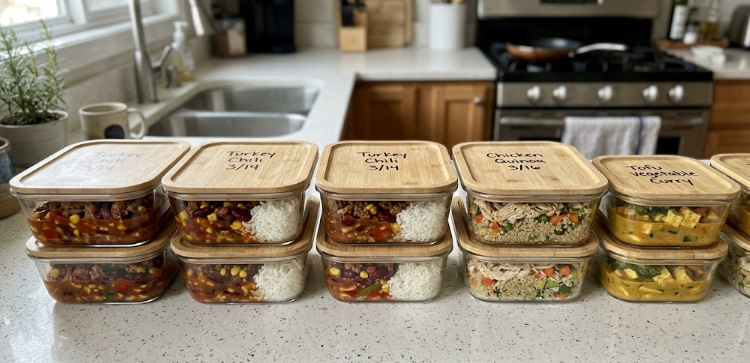
Quick Summary: High Protein Freezer Meals
- High protein freezer meals are fully cooked, batch-prepped dinners that deliver at least 20g of protein per serving and stay table-ready in the freezer for up to 3 months. They're built around proteins that survive freezing and designed to eliminate the nightly decision of what to make.
- The best proteins for freezing are ground meat and legumes — both hold texture through freeze-thaw cycles
- A 3-hour Sunday session produces 5 complete high protein freezer meals for the week
- Properly sealed, they last 2 to 3 months without significant texture loss
- Reheating at 50% microwave power in 90-second intervals protects protein texture better than full power
- Pairing ground meat with beans or lentils consistently clears 20g protein per serving without any tracking
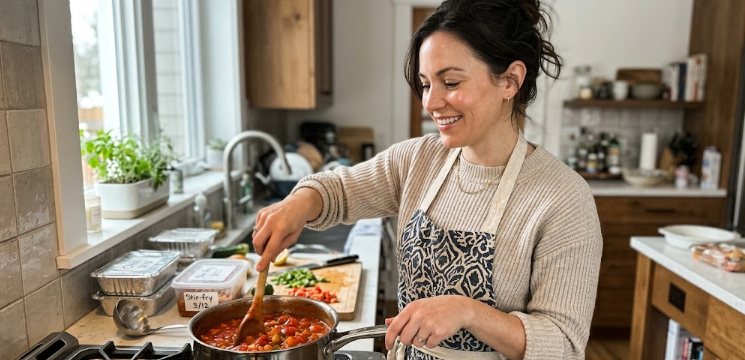
“By the time dinner rolls around, we are out of energy.” — Medium
That's not a cooking complaint. It's a description of what happens when the decision of what to make gets pushed to the moment everyone's already hungry.
You're tired. The family's hungry. The protein goal you've been working toward all day is one takeout order away from falling apart.
High protein freezer meals solve one specific part of that problem. The groceries still need buying. Sunday still needs a real block of time. But the moment where you're standing at the stove at 6:45pm deciding what to make — and whether it has enough protein to keep everyone full until morning — that moment disappears.
This guide covers five high protein freezer meals, each hitting at least 20g of protein per serving. It also covers which proteins actually hold up in the freezer, how to run a 3-hour Sunday session without losing the whole day, and how to reheat without undoing the work you already did.
Why High Protein Freezer Meals Work Better Than Daily Cooking
Most protein-focused meal prep falls apart by Wednesday.
Chicken breast cooked Sunday is dry by Tuesday. The same meals cycling through the week create flavor fatigue, and flavor fatigue is what sends families back to the drive-through. “That approach leads to flavor fatigue and abandoned meal prep containers in the back of your refrigerator,” noted one meal prep resource tracking exactly this pattern.
High protein freezer meals hold better than refrigerated leftovers because freezing pauses the degradation that starts the moment a cooked meal sits in the fridge. A properly frozen meal at the end of week three tastes closer to day one than a refrigerated leftover at day four. And because frozen meals stay table-ready for months, one Sunday session can stock a rotation diverse enough that no two back-to-back dinners taste the same.
The protein goal stays intact because the food actually gets eaten.
Which Proteins Freeze Well (and Which Ones Don't)
This is the decision that determines whether your high protein freezer meals work or become a collection of disappointing containers.
Ground meat freezes best. Ground turkey, ground beef, and ground chicken all survive freeze-reheat cycles with texture largely intact. The fat distributed through the meat acts as insulation during freezing. Chili, meatballs, and casseroles form the backbone of every reliable high protein freezer meal rotation for exactly this reason.
Chicken thighs hold up well. The fat content in thighs does the same protective work as fat in ground meat. Boneless thighs cut into pieces and cooked in sauce freeze reliably.
Chicken breast needs sauce coverage. It's the hardest protein to freeze without drying out. Breast that's stored without liquid covering it will come out dry regardless of reheat method. If you use it, make sure it's fully submerged in sauce before it goes into the freezer.
Legumes are the easiest protein source to freeze. Black beans, cannellini beans, and lentils freeze without any texture loss. They also push the per-serving protein count without increasing cost or cook time. Pairing ground meat with legumes is the most reliable route to clearing 20g per serving consistently.
Eggs and cream-based sauces are the problem cases. Scrambled egg texture degrades in the freezer. Cream-based sauces can separate on reheat. If your recipe uses either, test a small batch before committing to a full session.
The 3-Hour Sunday Method
Three hours is enough time to produce five high protein freezer meals if the session runs on overlap, not sequence.
The mistake most people make is cooking one recipe start to finish, cleaning up, and starting the next. That wastes the biggest efficiency available in batch cooking: running multiple recipes at the same time.
Here's the sequence that works:
0:00 — Start the longest-cook items first. If a chili or braise needs 45 minutes of simmering, it goes on the stove now. You're not standing over it.
0:15 — Prep aromatics for all five recipes at once. One cutting board session: all onions diced, all garlic minced, all spices measured. This eliminates repeated setup and cleanup between recipes. If you've got a multicooker, use it to run a bean-based braise while stovetop recipes run in parallel. The Instant Pot Duo 7-in-1 handles this well and frees up a burner. [Affiliate disclosure: HomemadeRecipes.com earns a commission on purchases made through links on this page.]
0:30 — Run parallel cook tracks. Use the oven for casseroles and stuffed vegetables while stovetop proteins cook.
1:30 — Begin the cool-down phase. Nothing goes into a freezer container hot. Move finished dishes to sheet pans or wide bowls. While they cool, start cleanup.
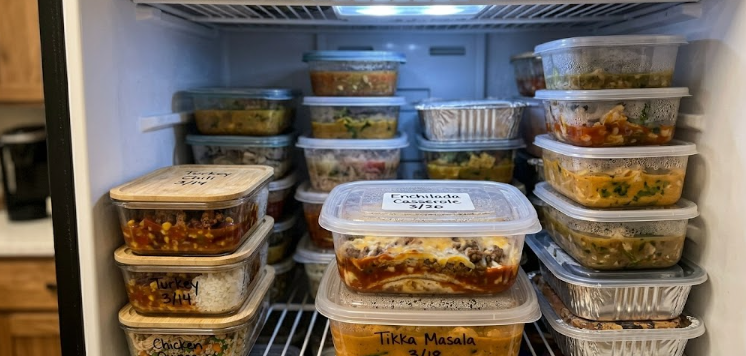
2:00 — Portion and pack. Label every container with the recipe name, date, and reheating instructions. It matters when you're pulling a frozen meal three weeks from now and can't remember what's inside.
2:30 — Freezer loaded. You've got 30 minutes of buffer for anything that ran long.
If you're only buying one thing before your first high protein freezer meal session, the container is it. Everything else is optional, but leaking or cracking containers will cost you more than the meal:
No products found.
(As an Amazon Associate, we earn from qualifying purchases.)
Best for stacked high protein freezer meals: Rubbermaid Brilliance BPA-Free Food Storage Containers
5 High Protein Freezer Meals (20g+ Per Serving)
These five high protein freezer meals cover the full range of what freezes well: chili, braised chicken, stuffed vegetables, meatballs, and a casserole. Each uses ground meat, legumes, or both as the protein base.
Recipe 1: Turkey and White Bean Chili
This is one of the most dependable high protein freezer meals on the list. Ground turkey and cannellini beans each contribute to the protein count, and the chili format freezes better than almost anything else you can make in a single batch.
Serves: 6 | Protein per serving: ~28g | Active prep: 8 minutes | Freeze life: Up to 3 months
Ingredients:
- 1.5 lbs ground turkey
- 2 cans (15 oz each) cannellini beans, drained and rinsed
- 1 can (15 oz) diced tomatoes
- 1 can (4 oz) diced green chiles
- 2 cups low-sodium chicken broth
- 1 small onion, diced
- 3 cloves garlic, minced
- 1 tsp cumin
- 1 tsp chili powder
- 1/2 tsp smoked paprika
- Salt and pepper to taste
- 2 tsp olive oil
Substitutions: Ground chicken works in place of turkey. Great Northern beans or navy beans substitute for cannellini. For lower sodium, skip the canned chiles and add 1 tsp jarred jalapeño instead.
1. Heat olive oil in a large pot over medium-high heat. Add ground turkey and break it up with a wooden spoon. Cook until no pink remains, about 6 minutes. Season with salt.
2. Add diced onion and garlic directly to the pot with the cooked turkey. Stir and cook for 2 minutes until the onion softens and the garlic's fragrant.
3. Add cumin, chili powder, and smoked paprika. Stir to coat the meat and aromatics. Cook for 1 minute until the spices are fragrant and beginning to toast.
4. Pour in chicken broth, diced tomatoes, green chiles, and cannellini beans. Stir to combine. Bring to a boil, then reduce heat to low and simmer uncovered for 20 minutes.
5. Remove from heat. Cool for 30 minutes before portioning into freezer-safe containers. Label each with the recipe name and date.
Recipe 2: Chicken Thigh Tikka Masala
Thighs make this a high protein freezer meal that actually reheats well. The fat content in the chicken protects texture during freezing, and the sauce covers every piece when stored, which prevents the drying that plagues breast-based freezer recipes.
Serves: 6 | Protein per serving: ~31g | Active prep: 10 minutes | Freeze life: Up to 3 months
Ingredients:
- 2 lbs boneless, skinless chicken thighs, cut into 1.5-inch pieces
- 1 can (14 oz) full-fat coconut milk
- 1 can (14 oz) crushed tomatoes
- 1 small onion, diced
- 4 cloves garlic, minced
- 1 tbsp fresh ginger, grated (or 1 tsp ground ginger)
- 2 tbsp olive oil
- 2 tsp garam masala
- 1 tsp turmeric
- 1 tsp cumin
- 1 tsp paprika
- Salt to taste
Substitutions: Bone-in thighs work; remove bones before portioning. Coconut milk is already dairy-free. For a lighter sauce, use light coconut milk — consistency will be thinner. Freeze the sauce only and cook rice fresh when serving.
1. Heat olive oil in a large skillet or wide pot over medium-high heat. Add chicken thigh pieces in a single layer. Sear for 3 minutes without stirring to develop color on one side.
2. Flip the chicken pieces and add diced onion, garlic, and ginger directly to the pan. Stir to combine and cook for 2 more minutes.
3. Add garam masala, turmeric, cumin, and paprika. Stir to coat all pieces evenly. Cook for 1 minute, pressing the spice mixture into the chicken as it toasts.
4. Pour in crushed tomatoes and coconut milk. Stir to combine, scraping any browned bits from the pan bottom. Reduce heat to medium-low and simmer for 20 minutes until sauce thickens and chicken is cooked through.
5. Cool for 30 minutes. Portion into containers with equal sauce distribution. Freeze the sauce only and cook fresh rice when serving, or freeze cooked rice in a separate container.
Recipe 3: Ground Beef and Lentil Stuffed Peppers
Ground beef and red lentils together push this well above the 20g threshold without extra ingredients. It's one of the more filling high protein freezer meals in the rotation, and it reheats cleanly because the dense filling retains moisture better than leaner proteins do.
Serves: 6 | Protein per serving: ~27g | Active prep: 10 minutes | Freeze life: Up to 2 months
Ingredients:
- 1 lb lean ground beef (85/15)
- 1 cup dry red lentils, cooked per package directions
- 1 can (14 oz) diced tomatoes, drained
- 1 tsp cumin
- 1 tsp garlic powder
- 1 tsp smoked paprika
- Salt and pepper to taste
- 6 medium bell peppers, halved lengthwise and seeded
- 1/2 cup shredded mozzarella or cheddar
Substitutions: Ground turkey works 1:1. Green or brown lentils substitute for red; cook time is longer, so check the package. For dairy-free, skip the cheese or use a plant-based shred.
1. Cook red lentils according to package directions. Drain any excess water and set aside.
2. Brown ground beef in a large skillet over medium-high heat. Break into small pieces and cook until no pink remains. Drain excess fat.
3. Add cooked lentils, drained diced tomatoes, cumin, garlic powder, and smoked paprika to the skillet with the beef. Stir to combine and cook for 3 minutes until heated through and the mixture looks slightly dry.
4. Place halved, seeded bell peppers cut side up on a parchment-lined sheet pan. Spoon filling into each half, pressing firmly. Top with shredded cheese.
5. Cool filled peppers completely on the sheet pan, then transfer to a freezer-safe container or wrap individually in parchment and place in a zip bag. Bake from fully thawed at 375°F for 30 minutes.
Recipe 4: Chicken Meatballs in Marinara
High protein freezer meals built around meatballs work because the fat in the meat and the sauce coverage together protect texture during freezing. Ground chicken is leaner than beef, so searing before simmering in sauce is the step that keeps these from falling apart on reheat.
Serves: 6 | Protein per serving: ~24g | Active prep: 10 minutes | Freeze life: Up to 3 months
Ingredients:
- 1.5 lbs ground chicken
- 1/3 cup breadcrumbs (or almond flour for gluten-free)
- 1 egg
- 1/4 cup grated parmesan
- 3 cloves garlic, minced
- 1 tsp dried oregano
- 1 tsp garlic powder
- Salt and pepper to taste
- 2 cups jarred marinara sauce
- 1 tbsp olive oil
Substitutions: Ground turkey swaps 1:1. For gluten-free, use almond flour or rolled oats pulsed briefly in a blender. For dairy-free, skip the parmesan and add 1 tbsp nutritional yeast instead. Don't overwork the mixture — overmixed ground chicken meatballs turn dense.
1. Combine ground chicken, breadcrumbs, egg, parmesan, minced garlic, oregano, and garlic powder in a bowl. Mix until just combined.
2. Roll into 1.5-inch meatballs, about 24 total. Place on a parchment-lined sheet pan as you go.
3. Heat olive oil in a large skillet over medium-high heat. Add meatballs in batches and sear for 2 minutes per side until a golden crust forms on at least two sides. They don't need to cook at this stage.
4. Add marinara sauce to the skillet, reduce heat to medium-low, cover, and simmer for 12 minutes until meatballs are cooked through.
5. Cool to room temperature, then portion meatballs and sauce together into freezer containers. Freeze flat if using zip bags. Reheat on the stovetop over low heat or in the microwave at 50% power in 90-second intervals.
Recipe 5: Black Bean and Beef Enchilada Casserole
Casseroles are the most forgiving format in any high protein freezer meal session. They reheat evenly, they're easy to portion, and the layered structure protects interior moisture during baking. This one clears 26g of protein per serving through the beef and bean combination.
Serves: 8 | Protein per serving: ~26g | Active prep: 10 minutes | Freeze life: Up to 2 months
Ingredients:
- 1 lb ground beef (85/15)
- 1 can (15 oz) black beans, drained and rinsed
- 1 can (28 oz) red enchilada sauce
- 6 corn tortillas, cut into strips
- 1.5 cups shredded Mexican cheese blend
- 1 tsp cumin
- 1 tsp garlic powder
- Salt to taste
Substitutions: Ground turkey or ground chicken works in place of beef. Flour tortillas substitute for corn; texture will differ slightly. For dairy-free, omit the cheese and stir 1/4 cup nutritional yeast into the beef layer for depth.
1. Brown ground beef in a large skillet over medium-high heat until fully cooked. Drain excess fat. Add cumin and garlic powder and stir to coat.
2. Stir in black beans and 1/2 cup of the enchilada sauce. Mix to combine and remove from heat.
3. Spread 1/2 cup of enchilada sauce across the bottom of a 9×13 freezer-safe baking dish. Lay corn tortilla strips across the sauce in an overlapping layer.
4. Spoon half the beef and bean mixture over the tortilla layer. Add another layer of tortilla strips, the remaining beef mixture, the remaining enchilada sauce, and top with shredded cheese.
5. Cover tightly with two layers of plastic wrap and one layer of foil before freezing. Bake from fully thawed at 375°F for 35 minutes, uncovering for the last 10 minutes to brown the cheese.
Reheat Without Ruining the Texture
Reheating high protein freezer meals correctly comes down to two things: knowing the safe internal temperature for each protein and having containers that handle the transition from frozen to table without cracking or leaching. These three tools cover both.
Table could not be displayed.Affiliate disclosure: HomemadeRecipes.com earns a commission on purchases made through links on this page.
How to Reheat High Protein Freezer Meals Without Ruining the Texture
This is the step most guides skip, and it's where a lot of high protein freezer meals fail at the family table.
Thaw first. Moving a frozen meal directly into a hot oven or microwave creates uneven heat — the outside overcooks before the center warms. Transfer containers from freezer to refrigerator the night before and the meal will be fully thawed by dinner time.
Microwave: use 50% power. Full power reheating forces moisture out of proteins quickly. At 50% power in 2-minute intervals, with stirring between each, proteins reheat evenly without going rubbery.
Stovetop: low heat with a lid. Chilis, meatballs, and sauce-based meals reheat best on the stovetop over low heat. Add 2 tablespoons of water or broth if the sauce has thickened during freezing.
Oven: covered for the first half. For casseroles and stuffed peppers, cover with foil for the first 20 minutes, then remove for the final 10. This keeps the top from drying before the center heats through.
Temperature check: All proteins should reach 165°F before serving. A quick-read thermometer is faster than cutting into every meatball to check.
Build Your First Freezer Meal Kit
Ready to run your first session? These are the four things that make it easier to execute without chaos:
Table could not be displayed.Save These Recipes for Your Next Batch Session
All five high protein freezer meals are available as a free printable recipe card. Ingredients, steps, protein counts, and storage instructions in one place, formatted to stay readable on the counter while you cook. Download it once and it's yours for every Sunday session going forward.
Download the Free Printable Recipe Card
One Sunday, Five Nights Handled
High protein freezer meals aren't a trend. They're a structural fix for the same problem most families hit every Tuesday at 6pm.
One Sunday session isn't a perfect solution — it's a complete one. You'll have five dinners with a protein guarantee, a working reheat method, and one fewer decision to make when you're already running low.
If you've never done a full batch session before, start with the turkey white bean chili and the enchilada casserole. Both are forgiving on timing, both freeze without texture loss, and both clear the protein target without any tracking. Add a third recipe once the first session feels manageable.
High protein freezer meals work because the bar on a Tuesday night drops to reheating, not cooking. That's the only system change that actually sticks.
FAQs
Q: How long do high protein freezer meals actually last?
Most high protein freezer meals hold well for 2 to 3 months. After that, texture and flavor start to degrade even if the food's technically safe. Write the date on every container at packing. It's the only reliable way to track your stash.
Q: Can you freeze meals that have beans and rice together?
Beans freeze without any texture loss. Cooked rice can become slightly mushy after freezing and reheating. Freeze the protein and bean component together and cook rice fresh at serving, or freeze rice in a separate thin layer so it reheats faster and more evenly.
Q: What actually causes freezer burn and how do you prevent it?
Freezer burn happens when air reaches the food surface and draws out moisture. Remove as much air as possible before sealing containers or bags. For rigid containers, press a layer of plastic wrap directly against the food surface before locking the lid. Protein stored in sauce is more protected than protein stored dry.
Q: Do I need an Instant Pot or pressure cooker to pull off a full batch session?
No. Every recipe in this guide works on a standard stovetop. A multicooker speeds up bean-based braises and can run a second recipe simultaneously, but it's not required to finish in 3 hours.
Q: My frozen chicken always comes out dry when I reheat it. What's going wrong?
Chicken breast stored without sauce covering it will dry out during freezing regardless of reheat method. Make sure it's fully submerged in sauce before freezing. If you're reheating in the microwave, use 50% power in 2-minute intervals rather than full power. Thighs are more forgiving than breast for exactly this reason.
Q: How do you reliably clear 20g of protein per serving without tracking macros?
Pair ground meat with legumes in every recipe. One cup of cooked ground turkey combined with one cup of cannellini beans provides roughly 35g of protein across two servings with no calculation needed. Using this combination as the base for chilis, casseroles, and stuffed dishes consistently clears the 20g threshold.
Q: Is it safe to refreeze a meal that was thawed in the refrigerator but not used?
Yes, if the meal thawed in the refrigerator and has been there for fewer than 3 days. Meals thawed at room temperature should be cooked and consumed. The USDA's guidance: if it was thawed safely in the fridge, it can be refrozen once.
Meal Prep or Takeout: Pick a Side
Why did you vote that way? Drop your take in the comments!